What's inside
As an Amazon Associate I earn from qualifying purchases. This post may contain affiliate links at no extra cost to you.
Overhead screwdriving exposes the main difference between a magnetic bit holder and a locking bit holder: magnets hold the screw, while a locking holder primarily holds the bit. That distinction matters when the screw is pointed upward, the workpiece is above your head, or you are using a long extension where a dropped fastener is difficult to recover.
For ordinary steel screws and light overhead work, a magnetic holder is usually faster and cheaper. For repeated overhead driving, deep access, vibration, or screws that do not respond well to magnets, a locking holder is the more dependable choice—especially when paired with a separate screw-retaining sleeve or a magnetic bit.
As an Amazon Associate we earn from qualifying purchases at no extra cost to you.


Our Top Picks
 Bosch ITBHQC201 2-Inch Impact Tough Quick Change Bit21" in0.59 x 1.75 x 1.17 inches0.07 PoundsCheck on Amazon


How the Two Holders Work
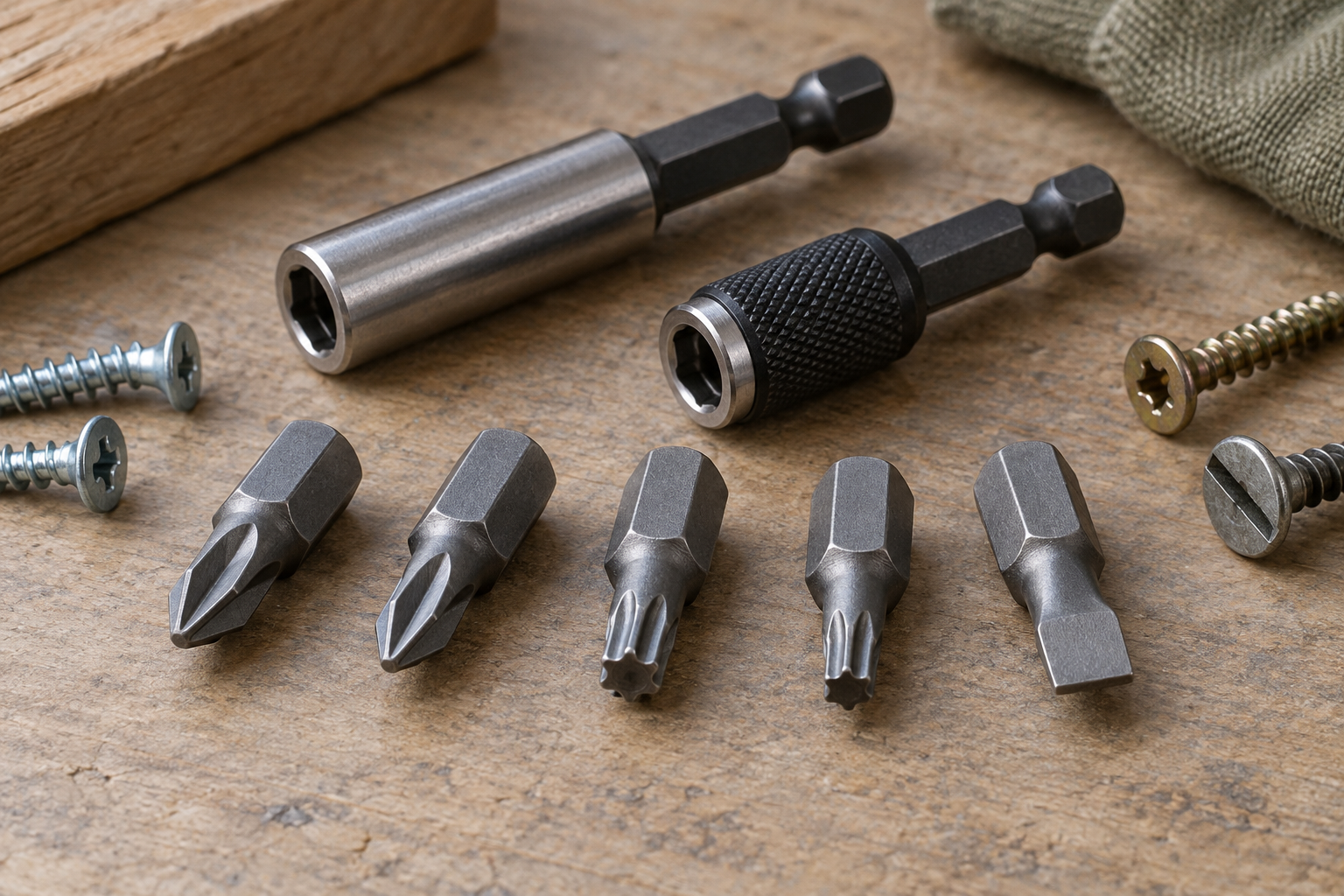
A magnetic bit holder uses a permanent magnet, usually inside a hex-shank sleeve, to attract the screw head and keep the driver bit engaged with it. The magnet does not mechanically grip the screw. Its holding force drops when the screw is stainless steel, coated with a nonmagnetic material, unusually small, or covered in dust and metal filings.
A locking bit holder uses a ball detent, retaining ring, sliding collar, or similar mechanism to mechanically secure the bit. This prevents the bit from pulling out of the holder, but the locking mechanism generally does not clamp the screw head. A standard locking holder can therefore keep your bit attached to the drill while the screw still falls away before it reaches the hole.
Some products combine both features: a locking mechanism for the bit and a magnet or sleeve for the screw. Those combination holders are often the best setup for overhead work, but they cost more and can be bulkier than a basic magnetic holder.
Which Retains Screws Better Overhead?
If the comparison is strictly about retaining the screw, a magnetic holder generally performs better than a bare locking holder. The magnet keeps a ferrous screw attached to the bit as you position it. A locking holder without screw retention offers little protection against a screw sliding off the driver tip.
That advantage has limits. A typical magnetic holder may hold a small steel screw securely enough while you move it horizontally, but the connection can break when you shake the tool, start the screw at an angle, or encounter a hard knot in wood. A screw that stays attached by magnetism at rest may still drop after the driver applies torque.
For overhead fastening, the most reliable arrangement is a locking magnetic bit holder with an impact-rated design. The lock prevents bit loss, and the magnet provides basic screw retention. For larger screws or work above finished floors, add a retaining sleeve rather than trusting the magnet alone.
| Feature | Magnetic bit holder | Locking bit holder |
|---|---|---|
| Holds the bit in the holder | Usually adequate, but may release with pulling or vibration | Best; mechanical retention prevents accidental bit pullout |
| Holds a steel screw overhead | Yes, if the screw is ferrous and the magnet is strong | Not usually, unless it also has a magnet or retaining sleeve |
| Nonmagnetic stainless screws | Poor retention | Poor without a sleeve or special screw-gripping tip |
| Fast bit changes | Excellent | Good, though collars can require two-handed operation |
| Resistance to vibration | Fair to good, depending on magnet and fit | Very good for retaining the bit |
| Typical cost | Lower | Moderate to high |
Common Failure Modes Overhead
The most common magnetic-holder failure is not a weak magnet alone. It is poor contact between the magnet, bit, and screw. If the bit is not fully seated, if the holder has collected steel dust, or if the screw head is recessed or painted, the effective pull drops sharply. A magnet also cannot compensate for a bit that does not fit the screw recess.
Another problem is side loading. When the driver is tilted even a few degrees, the screw tries to slide off the bit rather than pull straight away from it. This is particularly noticeable with short Phillips bits and small trim screws. A longer bit does not automatically solve the problem; it can increase leverage and make the screw wobble more.
Locking holders fail differently. The collar can stick from dust, the detent ball can wear, or the bit can remain captured while the screw falls during positioning. Some low-quality holders have enough play that the bit wobbles under load. That wobble can cam the driver out of a Phillips or Pozidriv recess and damage the screw head.
For impact drivers, use an impact-rated locking bit holder. Standard chrome or drill-only holders can crack under repeated impact blows. Even an impact-rated holder is a wear item: replace it when the bit has noticeable radial play, the collar no longer stays closed, or bits fall out during normal use.
Choose by the Job
Buy a basic magnetic holder when you are driving common carbon-steel screws into wood, working at modest height, and can tolerate occasionally picking up a dropped screw. It is the sensible choice for shelves, framing repairs, drywall backing, and short installation jobs. A magnetic impact bit holder is inexpensive and usually gives the best convenience-per-dollar.
Choose a locking holder when bit retention is the main issue: changing between bits on a ladder, using long bits, driving through a metal frame, or working where a bit falling out could damage a finished surface. It is also useful when your bits have different shank lengths or when you frequently pull the tool away from the work with the bit still engaged.
For overhead screws, use a holder with a sliding sleeve when the screw must remain attached through positioning and starting. A screw-retaining bit holder sleeve physically surrounds the screw and is more dependable than magnetism for nonmagnetic fasteners. The trade-off is reduced visibility and access in tight corners.
Best Practice for Reliable Overhead Driving
Start with the right bit size and a clean, undamaged screw. Insert the bit fully, then test retention by holding the driver downward and giving it a gentle shake before raising it overhead. Keep the driver square to the fastener for the first few turns; an angled start is where magnetic retention most often fails.
For screws longer than about 2 inches, heavy structural screws, or work over glass, vehicles, or finished flooring, do not rely on a magnet alone. Use a retaining sleeve, a dedicated screw-gripping bit, or pre-position the screw by hand. The extra few seconds are cheaper than a dropped fastener, a damaged surface, or a stripped head.
The practical verdict is straightforward: a magnetic holder retains ordinary steel screws better than a locking holder by itself. A locking holder retains the bit better. If overhead reliability is the priority, buy a combined locking-and-magnetic holder or use a locking holder with a proper screw-retaining sleeve.