What's inside
As an Amazon Associate I earn from qualifying purchases. This post may contain affiliate links at no extra cost to you.
Our Top Picks
 BOSCH BSPE6D 12-Piece Assorted Set Spiral Flute High-CarbonAssorted10.15 x 1.86 x 8 inches1.24 poundsCheck on Amazon
 19 Piece Easy Out Screw Extractor Set and4.68 x 6.42 x 1.93 inches6.42 x 4.68 x 1.93 inches1.08 poundsCheck on Amazon

What works for a broken fastener in hardwood
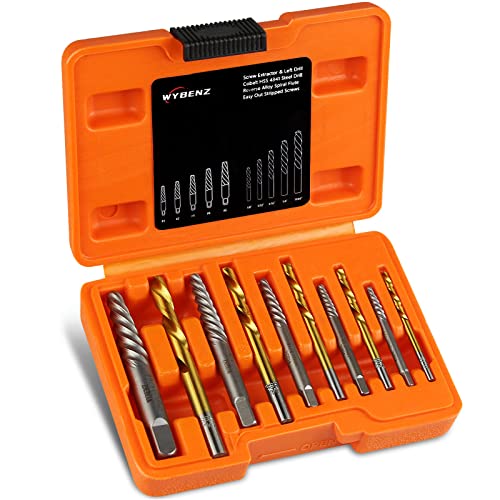
For a screw broken off in a board, a small left-hand drill bit is often a better first purchase than a spiral screw extractor. It may catch the screw and turn it out while drilling, and it removes less surrounding wood if you center it carefully. A spiral extractor is useful when the fastener is larger, the left-hand bit does not bite, or you need more gripping force. Neither tool is a guarantee: hardened screws, badly off-center breaks, and screws driven deep into dense wood can defeat both.
For typical woodworking screws roughly 1/8 to 1/4 inch in diameter, look for a set with clearly stated drill-bit sizes and extractor sizes, plus a small pilot-bit option. Avoid choosing a set based only on how many pieces it contains. A dozen extractors are not helpful if none suits the screw you have.
As an Amazon Associate we earn from qualifying purchases at no extra cost to you.


Extractor sets compared by job
| Option | Best use | Advantages | Main drawback |
|---|---|---|---|
| Left-hand drill-bit set | Small or medium screws with an accessible, centered break | Can loosen the screw during drilling; often leaves a cleaner hole | May skate on a hard screw, and bits can break if pushed or run too fast |
| Spiral screw-extractor set | Fasteners with a drilled pilot hole and enough exposed material to grip | Strong bite and useful across several screw sizes | Can expand the screw against the wood; brittle extractors can snap |
| Screw-removal pliers | A screw stub protruding above the surface | Simple, quick, and no pilot hole needed | Cannot reach a flush or recessed break; may mark the wood |
| Drill-out and plug repair | Seized, stripped, or badly damaged fasteners where appearance matters | Reliable fallback; damage can be hidden with a fitted plug | More work and a larger repair area |
For a general-purpose kit, compare left-hand drill-bit sets with spiral screw-extractor sets. Check that the included pilot bit is smaller than the screw’s core diameter, not its outside thread diameter. If the kit gives no sizing chart, it is difficult to match tools safely.
What to check before buying
Look for extractors sized for the fasteners you actually use, preferably with a chart linking each extractor to a pilot-hole diameter. Small screws need small bits: a pilot hole that is too large leaves the extractor with little metal to engage, while one that is too small may keep the extractor from biting. For a common 1/4-inch wood screw, the correct pilot size depends on its core and the set’s extractor design; follow the kit’s chart rather than guessing from the screw’s outside diameter.
Material and storage matter, but do not treat a “titanium” finish as proof that an extractor is unbreakable. Extractors are hard and brittle by design. A steel case or labeled holder is useful because it keeps small sizes from disappearing, but a cheap set is adequate for occasional repairs if its sizes fit your fasteners and its bits cut cleanly. For frequent work, buy a set with replacement bits available rather than replacing an entire assortment after one dull bit.
How to remove the screw without damaging the board
First, stop driving the screw. Remove nearby hardware and support the board so it cannot move. If the screw is proud of the surface, try locking pliers or screw-removal pliers before drilling. Grip low and turn slowly counterclockwise. This is often the least damaging method, though the jaws can crush fibers around the hole.
For a flush or recessed break, mark the center with a nail set or sharp awl. A drill guide, drill-press setup, or simple block with a perpendicular hole helps keep the bit straight. Start with a small left-hand bit, commonly around 1/16 to 1/8 inch for a small screw, and drill slowly in reverse. Use light pressure; if the bit heats, wanders, or produces no chips, stop and reassess rather than forcing it.
If the screw does not turn, switch to the kit’s specified pilot bit and drill to the recommended depth. Keep the hole centered in the metal. Insert the extractor and turn it counterclockwise by hand with a tap wrench or small adjustable wrench. Do not use an impact driver. If the extractor flexes, slips, or binds hard, back it out and clear chips. Excess force can snap it off, and a hardened extractor broken inside the screw is much harder to drill than the original fastener.
Hardwood-specific risks and trade-offs
Hard maple, oak, and other dense woods hold screws tightly. That makes a spiral extractor’s wedge action risky: as it bites, it can press the screw outward against the wood and increase the friction. A left-hand bit is therefore a sensible first step when there is room to drill accurately. If the fastener is rusted, glued, or driven into a knot, extraction may fail even with a good kit.
Protect the surface with masking tape, and keep the drill square. A bit that wanders can enlarge the opening or cut into the surrounding grain. If the screw is close to an edge, stop before a large extractor hole splits the board. For a visible surface, removing a little material with a drill and fitting a matching wood plug may give a better result than repeated attempts to save every fiber.
When another method is the better buy
If the screw has a substantial stub above the wood, screw-removal pliers may be faster and safer than drilling. For a screw that is flush, badly off-center, or snapped below the surface, a drill guide and plug-cutter approach is a practical fallback when the board’s finish matters. It removes more wood, but lets you replace the damaged area cleanly.
Choose a left-hand-bit set for occasional, small fasteners and careful work. Add a spiral extractor set when you regularly encounter larger screws or need a stronger bite. A basic, correctly sized set is enough for most home repairs; spending more makes sense mainly when you need a wider size range, better bit availability, or more frequent use.