
What's inside
As an Amazon Associate I earn from qualifying purchases. This post may contain affiliate links at no extra cost to you.
Depth control is where a large plunge router either feels precise or becomes frustrating. Both the Bosch MRP23EVS and Makita RP2301FC are powerful 15-amp routers with electronic speed control, soft start, and 1/2-inch collets. Both can handle deep mortises, wide dados, template work, and large panel cuts. The important difference is how easily you can set, lock, and repeat a depth—not the horsepower number on the label.
As an Amazon Associate we earn from qualifying purchases at no extra cost to you.
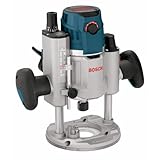


Our Top Picks
Quick verdict
The Bosch MRP23EVS has the more convenient depth-control system for most users. Its plunge mechanism combines a standard turret stop with a microfine adjustment, and its trigger is built into the right handle. You can make a rough setting, lock the plunge depth, and then fine-tune it without repeatedly unlocking and resetting the router.
The Makita RP2301FC is the better choice if you prefer a traditional, very solid plunge router with excellent visibility and a broad, stable base. Its depth stop is accurate and dependable, but fine adjustments are more manual. It is particularly good for repeated work once you have established a reliable setup method.
| Feature | Bosch MRP23EVS | Makita RP2301FC |
|---|---|---|
| Motor | 15 amps, 3.25 peak horsepower | 15 amps, 3.25 peak horsepower |
| Speed range | 8,000–25,000 rpm | 9,000–22,000 rpm |
| Plunge depth | Up to about 3-5/8 inches | Up to about 2-3/4 inches |
| Collet capacity | 1/2 inch and 1/4 inch | 1/2 inch and 1/4 inch |
| Fine depth adjustment | Built-in microfine adjustment | Manual depth-stop adjustment |
| Switch location | Trigger in the handle | Switch on the motor housing |
| Base style | Plunge base with adjustable sub-base | Large plunge base with clear sightlines |
Bosch MRP23EVS depth control
The Bosch’s main advantage is the microfine adjustment built into the plunge mechanism. After setting the turret and coarse depth stop, you can turn the fine-adjustment control to move the bit in small increments. That is useful when fitting a hinge mortise, dialing in a template cut, or sneaking up on the final depth of a dado.
Its advertised plunge range is roughly 3-5/8 inches, which gives it more travel than the Makita. That extra capacity is not a license to make a single deep cut. A 1/2-inch bit cutting 1-1/2 inches deep in hardwood can overload either router, especially if you feed too slowly or allow chips to pack around the bit. Make several passes, usually no more than 1/4 to 3/8 inch at a time for demanding work.
The trigger in the handle is convenient when lowering the router. You can keep both hands on the handles and start or stop the motor without reaching across the housing. The drawback is that the trigger and lock arrangement can feel busy until you develop a consistent grip. Always confirm that the plunge lock is fully engaged before beginning a cut. If it is only partly locked, vibration can let the depth change during the pass.
Bosch’s fine adjustment is most helpful for one-off fitting jobs. It does not eliminate the need to verify depth with a rule or test cut. The scale is useful for setup, but a router’s actual cut depth also depends on bit length, collet seating, base flatness, and whether the workpiece is supported at the same height as the reference surface.
Makita RP2301FC depth control
The Makita uses a conventional plunge system with a depth rod, turret stop, and locking mechanism. It lacks the Bosch’s built-in microfine control, so changing depth by a very small amount usually means loosening the depth-stop hardware, turning the adjustment, and retightening it. That takes longer, but the system is uncomplicated and robust.
For repeated production work, the Makita’s setup is not a serious limitation. Set the depth with a test piece, lock the rod securely, and use the turret for staged passes. If you need several identical cuts, a fixed jig or router table-style stop will usually contribute more repeatability than a more elaborate adjustment mechanism.
The Makita has approximately 2-3/4 inches of plunge travel. That is enough for most cabinet, furniture, and general woodworking tasks. It can be a limitation with unusually thick templates, deep pattern cuts, or work where the bit must retract fully while a tall guide bushing remains installed. Check the required cutting depth before buying rather than assuming all full-size plunge routers have the same travel.
The Makita’s large base feels planted, and the clear lower area gives a good view of the bit and layout line. That matters when the router is moving around a template or starting inside a panel. The downside is the router’s weight. At roughly 13 pounds, either machine becomes tiring during long freehand passes, and fatigue makes maintaining a steady feed rate harder.
Which router is more accurate?
For fine depth changes, the Bosch wins. Its microfine adjustment lets you correct a cut without disturbing the main setting. That is a practical advantage when a joint is just slightly too shallow. The Bosch is also the better fit for users who frequently switch between several precise depths.
For repeatability, the difference is smaller. Both routers can hold a setting well when the depth lock is properly tightened and the base is kept clean. The Makita’s simpler system has fewer adjustment parts to confuse a new user. The Bosch’s extra mechanism is useful, but it adds another control that must be locked and checked.
Neither router should be judged by scale markings alone. Make a test cut in scrap, measure with a depth gauge or caliper, and adjust from there. A common failure mode is measuring from the router base to the tip of the bit while the bit is not fully seated in the collet. Leave roughly 1/8 inch of clearance at the bottom of the collet and tighten the nut firmly; a bit that slips can suddenly cut deeper and damage both work and router.
Which one should you buy?
Choose the Bosch MRP23EVS if depth fitting is a major part of your work, you want the greatest plunge range, or you value a handle-mounted trigger. It is the stronger choice for hinge mortises, sign templates, inlay work, and jobs where you repeatedly make small depth corrections. Pair it with a good set of 1/2-inch woodworking router bits rather than relying on the router’s power to compensate for a dull cutter.
Choose the Makita RP2301FC if you want a straightforward, highly stable plunge router and most of your work uses established depths. It is a particularly sensible buy when the Makita is meaningfully cheaper. The missing microfine adjustment is inconvenient, not a deal-breaker, for dados, rabbets, edge profiles, and template work set up with test cuts.
Whichever model you choose, budget for dust collection. A shop vacuum and a suitable router dust-collection attachment make depth lines easier to see and reduce chip buildup around the plunge mechanism. Clean the columns and depth-stop hardware regularly; dust on those surfaces can make a precise setting feel inconsistent.
The practical choice
The Bosch has better depth control because its microfine adjustment solves a real problem: making small, controlled changes after the rough setting is locked. The Makita remains an excellent full-size plunge router, and its conventional adjustment is adequate for most woodworking. If the price difference is large and your work is repetitive rather than precision-fitting, buy the Makita. If you regularly sneak up on exact depths, the Bosch’s adjustment system will repay the extra cost in time and fewer test-and-error cycles.