What's inside
As an Amazon Associate I earn from qualifying purchases. This post may contain affiliate links at no extra cost to you.
The short answer
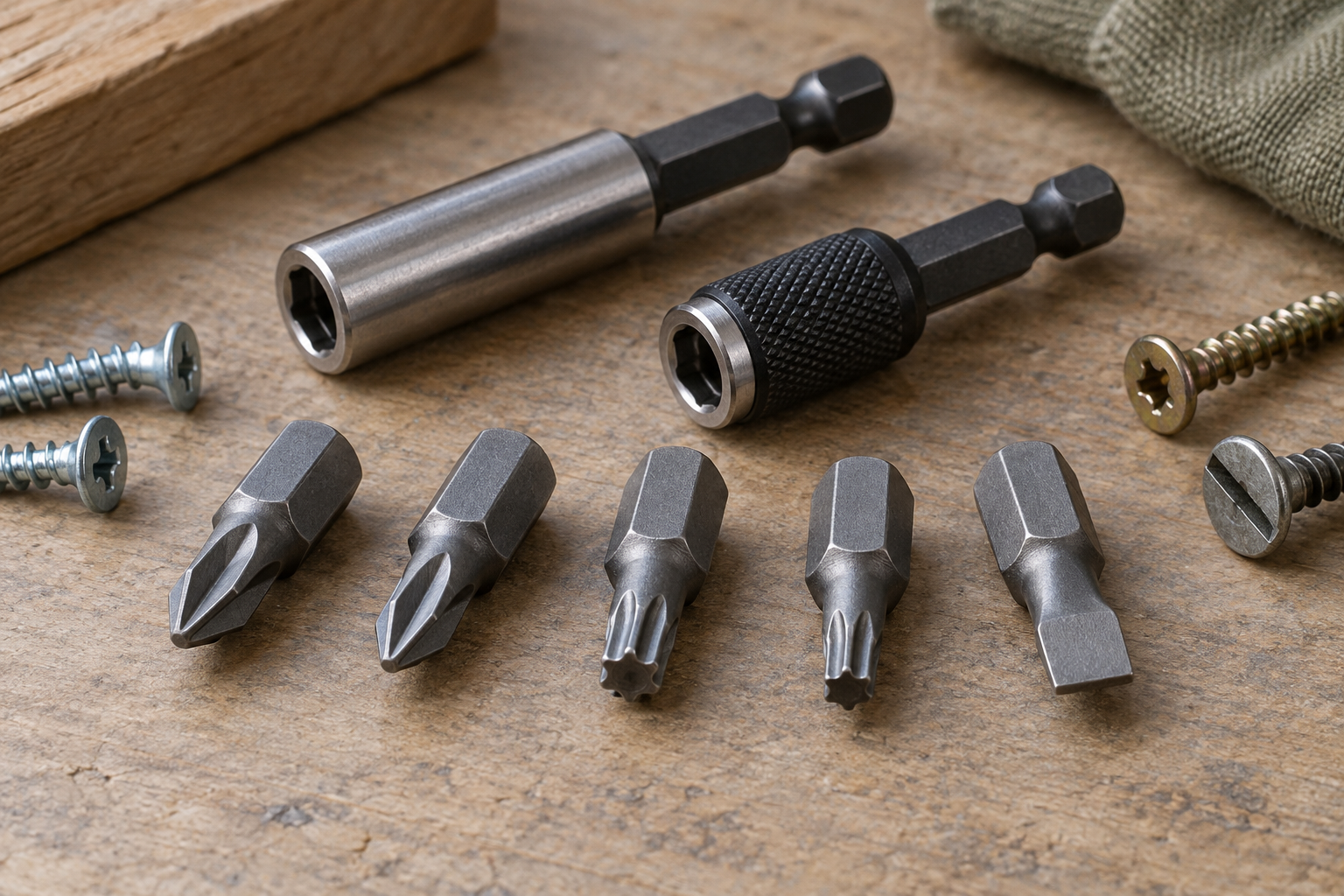
Phillips and Pozidriv bits look similar, but they are not interchangeable. A Phillips bit has four main driving surfaces and a tapered shape. A Pozidriv bit adds four smaller ribs between the main surfaces and has a squarer profile. Those differences help a correctly matched Pozidriv bit hold its screw more securely, especially under higher torque.
To avoid stripping a fastener, match the bit to the screw recess, choose the right size, and keep the driver straight and firmly seated. If you are working with ordinary Phillips screws, a Phillips bit is the right choice; switching to Pozidriv will not improve grip. If the screws are Pozidriv, using Phillips is a common cause of cam-out—the bit climbing out of the recess and damaging it.
As an Amazon Associate we earn from qualifying purchases at no extra cost to you.


How to tell them apart
Look closely at the screw head. A Phillips recess has one simple cross. A Pozidriv recess also has a cross, but usually shows four additional, smaller marks between the arms. These extra ribs are the easiest visual clue. Pozidriv screws and bits are commonly marked “PZ,” while Phillips parts may be marked “PH.”
Do not rely on the screw’s country of origin or appearance from a distance. Lighting, paint, dirt and wear can hide the fine ribs. Brush out the recess and inspect it under good light. If the bit rocks or sits high instead of dropping fully into the head, stop and check the type and size before applying power.
Phillips vs Pozidriv at a glance
| Feature | Phillips | Pozidriv |
|---|---|---|
| Visible recess | One cross | Cross plus four smaller ribs |
| Common bit marking | PH | PZ |
| Best fit | Phillips screw heads | Pozidriv screw heads |
| Typical behavior under excess torque | More likely to cam out | Better engagement when correctly matched |
| Interchangeable? | No. A near fit is not a proper fit. | |
Neither type is immune to stripping. A worn bit, wrong size, angled approach or excessive torque can damage either recess. Pozidriv’s added contact surfaces help only when the bit fits the screw properly.
Choose the right type and size
Use the marking as a guide: PH for Phillips and PZ for Pozidriv. Within each family, size matters. Common sizes include PH1, PH2 and PH3, and PZ1, PZ2 and PZ3; the right one depends on the screw head, not just the screw’s overall length. PH2 and PZ2 are frequent choices for general-purpose screws, but they are not substitutes for each other.
Before driving a batch, test one screw by hand or at low speed. The bit should reach the bottom of the recess, sit squarely and have very little side-to-side movement. If it wobbles, slips or contacts only the edges, try the correct type or a different size. For mixed household jobs, a bit set that includes both PH and PZ sizes is more useful than a large set containing only one style.
Drive with control
Set the bit straight into the screw and press firmly along the screw’s axis. Start slowly so the bit seats before the driver builds speed. When using a drill or impact driver, begin with a low clutch setting or reduced speed, then increase only if needed. A typical cordless drill may offer around 15–20 clutch positions, but the numbers are not standardized; test the setting on scrap or an unseen fastener.
Stop if the bit begins to climb out, chatter or chew the recess. More trigger pressure usually makes the damage worse. Back the screw out, clear debris from the head and inspect the bit tip. Rounded or chipped edges lose contact and should be replaced. For repeated fastening, a fresh, correctly sized bit is a cheap fix compared with removing a damaged screw.
Impact drivers can drive screws quickly, but their sharp bursts of torque can strip a small or soft screw before you can react. Use a suitable impact-rated bit and moderate trigger control; impact rating does not make a bit or screw head impossible to damage. For delicate assembly, a regular drill with a clutch or a manual screwdriver gives more control.
Common mistakes that strip screw heads
The most common mistake is putting a PH bit into a PZ screw, or the reverse. It may feel as if the bit fits, but the contact points do not line up. The bit can twist against the edges and round them off, sometimes in a single high-torque drive. Other frequent causes include using the wrong size, driving at an angle, reusing a worn bit and trying to force a screw through a pilot hole that is too small.
In hardwood or near the end of a board, drill a pilot hole sized for the screw’s core rather than its full outside diameter. The exact pilot size depends on the screw and wood; check the screw maker’s guidance or test on offcuts. If a screw stalls, do not keep increasing torque. Back it out, clear the hole, check for a knot or obstruction, and adjust the pilot hole if needed.
For assembling furniture, cabinets or other work with Pozidriv screws, keep a PZ2 bit or screwdriver on hand if that is the marked size. A basic hand driver is often sufficient for a few fasteners; there is no need to buy an impact-driver set for occasional work.
If the recess is already damaged
Stop using the bit that caused the damage. If the recess still has enough shape, try the correct fresh bit with firm downward pressure and low speed. For a slightly rounded head, a hand screwdriver may give better control than a powered driver. If the bit cannot engage, forcing it further can turn a recoverable screw into a harder extraction job; use an appropriate screw extractor or consult a repair professional for a critical fitting.
The practical buying choice is simple: buy bits marked for the screw type you actually use, and keep the sizes that fit your fasteners. Phillips is perfectly adequate for Phillips screws and light, occasional work. Pozidriv is the better match for Pozidriv screws, not a universal upgrade. Correct fit and controlled driving prevent more stripped heads than brand or price alone.