What's inside
As an Amazon Associate I earn from qualifying purchases. This post may contain affiliate links at no extra cost to you.
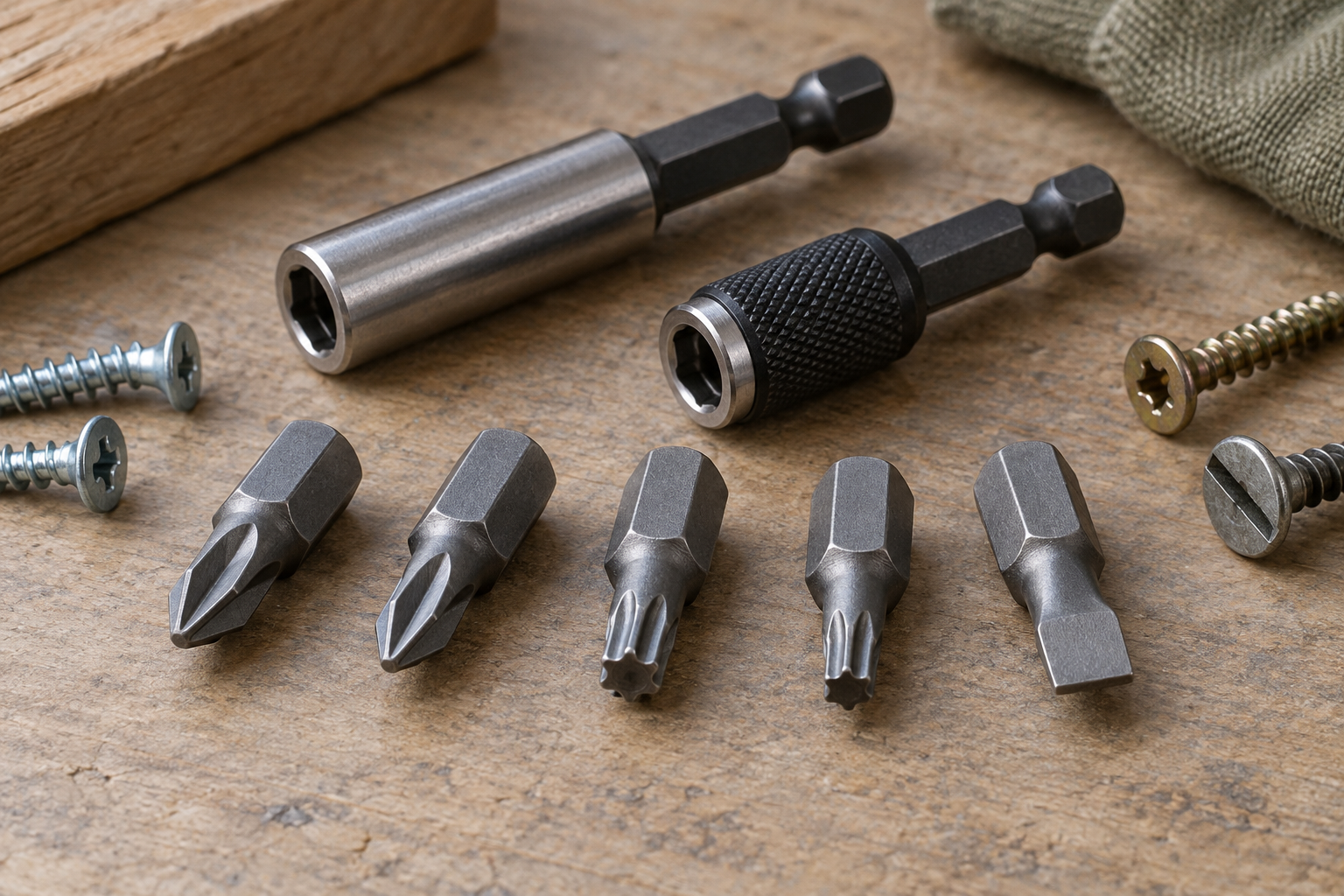
Recessed screws are a reach problem, not just a bit problem. A longer holder can get the bit into a cavity, but extra length also adds flex and makes it easier to wobble, cam out, or snap a bit under impact. Choose for the depth and access angle you actually have, then use the shortest holder that clears the obstruction.
Measure the reach before buying
Measure from the front of the driver’s chuck or collet to the screw head, not just the depth of the recess. Include any lip, bracket, or surrounding material that keeps the driver body away from the screw. A ruler or a scrap of wire can help estimate this distance.
Then check the approach angle. A straight extension works when the driver can point directly at the screw. If the recess is narrow, the screw is near a side wall, or the driver body hits an obstruction, extra length alone will not fix the problem. You may need a compact-angle attachment, a hand screwdriver, or a different way to reach the fastener.
For most jobs, select a holder with a little clearance beyond the measured reach, rather than buying the longest one available. Excess length makes control harder and increases leverage on the bit and screw.
Compare holder types
| Type | Best for | Main trade-off |
|---|---|---|
| Standard magnetic holder | Shallow recesses and routine driving | Limited reach; magnet may not retain some bits or screws securely |
| Long impact-rated holder | Deep, straight access where the driver can line up | More flex and leverage; length can reduce control |
| Locking or retaining holder | Overhead work or screws that must stay on the bit | Usually bulkier; release mechanism can collect debris |
| Right-angle attachment | Restricted side clearance or access around an obstruction | More parts and bulk; not a substitute for a straight long extension |
A locking holder retains the bit; it does not necessarily hold every screw. Magnetic strength varies, and some stainless or coated fasteners are not strongly attracted to a magnet. If screw retention matters, test the actual screw before working overhead.
Check the impact rating and fit
Impact drivers deliver repeated torsional blows. A holder intended only for a drill or hand screwdriver may wear, loosen, or fracture sooner under those pulses. Look for a clear impact-rated designation on the packaging or product listing, especially for frequent use or larger fasteners. Do not assume that a hex shank makes a holder impact-rated.
Most common impact drivers and holders use a 1/4-inch hex connection, but confirm the fit of both ends: the shank must lock into the driver, and the bit must seat properly in the holder. A loose connection can cause wobble, rounded bit tips, or a bit that stays in the screw when you pull the driver away. Keep the holder’s collar clean; sawdust and metal chips can interfere with locking.
For a one-off household repair, a basic impact-rated 1/4-inch bit holder is often enough if it reaches the screw and holds the bit securely. Paying extra for a locking mechanism or premium magnet is hard to justify when you are driving a few screws at bench height.
Balance length against control
Common holders and extensions range from short, compact pieces to lengths of several inches. A 2- to 3-inch extension often clears a modest recess without feeling unwieldy; deeper cabinets, framing pockets, or machinery access may call for 6 inches or more. Treat those figures as starting points, not a rule: the needed length depends on where the driver body must sit.
Long holders bend slightly under load, even when they are well made. That movement can push the bit off-center, particularly when starting a screw or driving into hard material. It can also make a small screw harder to keep seated. For a deep screw, hold the driver in line with the fastener, start at low speed, and apply steady forward pressure. Avoid leaning sideways on the extension to correct a poor angle.
If you need more than one extension to reach, pause and reassess. Stacking extensions increases play and makes the bit more likely to wobble or cam out. A single longer holder, a different driver position, or a manual tool may give better control.
When the angle matters more than length
A right-angle attachment is useful when a straight driver cannot line up because of a nearby wall, rail, or panel. It changes the direction of the drive; it does not make the tool smaller in every dimension. Check the attachment’s head size against the recess and confirm it is rated for impact-driver use before applying impact force.
For cramped work with small screws, a compact drill or manual right-angle screwdriver may be safer than an impact driver. Impact force can strip a small Phillips or Torx recess quickly, and a larger attachment may not fit even when its output points at the screw. If the screw is already damaged, stop rather than increasing speed; use a suitable extraction method or replace the fastener if the assembly allows it.
For obstructed access, compare impact-rated right-angle attachments with a longer straight holder. Choose the angle attachment only when it solves a real clearance problem, since the added head can itself be too bulky for narrow recesses.
A practical buying checklist
Before ordering, check four things: required reach, available side clearance, impact rating, and how securely the holder retains the bit. If you frequently drive screws overhead, prioritize a positive locking sleeve or testable screw retention. If you work in dusty areas, look for a mechanism that is easy to clean and release.
Do not confuse a magnet with a lock. Magnets help keep a bit centered and may retain compatible screws, but they can lose effectiveness with wear or debris. A mechanical retainer is more predictable for keeping the bit in place, though it adds bulk and can make bit changes slower. For ordinary horizontal work, a simple magnetic holder is often cheaper and perfectly adequate.
After fitting the holder, test it at low speed on a scrap piece. Stop if the bit wobbles, the screw head begins to cam out, or the holder heats or loosens. Use a fresh, correctly sized bit: a worn tip can be the cause of failed driving, and a longer holder will only make that failure harder to control.