What's inside
As an Amazon Associate I earn from qualifying purchases. This post may contain affiliate links at no extra cost to you.
Our Top Picks
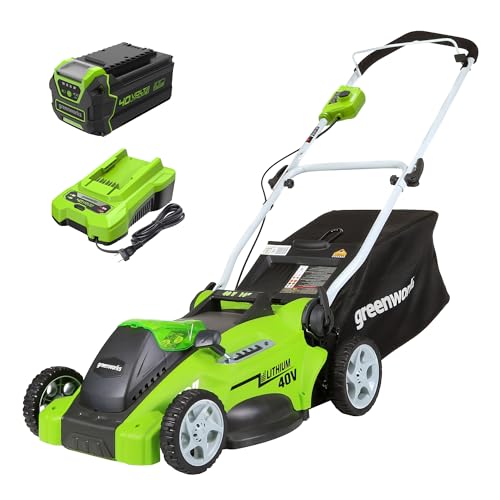 Greenworks 40V 16in Push Lawn Mower16" Cordless (4.0Ah)50.79 x 18.9 x 38.98 inches37.5 PoundsCheck on Amazon
 Greenworks 60V 21in Self-Propelled Lawn Mower21"SP w/2 x 4.0Ah Batteries68.89 x 25.63 x 42.12 Inches65.04 poundsCheck on Amazon

Best Lawn Mowers for Seniors: Choose by Yard Size and Effort
The best lawn mower for most seniors is a lightweight, self-propelled cordless model with a simple push-button start, adjustable handle, and battery capacity sized to the yard. For a small, flat lawn, a compact push mower may be easier to turn and store; for slopes or a larger lawn, self-propulsion can reduce pushing effort, provided the controls are comfortable and easy to stop.
“Senior-friendly” does not mean one mower suits everyone. Yard slope, grass thickness, strength, balance, storage space, and comfort with charging batteries all matter. The figures below are typical ranges, not guaranteed specifications: exact weight, runtime, and cutting width vary by model and battery.
As an Amazon Associate we earn from qualifying purchases at no extra cost to you.


Quick comparison by situation
| Mower type | Typical weight | Typical cutting width | Typical runtime or use | Best fit |
|---|---|---|---|---|
| Compact cordless push mower | 25–40 lb | 14–17 in | About 20–40 minutes per charge | Small, mostly flat lawns; limited storage |
| Self-propelled cordless mower | 45–75 lb | 18–22 in | About 25–60 minutes per charge | Medium lawns, slopes, or users who want help moving the mower |
| Lightweight corded electric mower | 25–45 lb | 14–20 in | Continuous while plugged in | Small lawns with an accessible outlet and few cord obstacles |
| Gas push mower | 55–85 lb | 20–22 in | Typically 30–60 minutes per tank, depending on conditions | Longer mowing sessions where battery charging is inconvenient |
Runtime varies with grass height and dampness, blade condition, drive speed, and whether the mower is self-propelled. Treat the upper end as an optimistic estimate rather than a promise.
Which mower makes sense for your yard?
Small, level lawn: prioritize low weight and easy storage
A compact cordless push mower is often the simplest choice for a modest lawn. It has no starter cord or fuel to manage, and many models have a folding handle for storage. A narrow deck is easier to guide around beds and obstacles, though it takes more passes to finish the lawn.
Check the mower’s weight as listed with the battery installed. Also check how it folds and whether you can lift it into a shed or over a step. A mower that is light to push can still be awkward to carry.
Slopes or a larger lawn: consider self-propulsion, not just a wider deck
A self-propelled cordless mower can move forward under its own power, reducing the force needed to push it. Look for a variable-speed control that is reachable without changing your grip, and confirm that the drive stops when you release its control. Self-propulsion adds weight and battery demand, so it is not automatically the easiest option on a small flat lawn.
For slopes, follow the manufacturer’s instructions on mowing direction and terrain limits. Avoid mowing when grass is wet, and do not assume a powered drive makes steep or uneven ground safe.
Limited strength or dexterity: prioritize controls and starting
Battery mowers generally start with a key, button, or button-and-bail sequence rather than a pull cord. Before buying, inspect the control layout: safety steps should be clear, the bail should not require a painful grip, and the speed control should be easy to reach. If possible, have the intended user handle the mower in person before purchase.
Small shed or no convenient charging outlet: check ownership logistics
Measure the folded mower, not just its cutting width. Confirm there is room to store the battery indoors in the temperature range specified by its manufacturer. A corded mower avoids runtime limits but requires managing a long cord around the cutting path; a gas mower avoids charging but needs fuel, oil checks, and seasonal upkeep.
What to compare before buying
- Weight and balance: Compare ready-to-mow weight, including the battery and grass bag. A balanced mower is easier to turn than one that feels front- or rear-heavy.
- Handle fit: Look for multiple height positions or a telescoping handle. A comfortable grip lets you stand upright without reaching or hunching.
- Starting and stopping: Confirm the start sequence is manageable and that releasing the safety control stops the blade. Read the manual before first use.
- Noise: Cordless and corded electric mowers are generally quieter than gas models, but they are not silent. Wear hearing protection if the manufacturer recommends it or the sound is uncomfortable.
- Battery system: Check whether the battery and charger are included, the replacement battery cost, charging time, and compatibility with other tools you own. Runtime claims may use ideal conditions.
- Cutting and collection: A bag can reduce clippings on the lawn but adds weight when full. Side discharge or mulching may avoid lifting a heavy bag; use the method recommended for your grass and mower.
- Storage: Check folding-handle dimensions and whether the mower can be stored upright. Do not store it in a position the manual prohibits.
Estimate battery coverage before choosing a deck
A rough coverage estimate helps avoid buying a mower that routinely runs out of charge. For example, suppose the lawn is 4,000 square feet, the mower has a 20-inch deck, and your practical mowing speed averages 2 miles per hour. The ideal cutting rate is approximately:
20 inches ÷ 12 × 2 miles per hour × 5,280 feet per mile ÷ 43,560 square feet per acre = about 0.40 acres per hour, or roughly 17,400 square feet per hour.
At that ideal rate, 4,000 square feet would take about 14 minutes. Real mowing takes longer because of turns, obstacles, overlap, and slower progress through thick grass; the drive system also uses battery power. Plan for a substantial margin rather than matching advertised runtime exactly. If the lawn is dense, hilly, or divided into sections, a second compatible battery can be more useful than choosing the widest deck.
Ownership realities: what needs attention
On a cordless mower, the battery gradually loses capacity over time, and blades need periodic sharpening or replacement. Grass buildup beneath the deck can reduce cutting performance; disconnect the battery before cleaning and follow the manual’s instructions for safely tipping or washing the mower. Never reach under the deck while the battery is installed.
Keep the blade sharp and avoid cutting very tall grass in one pass. Taking off too much at once can strain the mower, leave an uneven finish, and shorten runtime. Mow more often during fast growth, and let wet grass dry when practical. After use, clear clippings from the deck and keep the battery and charger dry.
Gas models add recurring tasks: fuel handling, oil checks or changes, air-filter care, spark-plug maintenance, and winter storage. Corded models avoid batteries and fuel, but their extension cord must be suitable for outdoor use and the mower’s requirements. In either case, check the manual before performing maintenance.
Safe operation and a final buying checklist
Wear sturdy, closed-toe shoes and eye protection, clear the lawn of sticks and toys, and keep other people away while mowing. Use the mower on dry ground when possible. Do not bypass safety controls, carry a running mower, or mow on terrain beyond the manufacturer’s limits. If lifting, walking, gripping, or handling a battery feels unsafe, ask someone else to move or maintain the mower rather than forcing the task.
- Choose compact cordless push for a small, flat lawn and easy storage.
- Choose variable-speed self-propelled cordless for a larger or sloped lawn when reducing pushing effort is the priority.
- Choose corded electric for a small lawn with a practical, unobstructed cord route.
- Consider gas only when long sessions and refueling convenience outweigh pull-starting, noise, weight, and maintenance.
Before ordering, compare ready-to-use weight, handle adjustment, control force, folded dimensions, included battery capacity, and replacement-battery availability. Those details are more useful for choosing a manageable mower than the cutting width alone.