What's inside
- Best Pegboard Hooks: Choose by Tool, Length, Wire Gauge, and Board Fit
- Check board fit before choosing hook style
- Pick a hook shape for the tool
- How long should a pegboard hook be?
- Choose wire gauge and capacity for the real load
- Choose by storage situation
- Set up hooks so they stay put
- Durability and common mistakes
- Bottom line
As an Amazon Associate I earn from qualifying purchases. This post may contain affiliate links at no extra cost to you.
Our Top Picks
 INCLY 60 Pack 2/4/6 Inch Black Pegboard Hooks2/4/6inch-60pcs3.85 x 7.44 x 3.35 inchesCheck on Amazon

Best Pegboard Hooks: Choose by Tool, Length, Wire Gauge, and Board Fit
The best pegboard hooks are the ones that match your board’s hole spacing and thickness, then support the tool without wobbling or letting it slip; for most hand tools, start with a 1/4-inch hook set for standard 1-inch-spaced hardboard, and choose hook shape and length around each tool’s balance and handle.
Check board fit before choosing hook style
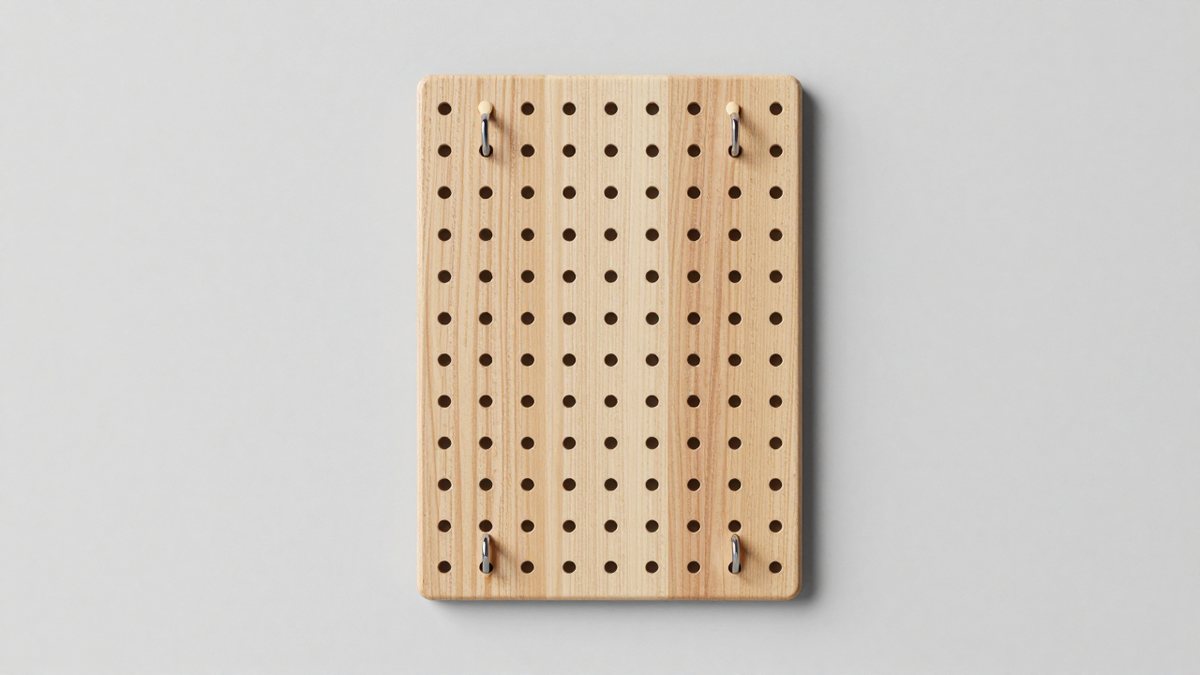
Pegboard hooks are not universally interchangeable. Measure the hole diameter and the distance between hole centers, and check the board thickness. Many common hardboard pegboards use holes spaced 1 inch apart, but hole diameters vary. A board described as “1/4-inch pegboard” may refer to its hole size, not its thickness. Metal and plastic boards can use different hole patterns or proprietary fittings.
As an Amazon Associate we earn from qualifying purchases at no extra cost to you.


As a quick fit check, insert one hook into an empty hole before buying a large assortment. It should seat fully, sit close to the board, and resist lifting when you pull gently forward. If the retaining prongs are too large for the holes, or the hook rocks loosely, use hardware specified for that board rather than forcing it.
| Common hook or board specification | Typical use or fit | What to verify |
|---|---|---|
| 1/8-inch pegboard hook shank | Light tools and accessories on compatible boards | Hole diameter; do not assume it fits a 1/4-inch-hole board |
| 1/4-inch pegboard hook shank | Common choice for standard hardboard with approximately 1/4-inch holes | Board thickness and hole spacing; many boards use 1-inch centers |
| 1-inch spacing, center to center | Common pegboard grid pattern | Measure between adjacent hole centers, not the edges |
| 2- to 3-inch hook projection | Small hand tools, tape measures, and compact accessories | Tool depth and room to lift it off |
| 4- to 6-inch hook projection | Bulkier tools, clamps, or several items on a double hook | Lever action increases with projection; secure the hook against lift-out |
| Approximately 2- to 4-mm wire | Light- to medium-duty hooks, depending on material and design | Manufacturer’s load rating and how the load is distributed |
These are practical selection ranges, not universal load ratings. Wire diameter alone does not tell you how much a hook can hold: steel type, bends, coating, shank design, board condition, and mounting all matter. Follow the hook maker’s rating and the pegboard manufacturer’s limits.
Pick a hook shape for the tool
- Straight single hooks: A good basic choice for pliers, screwdrivers, and tools with a hanging hole or a handle that naturally rests behind the hook. Short projections keep frequently used tools close to the board.
- Double-prong hooks: The two contact points reduce side-to-side rotation, making them more stable for heavier or wider tools. They also help keep a hook from twisting as an item is removed.
- Angled hooks: The raised or sloped end helps retain items that might slide off a straight hook. Choose one for rolls, packaged accessories, or tools with smooth surfaces.
- Curved and J-hooks: The curve provides a cradle for items such as extension cords, small hoses, or handled tools. Match the curve to the item; a hook that is too wide may let it swing or slip out.
- Loop and U-hooks: Useful for grouped items, such as several hex keys or a short bundle of cable. They can make individual items slower to remove, so reserve them for gear stored together.
- Specialty holders and bins: Drill, wrench, and screwdriver holders organize tools more securely than a single wire hook. Check whether the holder uses standard pegboard shanks or a board-specific mounting system.
How long should a pegboard hook be?
Choose the shortest projection that holds the tool securely and leaves enough clearance to lift it off. A 2- to 3-inch hook often works for compact hand tools; a 4- to 6-inch projection may be more useful for a bulky item or a pair of tools. Longer is not automatically better: it takes up more room, can make tools swing, and puts more leverage on the hook and board.
For a long tool such as a level or handsaw, use two spaced hooks or a purpose-built holder rather than balancing it on one narrow hook. Support the tool at points that prevent rotation, and leave enough vertical clearance to remove it without catching neighboring handles.
Choose wire gauge and capacity for the real load
Thicker wire generally resists bending better than thinner wire of the same material and shape, but a thick hook can still fail if its shank does not fit properly or the board is weak. For light items such as measuring tapes and small screwdrivers, a light-gauge hook may be sufficient. For heavier pliers, clamps, or multiple tools, favor a sturdier, double-prong design with a published capacity.
Think about how the load reaches the board. A tool far out on a long hook creates more leverage than the same weight close to the board. Keep heavy items near the board, distribute them across several holes, and avoid loading a single small area with multiple dense tools. If the board bows, the holes deform, or the hook pulls forward, reduce the load and improve the board’s support before using it again.
Choose by storage situation
| Your situation | Suitable starting choice | Why |
|---|---|---|
| Budget setup for light, varied hand tools | Basic compatible single hooks, mostly 2 to 3 inches long | Low cost and flexible placement; check fit and avoid overloading thin hooks |
| Tools used every day | Double-prong or locking hooks for frequently removed items | Less rotation and accidental lift-out during repeated use |
| Small workshop with limited wall space | Short hooks, compact holders, and deliberate grouping | Reduces projection and preserves access between tools |
| Large or awkward tools | Longer, rated hooks or purpose-built two-point holders | Supports the tool more evenly; reduces swinging and twisting |
| Uncertain board pattern or thickness | Buy a small sample of the matching hook type first | A physical fit check avoids a box of incompatible hardware |
Set up hooks so they stay put
- Measure the board. Check hole diameter, center-to-center spacing, and board thickness. Identify whether it is hardboard, metal, or plastic.
- Sort tools by weight and shape. Place heavier items close to the board, and use a holder or two support points for long or awkward tools.
- Test each hook. Install it fully and pull gently forward. If it rocks, lifts out, or does not sit flat, do not use it for a loaded tool.
- Plan removal clearance. Leave enough space to lift handles off without striking adjacent tools. Arrange frequently used tools where they are easy to reach.
- Recheck the setup. Look for bent wire, loose retaining clips, enlarged holes, or a board that is bowing. Replace damaged hooks and address the board or wall support rather than simply adding a stronger hook.
Durability and common mistakes
On basic steel hooks, the first problems are often a bent tip, worn or chipped coating, and loose fit—not a clean break. Repeatedly lifting a hook out with the tool can enlarge pegboard holes, particularly in thin or unsupported hardboard. Retaining clips can also loosen, so check them periodically if tools are moved often.
Keep hooks dry and wipe away dust, oil, and metal shavings before they accumulate around tools. Replace hooks with visible corrosion or distortion, and avoid bending a hook back into shape; the damaged area may be weaker afterward. Common mistakes include buying by shank size alone, using a long hook for a heavy item, hanging a tool from an unstable edge, and treating an assortment’s advertised capacity as the rating for every hook in the pack.
Bottom line
For a dependable pegboard setup, confirm the board pattern first, then match hook shape and projection to the tool. Use short single hooks for compact items, double-prong or rated holders for heavier and frequently handled tools, and two-point support for long gear. A small compatibility test and a sensible load layout matter more than buying the largest assortment.