What's inside
As an Amazon Associate I earn from qualifying purchases. This post may contain affiliate links at no extra cost to you.
Our Top Picks


The best pliers set for beginners is a compact 3- or 4-piece set
For most beginners, the best pliers set for beginners includes 6- or 7-inch combination pliers, 6- or 7-inch long-nose pliers, and 6- or 7-inch diagonal cutters; add 8-inch groove-joint pliers if plumbing or household repairs are likely. This covers gripping, reaching, cutting, and basic turning without paying for several tools that do nearly the same job.
Choose comfortable, non-slip handles and a case that keeps each tool in place. For woodworking, pliers are supporting tools, not substitutes for clamps: they help with wire, small hardware, stubborn nails, and adjustments, but their teeth can mark finished wood.
As an Amazon Associate we earn from qualifying purchases at no extra cost to you.


Choose by the work you expect to do
| Your situation | Best starting set | Why it fits |
|---|---|---|
| Occasional home fixes, tight budget | 3-piece: combination, long-nose, diagonal cutters; 6–7 inches each | Covers the most common gripping, access, and cutting tasks without specialty-tool overlap. |
| Woodworking plus general DIY | 4-piece set above plus 8-inch groove-joint pliers | The adjustable jaw helps with larger fittings and hardware, while the smaller tools remain manageable. |
| Frequent repairs or larger hands | 4-piece set with combination pliers around 8 inches and long-nose pliers around 7 inches | Longer handles can improve leverage, though they need more room and may feel tiring for delicate work. |
| Small toolbox or apartment storage | 3-piece set in a compact roll or fitted pouch | It is easier to store and avoids a bulky case filled with tools you may rarely use. |
What each essential type does
Combination pliers: the general-purpose pair
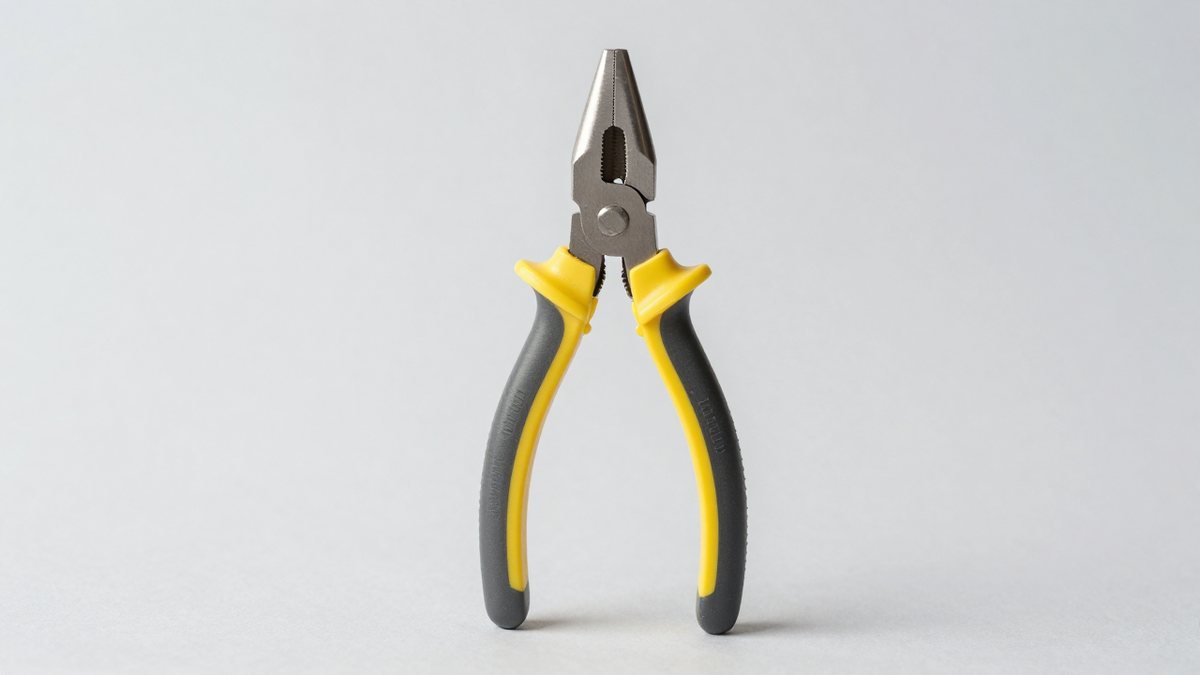
Combination pliers have serrated jaws for holding, a gripping area near the pivot, and cutters close to the hinge. They are useful for bending wire, holding small parts, and pulling light fasteners. A 6- or 7-inch pair is a good first choice: compact enough for a toolbox and easier to control than a heavy 10-inch model.
Long-nose pliers: reach and control
The narrow jaws reach into corners and help position small parts. A 6- or 7-inch size works well for most household and hobby tasks. Longer jaws can reach farther, but they are not stronger simply because they are longer. Avoid twisting hard against the tip; that can misalign or damage the jaws.
Diagonal cutters: clean access for cutting
Diagonal cutters are designed to cut wire and similar small stock, not grip it. A 6- or 7-inch pair is usually a practical size for beginners. Check the maker’s stated cutting capacity and material rating: a cutter intended for soft copper wire may be damaged by hardened steel or nails. Do not assume all cutters can handle the same material.
Groove-joint pliers: useful when larger fittings are involved
The adjustable jaw opening makes 8-inch groove-joint pliers useful for nuts, plumbing fittings, and irregular objects. They are optional for a woodworking-first kit. The teeth can scar polished metal and finished surfaces, so use a protective layer where appropriate and avoid using them as a wrench on delicate hardware.
Compare sizes and practical specifications
The ranges below are useful selection targets, not claims about every set. Actual weight, jaw opening, and cutting limits vary by model; check the manufacturer’s specifications before buying.
| Tool | Useful beginner length | Typical role | What to check |
|---|---|---|---|
| Combination pliers | 6–7 in (152–178 mm) | General gripping, bending, light pulling | Jaw alignment, comfortable pivot action, stated cutting rating |
| Long-nose pliers | 6–7 in (152–178 mm) | Reaching and positioning small parts | Tips meet evenly; serrations are consistent without sharp burrs |
| Diagonal cutters | 6–7 in (152–178 mm) | Cutting suitable wire and small stock | Rated material and capacity; cutting edges close cleanly |
| Groove-joint pliers | 8 in (203 mm) | Adjustable gripping of larger fittings | Secure adjustment positions and a jaw opening suited to your work |
Spend on comfort and fit, not extra pieces
Handles should feel secure without forcing your fingers into an uncomfortable spread. Soft, non-slip grips can improve control, but very thick handles may be awkward for smaller hands. If possible, hold the pliers open and closed before buying, or check return terms. Inspect that the handles do not shift and that the pivot moves smoothly without excessive side play.
For occasional household use, general-market pricing for a basic three-piece set is often around $15–$40; a better-finished set or a four-piece set with groove-joint pliers may fall around $30–$80. Specialty materials, insulated tools, and premium professional lines can cost more. These are broad ranges, not quotes for a specific brand or model.
Do not pay extra for a large set simply because it has more pieces. Sets often add multiple sizes of the same plier type, crimpers, or specialty tools that a beginner may not need. Buy a specific extra only when a real task calls for it.
Build quality, storage, and long-term care
Look for cleanly finished jaws that meet evenly, a pivot that opens smoothly, and cutters with no visible gap when closed. A rust-resistant finish can help, but no finish makes steel immune to corrosion. A pouch or fitted tray is useful if it keeps tools from rubbing together and makes missing pieces obvious; a hard case is convenient but adds bulk.
The cutting edges are often the first part to suffer from misuse. Cutting hardened wire, nails, or material beyond the stated capacity can nick them; once damaged, cutters may leave a ragged cut or fail to sever wire. Dirt and moisture can also make a pivot stiff or encourage rust. Wipe tools dry after use, remove sawdust and grime, and apply a small drop of light machine oil to a stiff joint. Keep cutters closed or covered in storage.
For woodworking, protect finished surfaces from toothed jaws with a scrap of leather, cardboard, or soft wood when the task allows. Do not use pliers as a hammer, pry bar, or substitute for a correctly sized wrench. Those habits can damage the tool, the workpiece, or the fastener.
A simple buying check
- Start with three distinct jobs: general gripping, narrow access, and cutting.
- Choose 6–7-inch tools unless you regularly need extra leverage or reach.
- Confirm cutting limits and jaw openings from the manufacturer, rather than guessing from tool length.
- Prioritize a comfortable grip, aligned jaws, and a secure pivot over a high piece count.
- Add groove-joint pliers only if your projects include fittings or larger objects to grip.
- Choose storage that suits your actual toolbox space and keeps edges protected.
For a woodworking beginner who also wants to handle routine repairs, a well-made 3-piece set is the sensible starting point. Choose a 4-piece set if adjustable gripping is likely to come up; otherwise, put the difference toward better fit, finish, and storage rather than redundant pliers.