What's inside
As an Amazon Associate I earn from qualifying purchases. This post may contain affiliate links at no extra cost to you.
Our Top Picks
 19-Piece Complete Metric Combination Wrench Set in Roll-up19-Piece Metric Set14.1 x 3.6 x 2.7 Inches5.3 poundsCheck on Amazon


Best Metric Wrench Sets: The Right Pick for Your Work
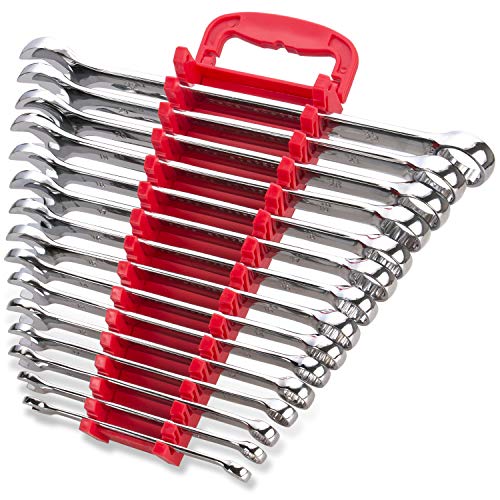
The best metric wrench set for most home mechanics is a 6–19 mm combination set with 12-point box ends, a polished chrome finish, and both standard and ratcheting options if you regularly work in tight spaces. If you buy only one set, prioritize accurate sizing and useful coverage over the largest piece count: a dozen well-chosen sizes are more practical than a bulky kit filled with rarely used extras.
Metric Wrench Sets Compared
These established tool lines illustrate the main trade-offs. Exact set contents, finish, and included sizes vary by package, so confirm the specific listing before buying. Weight is omitted because it varies substantially by set configuration and is not consistently published.
As an Amazon Associate we earn from qualifying purchases at no extra cost to you.


| Set or line | Common coverage | Configuration | Box-end design | Best suited to |
|---|---|---|---|---|
| Tekton combination wrench sets | Common sets cover 6–19 mm; verify the package for skipped sizes | Standard, non-ratcheting combination wrenches | 12-point box end on many sets | Everyday repair and value-focused buyers |
| GearWrench 120XP metric ratcheting combination wrench sets | Common set configurations include 8–19 mm | Ratcheting box end with open end | 120-position ratcheting mechanism; about 3° of swing arc | Fasteners in restricted-swing spaces |
| Wera Joker combination wrench sets | Configurations vary; many cover frequently used midrange sizes | Combination wrench with a retaining feature on applicable models | Model-dependent geometry designed to help retain and engage fasteners | Buyers who value controlled engagement and refined details |
| Stahlwille combination wrench sets | Broad professional ranges; set contents vary | Standard combination wrenches | Available in different profiles and configurations | Frequent professional use and buyers comparing premium tools |
Coverage figures in the table describe common configurations, not every available package. A “6–19 mm” range does not guarantee every integer size is included: sets may skip sizes such as 16 or 18 mm. Check the size list, not just the first and last numbers.
Choose by the Space You Work In
For general home and garage repairs
Choose a standard combination set with sizes roughly 8–19 mm, or 6–19 mm if you also work on smaller hardware. The open end is handy for quick repositioning; the box end offers more contact around a nut or bolt head. A polished chrome finish is easy to wipe clean and offers useful corrosion resistance when tools are stored dry.
Tekton’s conventional combination sets are a sensible place to compare options if you want straightforward, non-ratcheting tools. The deciding point is the actual size list: a more complete set can be worth more than a higher piece count padded with duplicates or accessories you will not use.
For cramped engine bays or machinery
A ratcheting combination set can save time when a nearby panel or hose limits how far you can swing a wrench. GearWrench’s 120XP line uses a fine ratcheting mechanism with approximately 3° of swing arc, which can help in tight access. It is not a substitute for clearance: the ratcheting head may be thicker than a standard box end, and a mechanism can be more vulnerable to grit, impact, or misuse than a solid wrench.
For a fastener that needs high initial force, loosen it with a suitable non-ratcheting wrench or breaker tool when access permits, then use the ratcheting wrench to run it off. Do not use an extension pipe on a wrench or force the ratchet past its intended load.
For a compact kit or occasional use
Buy the sizes you actually encounter rather than chasing a 6–32 mm range. A compact set covering common automotive or household fasteners is easier to carry and store. If your work is occasional and access is open, standard combination wrenches generally offer better simplicity and value than paying extra for ratcheting heads.
What Matters More Than the Piece Count
- Coverage: Count the included sizes and look for gaps. A set that starts at 8 mm may be fine for a vehicle, but unsuitable for small appliance or bicycle work.
- Combination versus ratcheting: A conventional combination wrench has an open end and a fixed box end. A ratcheting combination wrench adds a moving mechanism that speeds repeated turns but usually costs more and needs more care.
- Handle length: Longer handles can provide more leverage, but they need more swing room and may not fit behind brackets. Short or stubby versions solve access problems, not high-torque needs.
- Box-end geometry: A 12-point end engages a fastener at more rotational positions than a 6-point design, making it easier to position in restricted space. A 6-point end can provide more surface contact on compatible hex fasteners. Match the profile to access and fastener condition.
- Finish and corrosion resistance: Chrome-vanadium steel with a plated finish is common. A polished finish cleans easily, but no coating makes a wrench immune to rust if it is put away wet or left in a damp toolbox.
A Quick Coverage Check Before You Buy
Write down the fastener sizes you use most, then compare them with the set’s included list. For example, suppose your repair notes show 10, 12, 13, 14, 17, and 19 mm. A set advertised as 8–19 mm covers your needs only if it actually includes all six sizes. If it skips 16 and 18 mm, that does not matter for this job; if it skips 17 mm, the range label has concealed a problem.
This check also helps decide whether a larger set is worthwhile. If a 20-piece set costs $80 and a 12-piece set costs $55, the larger set’s extra cost is $25. If you expect to use its eight additional sizes just twice a year for five years, that is 80 extra size-uses, or about $0.31 per use. If those sizes will sit unused, the smaller set is the better value. These are illustrative calculations; prices vary by brand, size range, and retailer.
Ownership: Keeping the Set Accurate and Ready
Wrench sets usually fail first at the fastener interface: rounded corners, spread open ends, or damaged ratcheting mechanisms. These problems often start with the wrong size, a wrench that is not fully seated, or using the tool as a hammer or pry bar. Check the fit before applying force, especially on corroded fasteners. If the wrench rocks or slips, stop and find the correct size or a better-fitting tool.
After use, wipe off oil, moisture, and road salt before returning the tools to their rack or case. Keep ratcheting heads free of abrasive grit, and follow the manufacturer’s care guidance rather than flooding the mechanism with an unapproved lubricant. If a ratchet skips or binds, retire it from loaded work until it has been inspected or replaced.
Bottom Line
For a general-purpose kit, choose a conventional metric combination set with verified coverage around 8–19 mm, adding smaller sizes if your work calls for them. Choose a ratcheting set when restricted swing is a frequent problem, and consider a compact or premium lineup when portability or sustained professional use matters more than the lowest upfront cost. The best metric wrench set is the one that includes your actual sizes, fits the space around your fasteners, and can be maintained in the conditions where you work.