What's inside
As an Amazon Associate I earn from qualifying purchases. This post may contain affiliate links at no extra cost to you.
Our Top Picks
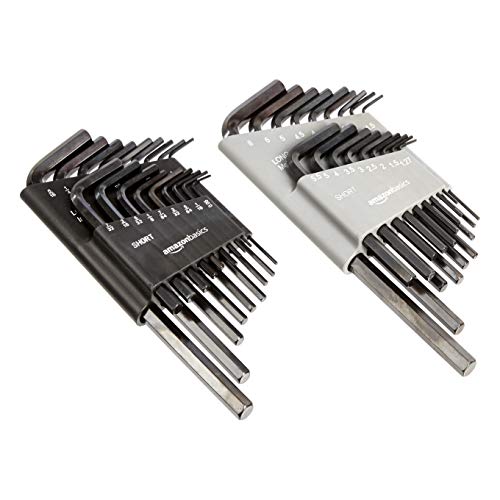 Amazon Basics 36-Piece Allen Wrench/Hex Key Set36-Piece7.4 x 3.39 x 1.65 inches1.2 poundsCheck on Amazon


Best Hex Wrench Sets: The Right Pick Depends on Reach and Size Coverage
The best hex wrench set for most woodworking shops is a metric-and-SAE L-key set with long arms, short-arm access at the opposite end, and a well-organized holder; choose ball ends for frequent angled access, but keep a straight-end key available for stubborn fasteners. That combination handles furniture hardware, jigs, machinery, and imported tools without asking a ball end to do a job it is not suited for.
Compare the Main Set Types
Hex keys are also called Allen keys or hex wrenches. The figures below describe common set formats, not specifications for a particular brand. Exact contents and holder designs vary, so check the size list before buying—especially if you need both measurement systems.
As an Amazon Associate we earn from qualifying purchases at no extra cost to you.



| Set type | Typical size coverage | Typical piece count | Reach and access | Best fit |
|---|---|---|---|---|
| Metric L-key set | 1.5–10 mm, often 9 keys | 8–13 | Long arm reaches recessed screws; short arm gives leverage | Metric machines, hardware, and shop equipment |
| SAE L-key set | 1/16–3/8 in, often 13 keys | 10–15 | Same two-arm advantage; size steps are fractions of an inch | Imperial fasteners and North American equipment |
| Metric-and-SAE L-key sets | Commonly 1.5–10 mm and 1/16–3/8 in | 18–30 | Broad coverage, but requires more storage space | Mixed hardware or a first general-purpose set |
| Folding hex-key set | Often 2–8 mm or 5/64–1/4 in | 7–10 | Compact, but the handle can obstruct access and limits leverage | Travel kits, light adjustments, or limited drawer space |
Choose by the Work You Actually Do
- One system dominates your shop: Buy a complete metric or SAE set rather than carrying unused duplicates. Confirm that it includes the smallest sizes used by your hardware; a gap at the small end can matter more than an extra-large key.
- You work on mixed or unknown equipment: A combination set is the safer first purchase. Keep the two systems clearly separated: a near-fit SAE key in a metric socket, or vice versa, can round the fastener.
- You adjust recessed screws: Favor long-arm keys. The extended leg reaches past rails, brackets, and machine guards, while the short leg can turn a screw in a shallow clearance.
- You work in tight clearances: Short-arm keys—or a set that includes both long and short patterns—can fit where a long leg hits a panel. A compact folding set may be convenient, but its bulky handle can be the obstacle.
- You routinely approach fasteners at an angle: A ball-end set saves time when a straight key cannot line up with the socket. It is a convenience feature, not a replacement for a straight working end.
- You use hex keys only occasionally: A clearly labeled holder and a durable mid-range set are generally more useful than buying specialty geometry you rarely need.
What Matters Beyond the Size List
Long versus short arms
Long arms offer reach and can provide more turning leverage when used at the long end. Short arms are easier to control in shallow spaces and can make a useful handle when the long leg is blocked. Many standard L-keys give you both options in one tool, but the proportions vary. If you often work inside cabinets or close to a machine frame, check whether the short leg will actually clear the obstruction.
Ball ends: useful, with limits
A ball end lets the key engage a hex socket off-axis, often at an angle of roughly 20–30 degrees, depending on the design and fastener. That can make a recessed furniture connector or machine screw much quicker to reach. But the ball contacts the socket differently from a straight hex tip, so it is a poor choice for initially loosening a tight fastener or applying maximum torque. Use the straight end to break it loose or finish tightening; use the ball end for quicker turning once the screw moves freely.
Steel quality and fit
Look for hardened, alloy-steel keys from a reputable tool maker, with accurately formed ends and a consistent finish. Chrome-vanadium and S2 tool steels are common choices; the steel name alone does not guarantee good heat treatment or precise sizing. A well-fitting key should enter fully without rocking. If it slips, stop rather than forcing it: the wrong size, a worn key, or debris in the socket may be responsible.
Storage that helps you find the right key
A holder should identify each size clearly and retain keys when tipped or carried. Hinged or indexed holders make removal easier than a tight one-piece rack, but very loose clips can let keys fall into a toolbox. For a bench set, a stand-up holder can keep sizes visible; for a portable kit, a compact holder that stays closed is more practical. Separate metric and SAE rows reduce the chance of grabbing a near-match.
How to Check Coverage Before You Buy
Do not judge a set by piece count alone. Compare its listed sizes against the fasteners you encounter, and look for gaps rather than just the smallest and largest sizes. For example, a 9-piece metric set spanning 1.5–10 mm may cover common needs, but it does not mean every size between those endpoints is included. Likewise, a large mixed set may contain duplicates in different configurations instead of filling a size gap.
If your machine uses a 5 mm socket, for instance, verify that 5 mm is explicitly listed. If you also service equipment with a 3/16-inch socket, check for that exact SAE size rather than assuming a nearby metric key will work. For a shared shop, write down the sizes already in use and buy for those first; add specialty keys only when a real fastener requires them.
Ownership: What Wears and How to Avoid It
The working ends usually show trouble first: corners round off from repeated high torque, poor fit, or use as a pry tool. Ball ends are especially vulnerable when used to crack a tight fastener loose. Replace a key if its tip is visibly twisted, chipped, or rounded; damaged edges can ruin the fastener socket too.
Keep keys clean and dry, particularly after contact with coolant, glue, or damp shop debris. Wipe them before returning them to the holder so grit does not migrate into fastener sockets. Seat the key fully before turning, match the measurement system, and avoid adding a pipe or other extension for extra leverage. When a fastener resists, clear the socket and confirm the size rather than escalating force.
For occasional furniture and jig adjustments, an inexpensive, clearly labeled set may be enough. For frequent shop maintenance, better-finished alloy-steel keys and a secure holder can justify a moderate investment. General-purpose sets range from budget options in the low tens of dollars to premium sets costing several tens of dollars or more, depending on material, size range, and holder design.
Bottom Line
The best hex key wrench set is the one that matches your fasteners and lets you reach them without compromising fit. For a first shop set, choose both metric and SAE coverage if your equipment is mixed, long-arm L-keys for reach, and a holder that keeps sizes readable. Add ball ends when angled access is a recurring need, but keep straight ends for tight fasteners and final torque.