What's inside
As an Amazon Associate I earn from qualifying purchases. This post may contain affiliate links at no extra cost to you.
The best PS5 controllers top choices in 2026 are the Sony DualSense Edge for all-around customization and comfort, the standard Sony DualSense for casual players who want great ergonomics at a lower price, and the SCUF Reflex Pro and Victrix Pro BFG for competitive players who need rear paddles, instant triggers, and deep remapping.
As an Amazon Associate we earn from qualifying purchases at no extra cost to you.


Our Top Picks
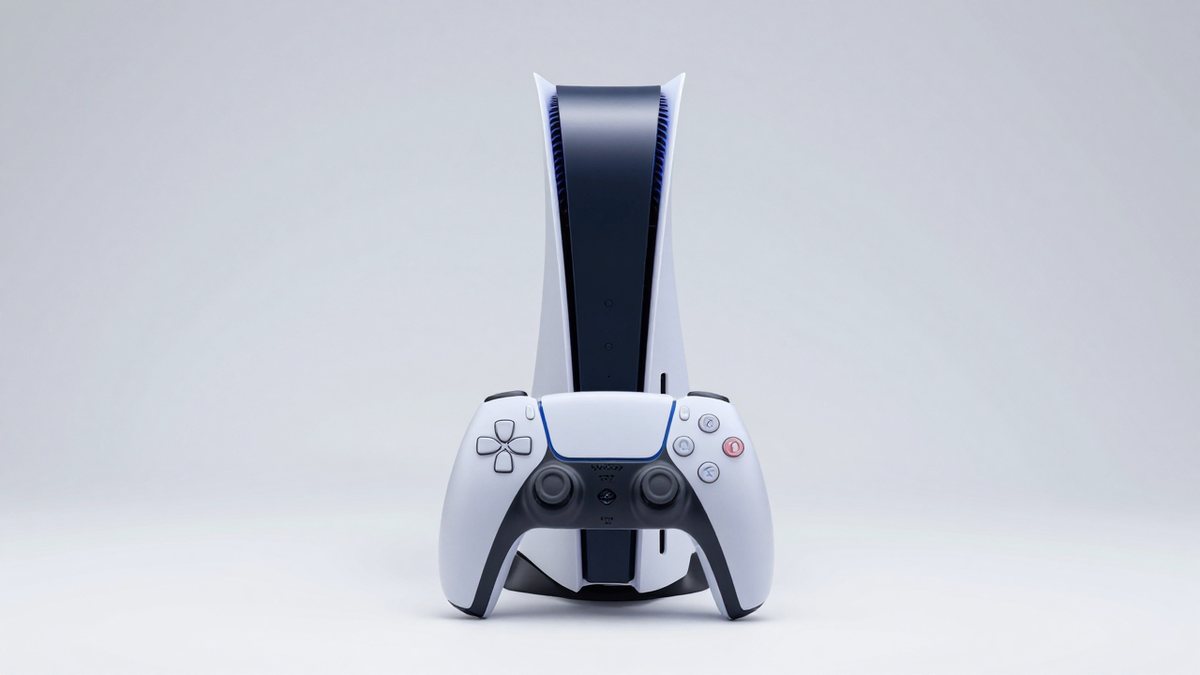
 Playstation 5 DualSense Wireless Controller167.5 cubic inches7.75 x 7.5 x 2.75 inches0.71 poundsCheck on Amazon


Top Picks by Play Style
If you want a quick shortlist before diving into specs, match your play style to these categories:
- Best overall for most players: Sony DualSense Edge — swappable sticks, adjustable triggers, and full PS5 feature support without losing comfort.
- Best value for casual gaming: Standard Sony DualSense Wireless Controller — excellent haptics, adaptive triggers, and balanced ergonomics at the lowest market price.
- Best for competitive FPS: SCUF Reflex Pro — four removable rear paddles, instant trigger option, and performance grip for faster inputs.
- Best modular for fighting and FPS hybrid: Victrix Pro BFG — reversible left module for offset or symmetrical sticks, plus a six-button fight pad module.
- Best for customization without software limits: Nacon Revolution 5 Pro — Hall Effect sticks, trigger blockers, and onboard profile storage.
- Best for wired/PC crossover extra buttons: Razer Wolverine V2 Pro — 6 remappable buttons including 4 rear triggers and 2 bumpers with microswitch face buttons.
Spec and Feature Comparison
Numbers reveal trade-offs that marketing copy hides. Weight affects fatigue, battery dictates session length, and materials change long-term grip.
| Controller | Weight | Battery Life (Rated) | Connectivity | Sticks & Modules | Rear Controls |
|---|---|---|---|---|---|
| Sony DualSense | 280g (9.9 oz) | 12-15 hours | Bluetooth 5.1, USB-C, 3.5mm jack | Standard ALPS analog, non-swappable | None |
| Sony DualSense Edge | 325g (11.5 oz) | 5-8 hours | Bluetooth 5.1, USB-C, 3.5mm jack, USB braided cable with lock | Swappable stick modules, 3 cap sets (standard, high dome, low dome) | 2 swappable rear paddles (lever or half-dome) |
| SCUF Reflex Pro | 300g (10.6 oz) | 10-12 hours | Bluetooth 5.1, USB-C, 3.5mm jack | Standard sticks, optional performance grip, interchangeable thumbsticks | 4 removable rear paddles |
| Victrix Pro BFG | 298g (10.5 oz) | Up to 20 hours | Bluetooth 5.1, USB-C, 2.4GHz dongle | Reversible left module (offset/symmetrical), swappable fight pad module | 4 rear buttons + trigger stop sliders (5 levels) |
| Nacon Revolution 5 Pro | 308g (10.9 oz) | Up to 10 hours | Bluetooth 5.2, USB-C, 3.5mm jack, RF dongle | Hall Effect sticks, 60+ customization options, 4 profiles | 4 rear buttons |
| Razer Wolverine V2 Pro | 279g (9.8 oz) | 10 hours (wireless via dongle) / wired unlimited | 2.4GHz HyperSpeed, USB-C wired, 3.5mm jack | Mecha-tactile face buttons, 8-way microswitch D-pad | 4 rear triggers + 2 extra shoulder bumpers |
Weight is measured without cable. Battery life is manufacturer-rated with haptics and adaptive triggers at default; turning off haptics or lowering speaker volume adds 2-4 hours on most models.
How to Choose: The 4 Decision Criteria That Matter
1. Ergonomics and Comfort
All PS5 controllers share the DualSense footprint, roughly 160mm wide x 106mm deep x 66mm tall, but grip texture and balance differ. The standard DualSense uses a smooth matte shell with micro-texture on the grips and weighs the least, which helps during long story-driven sessions. The DualSense Edge adds extra weight at the rear due to the swappable module housing and locking connector, which stabilizes it but can fatigue smaller hands after 3+ hours.
SCUF Reflex Pro and Nacon Revolution 5 Pro use a high-grip rubberized coating that prevents slip when palms sweat. Victrix Pro BFG is the most angular and tallest at 66.5mm with the fight pad installed, better for players who rest the controller on their lap for fighters. Razer Wolverine V2 Pro has offset mecha-tactile buttons with shorter travel and a slightly wider 162mm body, preferred by players with large hands who want less finger stretch to the rear triggers.
If you have hand pain or smaller hands, prioritize lighter weight under 285g and shorter handles like the standard DualSense or Wolverine V2 Pro. If you palm the controller tightly during competitive play, the textured grip and slightly heavier balance of SCUF or Nacon reduces micro-corrections.
2. Battery Life and Charging Reality
Battery life is the biggest practical difference. Standard DualSense averages 12-15 hours with adaptive triggers and haptics on, while DualSense Edge drops to 5-8 hours because two motors drive the swappable modules and rear paddle polling. Victrix Pro BFG leads at up to 20 hours because it disables adaptive triggers and uses a lower-power radio when on dongle mode.
Consider your session pattern: Casual players doing 1-2 hour sessions 3-4 times per week can charge weekly with any model. Competitive players practicing 4-6 hours daily should plan for daily charging on Edge, SCUF, and Nacon, or leave a USB-C cable locked in. All models charge to full in about 2-2.5 hours via USB-C; only the Edge includes a braided cable with a locking housing to prevent port wear from frequent plugging.
3. Trigger Response and Haptics
Standard DualSense and DualSense Edge offer true adaptive triggers with variable resistance from 0 to full lock and haptic feedback with dual actuators. This adds immersion in single-player titles but increases trigger pull distance to 7-8mm.
Competitive controllers trade immersion for speed. SCUF Reflex Pro offers switchable instant triggers that reduce pull to about 2mm by bypassing the adaptive motor. Victrix Pro BFG uses a 5-position clutch trigger stop that lets you set hair-trigger depth without tools. Nacon Revolution 5 Pro adds trigger blocker sliders that physically shorten travel and combine with software deadzone tuning. Razer Wolverine V2 Pro uses linear hair triggers with slide locks for 1.5mm actuation.
For casual play, keep adaptive triggers enabled. For shooters where trigger speed wins gunfights, choose a model with a physical stop and remap fire to a rear paddle to eliminate finger lift time entirely.
4. Customization and Software
Customization splits into hardware and software. Hardware: swappable sticks (Edge, SCUF, Victrix), interchangeable D-pads, and rear paddles. Software: button remapping, stick sensitivity curves, deadzone adjustment, and profile storage.
DualSense Edge stores up to 4 custom profiles plus a default, adjustable directly on the controller via Fn buttons without opening the PS5 menu. Nacon and Victrix store profiles onboard and allow full remapping on PC apps, then recall them on PS5. SCUF Reflex Pro relies on PS5 system-level remapping for paddles unless using its optional profile software. Razer Wolverine V2 Pro requires its app for 6-button remaps and mecha-tactile actuation tuning.
If you share a console or switch between genres, onboard profiles matter. If you only play one competitive title, a simple two-paddle setup is faster to learn than four.
Decision Matrix: Match Your Situation to the Right Controller
| Your Situation | Recommended Controller | Why It Fits |
|---|---|---|
| Casual player, 5-8 hours/week, prefers comfort and immersion | Standard Sony DualSense | Lightest feel, full haptics/adaptive triggers, lowest general market range ($69-$79) |
| Wants pro features but still plays story games | Sony DualSense Edge | Keeps haptics/adaptive triggers, adds adjustable triggers and rear paddles, mid-premium range ($199-$229) |
| Competitive FPS, needs fastest trigger and rear jump/crouch | SCUF Reflex Pro or Razer Wolverine V2 Pro | Instant/hair triggers and 4-6 rear inputs reduce time-to-action, premium range ($219-$259) |
| Fighting + shooter hybrid, uses both stick layouts | Victrix Pro BFG | Reversible module covers symmetrical for fighters and offset for shooters, up to 20-hour battery |
| Wants maximum longevity and drift resistance | Nacon Revolution 5 Pro | Hall Effect sticks resist drift, trigger blockers reduce mechanical wear |
| Limited budget, second controller for couch co-op | Standard Sony DualSense | Durable enough for shared use, easy to replace stick caps if worn |
Durability and Ownership Realities
What wears first is consistent across all PS5 pads: thumbstick rubber, then trigger springs, then rear paddle contacts. Standard ALPS sticks on Sony and SCUF models typically show edge wear or drift after 400-700 hours of heavy use, especially if you press L3/R3 to sprint. Hall Effect sticks in the Nacon Revolution 5 Pro use magnets instead of potentiometers, which significantly reduces electrical drift, though the caps still wear physically.
Consumables to plan for: thumbstick caps ($10-$20 for a set), replacement stick modules for DualSense Edge ($19-$22 per module), and USB-C cables. The Edge’s swappable modules are the only user-replaceable stick units without soldering; other controllers require service if drift develops after warranty.
Cleaning matters for trigger response. Dust in the trigger housing increases friction and dulls adaptive feedback. Use compressed air around the trigger seams monthly, wipe grips with a lightly damp microfiber cloth, and avoid silicone covers that trap heat. Do not use alcohol on rubberized grips; it dries and cracks the coating on SCUF and Nacon models.
Common mistakes that shorten life: storing the controller face-down on sticks, leaving it plugged in overnight on a high-wattage phone charger which stresses the 1560mAh battery, and hammering rear paddles with fingertip pressure instead of a rolling squeeze. Map only two paddles at first; adding all four immediately increases accidental presses and strain on the paddle flex cable.
Runtime Cost Calculation
To estimate ownership cost, use cost per 100 hours: (Controller price + expected module/cap replacement) / rated battery cycles. For example, a standard DualSense at a general range of $75 with no module costs, lasting 600 hours before cap replacement, equals about $12.50 per 100 hours. A DualSense Edge at $210 plus one module replacement at $20 over the same 600 hours equals about $38.30 per 100 hours, but saves on whole-controller replacement if drift occurs, since a module swap restores function in under a minute versus a full service.
Setup Tips Without Wasting Time
For any controller with rear controls, follow this sequence: set trigger stops first, then deadzones, then button mapping. Start with trigger stops on the shortest setting for shooters and middle for story games to preserve adaptive feel. Set stick deadzone to 0.05-0.08 to eliminate drift without delaying micro-aim. Map only jump and crouch/slide to rear paddles initially; add reload or weapon swap after a week. Save this as Profile 1 for shooters and keep a default profile with no remaps for casual games to avoid confusion when others use the controller.
Frequently Asked Questions
Do third-party PS5 controllers keep adaptive triggers and haptics? Only Sony’s own DualSense and DualSense Edge have full adaptive trigger and nuanced haptics. SCUF, Victrix, Nacon, and Razer either omit or simplify these features to enable hair triggers and longer battery life. If immersion in titles like racing or action-adventure is your priority, stay with Sony.
Will a PS5 controller work well on PC? Yes. All listed controllers work wired via USB-C on PC, and most support Bluetooth or 2.4GHz dongle. Victrix Pro BFG and Nacon Revolution 5 Pro offer broader PC software tuning than on PS5.
How many rear paddles do I actually need? Two is enough for most players (jump and crouch/dodge). Four helps in battle royale or tactical shooters where you need to aim while interacting, but increases learning time and accidental presses.