What's inside
- Quick picks by shop situation
- Combination wrenches are the best starting point
- Ratcheting wrench sets: faster, but not universal
- When specialty wrench sets earn their space
- Case storage can matter as much as the wrench count
- Brands and price tiers to consider
- A simple coverage calculation
- How to maintain wrench sets
- Final buying recommendation
- Related Guides
As an Amazon Associate I earn from qualifying purchases. This post may contain affiliate links at no extra cost to you.
The best wrench set for mechanics is usually a combination set with 8–19 mm metric coverage, 1/4–1 inch SAE coverage, thin but durable jaws, and a secure case; add ratcheting wrenches when speed matters more than maximum access or impact resistance.
The right choice depends less on the largest number printed on the box than on how often you work on vehicles, how much room you have around fasteners, and whether you need one set for both imported and domestic vehicles. A home mechanic may get more value from a carefully selected metric set than from a 40-piece collection filled with sizes used once a year.
As an Amazon Associate we earn from qualifying purchases at no extra cost to you.



Our Top Picks
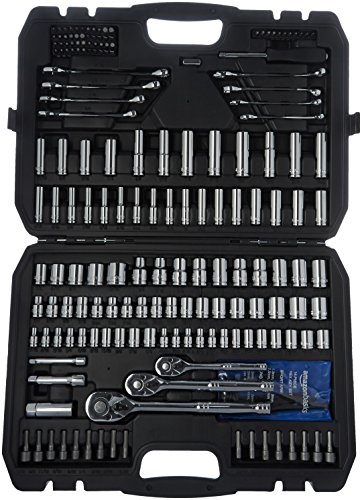 Amazon Basics 201-Piece Mechanic's Socket Tool Set With201 Piece17.7 x 13 x 3.53 inches16.49 poundsCheck on Amazon


Quick picks by shop situation
| Shop situation | Best wrench type | Useful coverage | Typical budget | Why it fits |
|---|---|---|---|---|
| First serious home set | Metric combination | 8–19 mm, preferably no skips | $40–$120 | Covers most modern passenger vehicles at the lowest cost |
| Mixed vehicle fleet | Metric and SAE combination | 6–24 mm and 1/4–1 in | $90–$250 | Reduces substitutions on older American equipment and imported vehicles |
| Frequent service work | Ratcheting combination | 8–19 mm or 1/4–3/4 in | $100–$300 | Speeds repeated loosening and tightening in open workspace |
| Rusty or high-torque fasteners | Heavy-duty combination | 8–24 mm or 1/4–1 in | $100–$350 | Solid box ends tolerate more torque and hammer-assisted work |
| Small toolbox or roadside kit | Compact metric combination | 8–17 mm | $25–$80 | Useful coverage without a bulky roll or case |
Combination wrenches are the best starting point
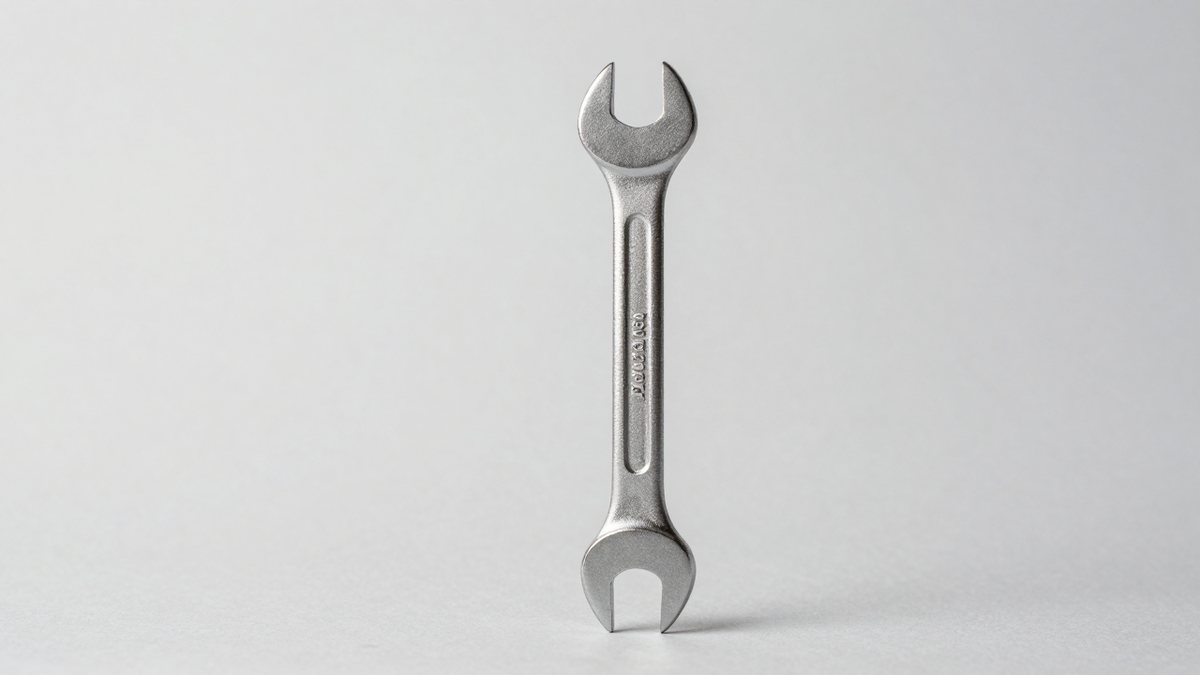
A combination wrench has an open end on one side and a box end on the other. The open end starts fasteners quickly and reaches nuts on threaded studs. The box end grips more faces of the fastener and is the better choice when loosening a tight bolt.
For a general automotive set, prioritize every size from 8 through 19 mm rather than buying a larger set with gaps. The most frequently used sizes are commonly 10, 12, 13, 14, 15, 17, and 19 mm, but skipping 11, 16, or 18 mm can leave you stuck on a less common but important fastener. A practical second stage is 21, 22, and 24 mm for suspension, steering, and engine work.
Look for a box end with a slight offset, usually around 10 to 15 degrees. This gives your fingers clearance from the work surface while keeping the head reasonably slim. A 15-degree offset is a useful general compromise; a straight box end can reach tighter vertical spaces, while a larger offset may clear surrounding brackets better.
Open-end and box-end fit
The open end should fit with minimal side-to-side movement. Excessive clearance rounds corners, especially on soft or corroded fasteners. Box ends are generally safer because they contact more flats, but their outside diameter matters: a thick head may not fit into a recessed nut or between a nut and a bracket.
For regular repair work, choose forged chrome vanadium steel with clearly marked sizes and a polished or satin finish. Satin surfaces are easier to hold with oily gloves and show fewer distracting reflections than mirror chrome. A polished finish is easier to wipe clean, but finish preference should come after jaw geometry and size accuracy.
Ratcheting wrench sets: faster, but not universal
Ratcheting combination wrenches put a small ratchet mechanism inside the box end. They can save substantial time where a fastener has only a few degrees of swing, such as brackets, accessory hardware, and engine-bay repairs. A 72-tooth mechanism typically needs about 5 degrees of movement per click; a 90-tooth design may reduce that to about 4 degrees.
That advantage has limits. Ratcheting box ends are usually thicker than fixed box ends, and their internal mechanism is less tolerant of dirt, side loading, and impact. Do not use a ratcheting wrench as a substitute for a breaker bar on a seized fastener. Crack the fastener loose with a conventional wrench or socket, then use the ratcheting wrench to remove it quickly.
| Feature | Fixed combination | Ratcheting combination | Best use |
|---|---|---|---|
| Typical tooth count | None | 72–90 teeth | Repeated turning in restricted swing space |
| Approximate working swing | Move and reposition manually | 4–5 degrees per click | Engine bays and brackets |
| Head thickness | Often thinner | Usually thicker | Fixed wrenches win in narrow recesses |
| High-torque suitability | Better | Use cautiously | Rusty suspension and structural hardware |
| Maintenance | Wipe and inspect | Keep mechanism clean and lightly lubricated if manufacturer permits | Dirty workshops require more care |
When specialty wrench sets earn their space
Flare-nut wrenches
Flare-nut, or line, wrenches have a nearly closed box end with a narrow slot for sliding over tubing. They spread force across more of a brake or fuel-line fitting than an ordinary open end. A 10, 11, 12, and 14 mm line-wrench set is useful for automotive hydraulic and fuel-system work. These are not replacements for everyday combination wrenches because the slot prevents them from matching the strength of a fully enclosed box end.
Short and stubby wrenches
Stubby wrenches are valuable when a normal handle hits a frame rail, firewall, or adjacent fitting. Their shorter length reduces leverage, so they should be reserved for already-loose fasteners or low-torque assembly. A set of 10–17 mm stubbies complements, rather than replaces, standard-length tools.
Extra-long and angled sets
Long combination wrenches improve leverage on large fasteners, while offset or double-box designs can reach around obstructions. They are useful in a professional shop but take more drawer space and make it easier to apply excessive torque to a smaller fastener. Buy them after your core 8–19 mm set is complete.
Case storage can matter as much as the wrench count
A molded case protects the tools and makes missing sizes obvious, but it can be awkward in a crowded toolbox. A hinged case may require more storage height than the wrenches themselves. A clip-in rail or wrench roll uses less rigid space and is easier to carry to a vehicle, although tools can fall out if the roll is left open or packed loosely.
Check four storage details before buying:
- Are metric and SAE sizes clearly separated?
- Can you remove one wrench without emptying the case?
- Are the size labels readable under low shop lighting?
- Does the holder fit your toolbox drawer, not merely the product packaging?
For a mobile mechanic, a roll with individual pockets is often the most practical. For a fixed garage, a case or drawer rail makes inventory control easier. Avoid storing oily wrenches in a sealed case for long periods because trapped moisture and grime encourage corrosion.
Brands and price tiers to consider
Craftsman, Tekton, GearWrench, SK Tools, and Snap-on all offer established wrench lines, but their ranges differ by finish, warranty, handle shape, and mechanism. In broad 2026 market terms, a basic fixed combination set costs about $25–$100, a better professional-style set about $100–$250, and a large premium or ratcheting collection about $200–$500 or more.
Budget sets can be sensible when the sizes are accurate and the warranty is usable. Mid-range sets often provide the best balance for home mechanics: complete common-size coverage, better stamping, and more consistent fit without paying primarily for a premium tool-truck warranty. Premium sets can make sense for daily professional use, where reduced downtime and replacement support matter more than the initial price.
A simple coverage calculation
Suppose a 12-piece metric set costs $72 and includes every size from 8 to 19 mm. That is $6 per included size. A cheaper 20-piece set costing $60 may appear better at $3 per wrench, but if it skips 11, 16, and 18 mm while adding rarely used oversized tools, the effective cost of the complete everyday coverage is higher because you will still need to buy the missing wrenches.
For a home mechanic who performs 30 repair sessions per year, a $120 set used for five years costs about 80 cents per session. That calculation favors buying complete, durable core coverage instead of repeatedly replacing rounded or missing low-cost tools.
How to maintain wrench sets
- Wipe oil and grit from the jaws after each job; abrasive dirt accelerates wear and spoils fit.
- Inspect the open-end corners for spreading, rounding, or visible cracks.
- Check ratcheting box ends for rough clicks, slipping, or contamination before applying torque.
- Use penetrating oil on corroded fasteners rather than extending a wrench with a pipe.
- Apply torque with the box end whenever possible, and use a torque wrench for final tightening where the service specification requires it.
- Replace a wrench that has been visibly bent, mushroomed, or heat-damaged; straightening it can weaken the steel.
Final buying recommendation
For most mechanics, start with a complete 8–19 mm fixed combination set in a case or roll, then add 21–24 mm sizes, SAE coverage, flare-nut wrenches, or ratcheting versions according to the work you actually perform. Choose ratcheting wrenches for speed in accessible spaces, fixed combination wrenches for maximum versatility and abuse tolerance, and specialty sets only when their particular access advantage solves a recurring problem.