What's inside
As an Amazon Associate I earn from qualifying purchases. This post may contain affiliate links at no extra cost to you.
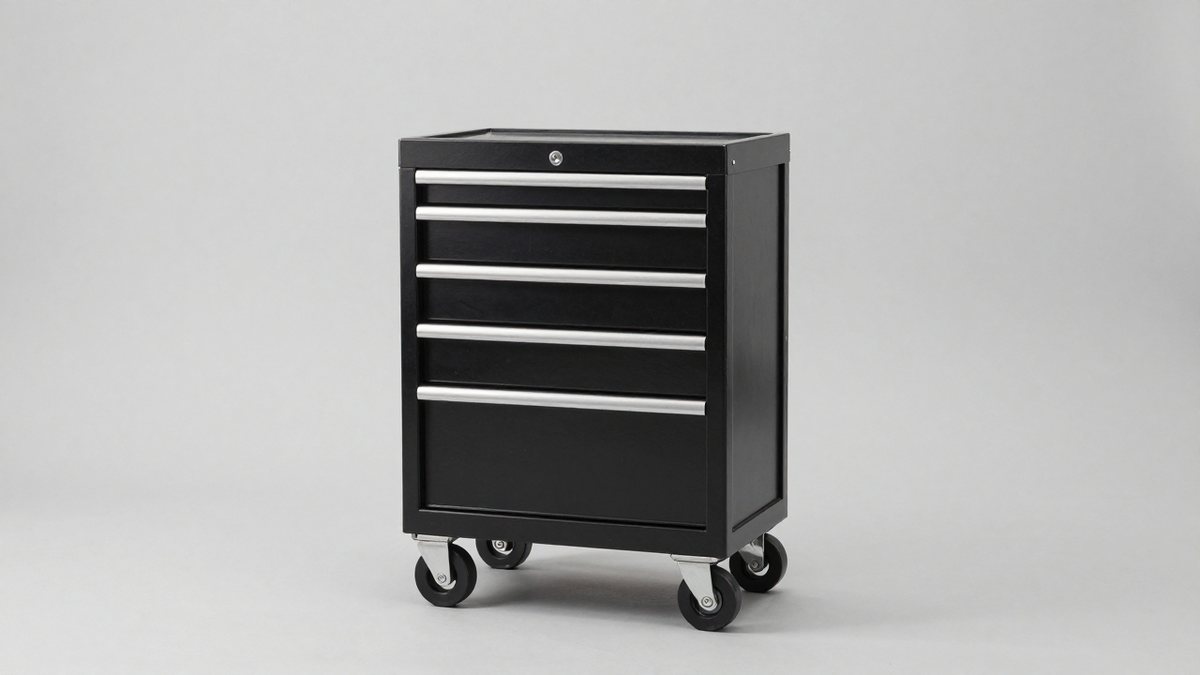
The best compact tool chest for most small workshops is a 26-inch-wide, four- or five-drawer steel chest with full-extension ball-bearing slides, a keyed lock, and a matching rolling cabinet or sturdy bench base; choose a lighter three-drawer chest only when you must carry it regularly.
A compact chest earns its floor space by using vertical drawer storage rather than a deep open box. The most useful designs keep hand tools, fasteners, measuring equipment, and small power-tool accessories visible and separated while remaining narrow enough for a garage corner, apartment workshop, or shared workbench. The right choice depends less on the brand name than on drawer layout, loaded weight, slide quality, and how the chest will be moved.
As an Amazon Associate we earn from qualifying purchases at no extra cost to you.



Our Top Picks
 INTERGREAT 7 Drawers Rolling Tool Chest with Pegboard7 Drawers13 x 24.2 x 43.3 InchesCheck on Amazon
 HRVEOCEI Heavy Duty Multi-Use Rolling Tool Chest with20 Inches13 x 20 x 29 inches38.2 poundsCheck on Amazon


Best compact tool chests by situation
| Best for | Recommended type | Useful target specifications | Why it fits |
|---|---|---|---|
| Very limited bench space | 22- to 26-inch steel top chest | 4 drawers, 18-22 inches deep, under 55 lb empty | Maximizes vertical storage without requiring floor space |
| Frequent garage use | 26-inch top chest on a rolling cabinet | 5-6 drawers, 50-100 lb capacity per drawer, keyed lock | Provides more storage while keeping the work surface usable |
| Car, van, or mobile repair | Portable cantilever chest or compact steel chest | 3-4 drawers, 25-45 lb empty, side handles or secure latches | More manageable to lift and less likely to shift in transit |
| Occasional DIY work | Budget steel chest with shallow drawers | 3-4 drawers, 20-35 lb empty, 18-20 gauge steel | Costs less and provides enough organization for a basic hand-tool set |
| Professional or frequent use | Heavy-duty 26- or 27-inch chest | 18-gauge or thicker shell, reinforced corners, full-extension slides | Better resistance to denting, overloading, and repeated opening |
Our compact tool chest picks
Best overall: a 26-inch, four-drawer steel chest
A mainstream 26-inch four-drawer chest is the best balance for most small workspaces. Models in this class are commonly about 26 inches wide, 18 inches deep, and 16 to 18 inches high. They usually include two shallow drawers for sockets and drivers, one medium drawer for pliers and wrenches, and one deeper drawer for ratchets, hammers, or electrical tools.
Examples include the Craftsman 26-inch four-drawer tool chest, the Husky 26-inch four-drawer tool chest, and the U.S. General 26-inch four-drawer top chest. Exact drawer dimensions, steel thickness, load ratings, and included liners vary by generation, so check the current specification sheet before buying. The key advantage is compatibility with a matching rolling cabinet: the chest can start on a bench and later move onto a mobile base as the tool collection grows.
Expect roughly $120 to $300 for this size category, depending on steel thickness, finish, locking hardware, and whether the slides are soft-closing or rated for heavier loads.
Best for a very narrow room: a three-drawer top chest
When every inch matters, a three-drawer chest can be more practical than a nominally larger model. A 20- to 24-inch-wide chest generally fits on a narrow bench or under a shelf, and its lower weight makes it easier to relocate. Look for at least one drawer deeper than 2.5 inches; otherwise the chest may hold screwdrivers and sockets but struggle with pliers, adjustable wrenches, or cordless-tool accessories.
This is the better choice for a beginner with a modest tool collection or for a second chest dedicated to electrical parts, model-making tools, bicycle tools, or fasteners. It is not the best long-term solution if you already own a complete mechanic’s set, because shallow drawers fill quickly and encourage unsafe overloading.
Best for maximum storage: a compact chest paired with a rolling cabinet
If you have a little floor space but not enough room for a full-size tool system, buy a top chest and rolling cabinet as a matched pair. A 26- or 27-inch unit typically gives substantially more usable storage than a single chest while remaining narrower than many 40-inch professional cabinets.
The important detail is stability. The top chest should sit fully inside the cabinet’s locating lip or be secured with the supplied bolts. Do not place a heavy chest on a generic table and assume its rubber feet will prevent sliding. Keep the heaviest tools in the lowest cabinet drawers, lock the casters when working, and open only one heavily loaded drawer at a time. This lowers the center of gravity and reduces the chance of tipping.
Best for transport: a portable drawer chest or cantilever box
For service calls, a drawer chest is useful only if you can move it safely. A portable model with side handles, positive latches, and a metal or reinforced polymer shell is preferable to a full-depth rolling unit. Choose one with removable trays or dividers if it will ride in a vehicle; loose tools can damage drawer slides when the box is carried over rough roads.
Portable chests sacrifice drawer capacity for manageable weight. A loaded 26-inch steel chest can easily exceed 80 pounds even when its empty weight is only 35 to 50 pounds. If you routinely carry the chest up stairs, calculate the loaded weight before choosing steel over reinforced plastic.
What matters more than the drawer count
- Drawer depth: Shallow drawers are ideal for sockets, bits, and measuring tools. At least one drawer around 3 to 4 inches deep is useful for pliers and larger hand tools.
- Slide construction: Ball-bearing slides are smoother and usually tolerate repeated use better than simple friction slides. Full-extension slides let you see the back of the drawer, reducing forgotten tools.
- Load rating: Treat the rating as a maximum, not a target. A drawer rated for 50 pounds should not be packed with sockets until it barely moves. Leave capacity for the force created when the drawer is opened quickly.
- Locking system: A keyed lock prevents drawers from opening during movement and provides basic access control. It is not a substitute for secure storage in a vehicle or public workspace.
- Drawer liners: Foam or rubber liners reduce rattling and protect the finish. Check whether liners are included, because replacing them for four or five drawers can add $20 to $60.
- Finish and seams: Powder coating resists ordinary workshop wear, while rolled edges and reinforced corners help prevent sharp dents. Inspect the lid, drawer fronts, and hinge area because these are common impact points.
A simple fit calculation before you buy
Measure the actual usable space, not merely the advertised shelf width. Suppose a bench opening is 29 inches wide and 20 inches deep. A nominal 26-inch chest may be about 26 inches wide but could have a handle, hinge, or side overhang that adds an inch or two. Allow at least 1 inch of clearance on each side and 2 inches behind the chest for the lid, lock, and cable clearance. In this example, a chest no wider than 27 inches and no deeper than 18 inches is the safer fit.
Also measure lid clearance. If the closed chest is 17 inches high and the lid rises another 8 inches, the shelf above it must be at least 25 inches higher than the bench, with extra room for your hand. A chest that fits physically but cannot open fully wastes its top drawer.
Setup and maintenance that extend service life
- Remove shipping restraints before loading. Many drawers are secured with clips, tape, or foam. Forcing a restrained drawer can bend the slide or front panel.
- Install liners and dividers first. Organize tools by task or shape before the chest becomes crowded. Dividers stop sockets and loose fasteners from concentrating weight at the front of a drawer.
- Load heavy items low. Put hammers, pullers, and large ratchets in the lowest available drawer. Keep the upper drawers for lighter items.
- Clean spills quickly. Cutting oil, brake cleaner, and water can migrate into slide bearings or beneath liners. Wipe the surface, remove the liner, and dry the drawer before closing it.
- Inspect slides and casters periodically. Tighten loose fasteners and remove metal filings from the tracks. Use only a light manufacturer-compatible lubricant; heavy grease attracts abrasive dust.
- Do not use the open lid as a step. Compact chests are storage furniture, not platforms. Excess force can distort the lid or hinges and make the lock misalign.
Common ownership mistakes
The first component to show wear is often not the steel shell but the drawer slide, latch, or lid hinge. Overloaded drawers, tools extending above the drawer walls, and repeatedly slamming the drawers accelerate that wear. Another common mistake is buying a chest based on external width while ignoring usable drawer width: side-mounted slides and thick walls can reduce internal space by several inches.
Do not assume a top chest is waterproof. Most workshop chests resist dust and minor splashes but are not weatherproof. If the chest is kept in an unheated garage, use a corrosion-inhibiting product on bare tools and avoid trapping damp rags or wet accessories inside.
Bottom line
Choose a 26-inch four- or five-drawer steel chest for the best combination of storage, stability, durability, and future expansion. Downsize to a three-drawer model when bench width, lifting weight, or portability matters more than capacity. Before ordering, verify the internal drawer measurements, slide ratings, empty weight, lid clearance, and whether the chest securely fits its intended cabinet or bench. Those details determine whether a compact tool chest remains convenient—or becomes another crowded box taking up valuable workspace.