What's inside
As an Amazon Associate I earn from qualifying purchases. This post may contain affiliate links at no extra cost to you.
If you need to weld a cracked gate hinge, patch a lawn mower deck, or tack a bracket without dragging out a full-size machine, a handheld welder gun in the $90–$250 range handles steel up to about 3/16 inch — but only if you match the process (stick, MIG, or spot) to the job and check the duty cycle before you buy.
As an Amazon Associate we earn from qualifying purchases at no extra cost to you.


Our Top Picks


What “Handheld Welder Gun” Actually Means in 2026
The term covers three distinct tools, and confusing them is the most common buying mistake:
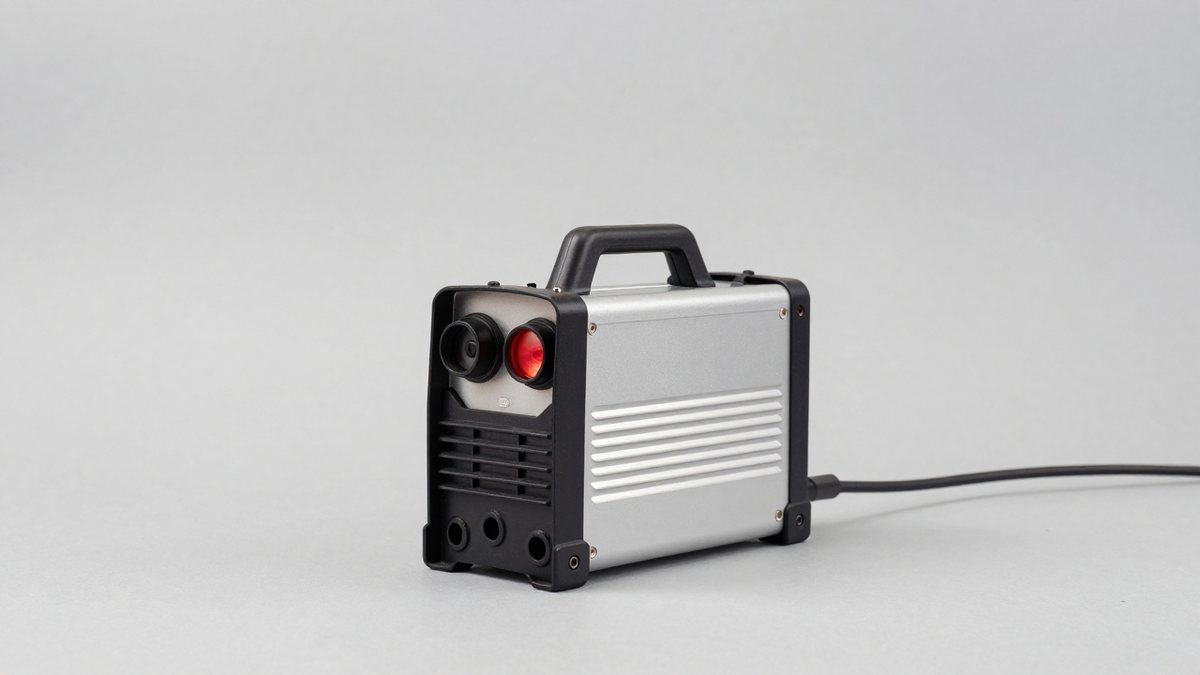
- Handheld stick welders (ARC): A compact inverter body held in one hand, with the electrode holder integrated or attached. They look like oversized drills. Best for rusty, painted, or outdoor work where flux protects the arc.
- Handheld MIG/flux-core guns: The torch portion of a small flux-core welder, sometimes sold as all-in-one spool-gun units. Cleaner welds on thin sheet metal, but flux-core wire costs more per pound and spatter is heavier.
- Handheld spot welders: For battery tabs, thin sheet, and jewelry work. Not for structural repairs — don’t buy one expecting to fix a trailer.
For general DIY repair, handheld stick (ARC) models dominate the market because they’re cheap, tolerate dirty metal, and run off a standard 120V outlet.
The Five Specs That Decide Whether It Works for You
Input power: 120V vs. 220V
Most handheld units are 120V and draw 20–30A at the wall. That’s enough for electrodes up to 1/8 inch (3.2mm). If a listing claims 200A output on a 120V plug, read the fine print — real sustained output is usually 90–140A. True 220V handheld units exist but need a dedicated circuit most garages lack.
Realistic material thickness
Ignore “welds up to 1/2 inch” marketing. With a 120V handheld stick welder and 3/32-inch 6013 or 7018 rods, expect clean single-pass welds on 16-gauge to 1/8-inch steel, and multi-pass work to 3/16 inch. Thinner than 18-gauge risks burn-through unless the unit has good low-amp control (under 40A).
Duty cycle — the spec that limits real work
Duty cycle is rated at a given amperage: “60% at 120A” means 6 minutes welding, 4 minutes cooling per 10-minute window. Budget handhelds often quote duty cycle at their lowest amperage. At max output, many drop to 20–35%. For a 10-minute fence repair that’s fine; for building a workbench frame, you’ll spend half your time waiting.
Electrode compatibility
Check whether the unit handles 7018 rods (better weld quality, low-hydrogen) or only 6011/6013 (easier to strike, works on rust). Some ultra-cheap handhelds arc poorly on 7018 because their open-circuit voltage is too low.
Hot start, arc force, and anti-stick
These three features separate frustrating units from pleasant ones. Hot start boosts current at ignition; arc force prevents the rod from sticking mid-weld; anti-stick cuts power if the electrode freezes to the work. On a $100 tool, anti-stick alone saves beginners a dozen ruined rods.
Handheld Welder Comparison: Representative 2026 Models
The table below compares typical handheld stick units and well-known compact welders in this class, using manufacturer-published specs:
| Type / Representative Model | Process | Input | Output Range | Duty Cycle | Max Electrode | Weight | Typical Price |
|---|---|---|---|---|---|---|---|
| Budget handheld ARC (generic drill-style units) | Stick | 120V | 20–120A | ~30% @ 100A | 3/32″ (2.5mm) | 2.5–4 lb | $60–$100 |
| Mid-range handheld ARC (YesWelder ARC-125 style handhelds) | Stick | 120V | 20–140A | ~60% @ 90A | 1/8″ (3.2mm) | 3.5–5 lb | $100–$160 |
| Premium handheld ARC (Hynade / ARCCAPTAIN handheld lines) | Stick | 120V/220V dual | 20–160A | ~60% @ 120A | 1/8″ (3.2mm) | 4–6 lb | $150–$250 |
| Compact flux-core (Lincoln Electric FC-90, Harbor Freight Titanium 125-style bench units) | Flux-core MIG | 120V | 40–90A | ~20–30% @ max | .030″ wire | 10–26 lb (bench) | $200–$400 |
| Handheld spot welder (battery tab class) | Spot | 120V / battery | Pulse | N/A | 0.1–0.3mm nickel strip | 1–3 lb | $50–$200 |
The pattern: drill-style handhelds win on portability and price; bench flux-core units win on weld appearance on thin sheet. Nothing handheld under $200 meaningfully welds aluminum.
Match the Tool to Your Situation
| Your situation | Best choice | Why |
|---|---|---|
| Occasional repairs, rusty outdoor metal, under $120 | Budget handheld stick unit + 6011 rods | 6011 burns through rust and paint; anti-stick forgives beginners |
| Regular garage use, want better bead quality | Mid-range handheld, 7018-capable | Higher duty cycle and arc force; cleaner welds on clean steel |
| Sheet metal, auto body, 18–22 gauge | Compact flux-core welder | Continuous wire feed is easier than stick on thin metal |
| Battery pack building, electronics | Handheld spot welder | Stick/MIG will destroy cells; only spot welding is appropriate |
| Aluminum boat or bike frame | None of these — need AC TIG or spool-gun MIG | Budget handhelds don’t do aluminum; renting beats buying wrong |
What Accessory Kits Actually Include — and What’s Missing
Most handheld units ship with an electrode holder, ground clamp (often a flimsy stamped-steel spring clamp — the first upgrade worth making), a small wire brush/chipping hammer combo, and sometimes a handful of rods. Rarely included but needed:
- Auto-darkening helmet ($30–$60) — handheld units position your face closer to the arc than a bench machine, so a fixed-shade hood is fatiguing.
- Electrodes — buy 6011 for dirty metal, 7018 for clean structural joints. A 5 lb box runs $15–$30.
- Ground clamp upgrade ($10–$15 for a 300A brass clamp) — the stock clamps lose grip and cause erratic arcs.
- Leather gloves and sleeves — handheld units put the torch inches from your knuckles; spatter is constant.
Ownership Realities Listings Won’t Tell You
What wears first: The ground clamp spring, then the electrode holder jaws. Both are $10–$15 replacements. Fan-cooled units accumulate grinding dust inside the case — blow them out with compressed air every few months or the fan bearing fails.
Consumable math: A typical homeowner repair uses 3–8 rods. At roughly $1.50–$3 per rod bought in small packs, a $100 welder plus $60 in rods, helmet, and gloves is the realistic all-in cost — call it $160–$200 for the setup, then a few dollars per repair afterward. That beats a $75–$150 mobile welder call-out fee after two or three jobs.
Common beginner mistakes: Holding too long an arc (should be roughly the rod’s diameter in gap), welding on a painted surface without grinding a spot for the ground clamp, and blaming the machine for sticking when the real issue is a 6011 rod run at too low amperage. Set the dial near the rod maker’s mid-range and adjust down only if you’re burning through.
Circuit reality check: A 120V handheld pulling 25A+ will trip a shared 15A breaker mid-weld. Use a 20A dedicated outlet or a heavy 10-gauge extension cord under 50 ft — long thin cords sag the input voltage and make the arc erratic.
FAQ
Can a handheld welder gun weld exhaust pipe?
Yes, with flux-core or stick on 16–18 gauge mild steel, but keep amperage low (40–60A) and use short tack welds to avoid warping thin tube.
Is a handheld stick welder safe for a total beginner?
It’s the most forgiving process for dirty metal, and anti-stick features reduce frustration — but you still need a proper helmet, gloves, and ventilation. Watch for hot spatter when the torch is close to your hand.
How thick can a 120V handheld really weld?
Comfortably: 1/8 inch in a single pass. Up to 3/16 inch with multiple passes and proper joint prep. Anything structural and thicker belongs on a 220V machine.
Do I need 220V?
Only if you regularly weld material over 3/16 inch or want duty cycles above 60% at high amperage. For household repairs, 120V is sufficient and far more convenient.