What's inside
- Quick comparison of the best 20V-class brushless drills
- Best overall: DeWalt DCD800
- Most powerful: Milwaukee M18 Fuel 2903-20
- Best control and balance: Makita XFD131
- Best budget: Ryobi 18V ONE+ HP brushless
- What brushless actually changes
- How to choose with numbers
- Worked example: bare tool versus kit
- Ownership realities
- Common mistakes when buying a brushless drill
- Which one should you buy?
- Frequently Asked Questions
As an Amazon Associate I earn from qualifying purchases. This post may contain affiliate links at no extra cost to you.
The best 20 volt brushless drill for most people is the DeWalt 20V MAX XR DCD800: it is compact, has plenty of torque for framing and cabinet work, and sits on the largest 20V battery platform in the big-box aisle. If you already own 18V batteries from Milwaukee or Makita, the Milwaukee M18 Fuel 2903-20 and Makita XFD131 are the better buys because the battery you already own matters more than a small spec gap.
One naming point clears up most confusion. A “20V MAX” battery is the same 5-cell, 18-volt-nominal pack as an “18V” battery; 20V is simply the peak voltage measured with no load. So “20 volt” and “18 volt” drills compete directly, and the real differences come from the motor, the clutch, the chuck and the ecosystem around the drill.
As an Amazon Associate we earn from qualifying purchases at no extra cost to you.


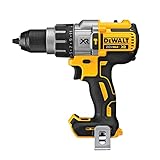
Our Top Picks
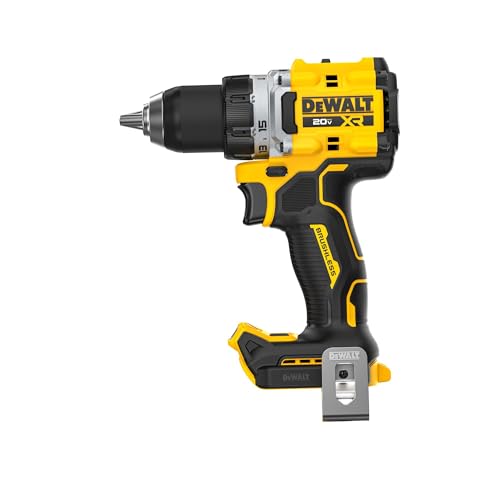 DEWALT 20V MAX XR Brushless Cordless 1/2 in.9 x 3.5 x 7.1 inches9 x 3.5 x 7.1 inches0.86 poundsCheck on Amazon
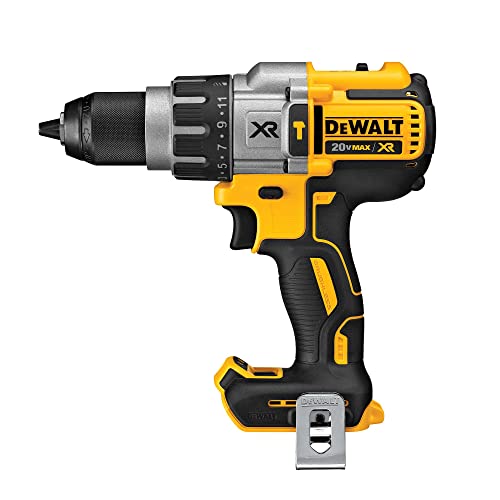
 Dewalt DCD794B 20V MAX ATOMIC COMPACT SERIES BrushlessOne Size6.61 x 3.32 x 8.39 Inches2.51 PoundsCheck on Amazon
Quick comparison of the best 20V-class brushless drills
| Pick | Best for | Key specs (per maker) | Price tier |
|---|---|---|---|
| DeWalt DCD800 (20V MAX XR) | Best overall | 1/2 in. chuck, brushless, compact head, no hammer mode | Mid-range (bare tool) |
| Milwaukee M18 Fuel 2903-20 | Most power | 1/2 in. chuck, about 1,200 in-lbs peak torque, POWERSTATE brushless motor | Upper-mid |
| Makita XFD131 (18V LXT) | Best control and balance | 1/2 in. chuck, about 480 in-lbs, up to 2,000 RPM, light body | Mid-range |
| Ryobi 18V ONE+ HP brushless drill/driver | Best budget | Brushless HP motor, shares the huge ONE+ battery line | Budget |
| DeWalt DCD805 (20V MAX XR hammer drill) | Best if you also drill masonry | Brushless, adds a hammer mode to the DCD800 formula | Mid-range |
Torque figures above come from the manufacturers’ spec sheets. Makers measure torque differently (“unit watts out” for DeWalt, in-lbs for Milwaukee and Makita), so treat cross-brand numbers as a rough guide rather than a ranking.
Best overall: DeWalt DCD800
The DCD800 is the drill most reviewers recommend to a first-time buyer who wants a brushless motor without paying Milwaukee prices. Its compact head slips between studs and into cabinet corners, it has an all-metal ratcheting chuck, and DeWalt’s 20V MAX batteries are sold in every hardware chain. It has no hammer mode, which is rarely a loss for wood, drywall or sheet metal.
Trade-off: the bare tool is not cheap, and DeWalt’s own DCD805 adds a hammer mode for a small premium. If you will ever drill brick or block, buy the DCD805 instead.
Most powerful: Milwaukee M18 Fuel 2903-20
Milwaukee’s drill/driver is the one to buy for self-feed bits, large hole saws and long auger bits in engineered lumber. Per Milwaukee, the POWERSTATE brushless motor and its electronics are tuned for sustained load, and it is among the stronger drill/drivers in its class. The M18 platform also covers an enormous range of tools, from impact wrenches to cordless table saws.
Trade-off: it is heavier and longer than the DeWalt, and overkill for hanging shelves. Bare-tool pricing is high, so it makes the most sense if you are building a Milwaukee battery collection.
Best control and balance: Makita XFD131
The XFD131 is smoother and lighter than the others. Its torque is lower, at roughly 480 in-lbs on Makita’s spec sheet, but the variable-speed trigger is predictable and the lighter body is easier on the wrist when you are driving screws overhead. Makita 18V LXT batteries are also shared with a huge range of tools.
Trade-off: it will stall earlier than a Milwaukee in big holes, so it is a drill for fastening and mid-size boring rather than heavy-duty work.
Best budget: Ryobi 18V ONE+ HP brushless
Ryobi’s HP (high performance) drill/driver is the cheapest sensible way into brushless. The ONE+ battery system spans a very large tool range, including garden gear that no pro brand matches, which suits a homeowner better than a tradesperson.
Trade-off: the chuck, clutch and housing do not feel as tight as the pro brands, and runtime on small batteries is shorter under load. For weekend projects that is a fair compromise.
What brushless actually changes
- Efficiency: a brushless motor has no carbon brushes dragging on the commutator, so more battery energy turns into rotation. Makers claim roughly 20 to 50 percent more runtime depending on the tool; treat any exact figure as marketing.
- Heat and wear: there are no brushes to replace, so the motor outlasts a brushed one if you do not abuse it.
- Electronic control: the controller can change speed to match resistance, which gives better stall response and smoother clutch behaviour.
How to choose with numbers
Torque
For furniture, trim and deck screws, 450 to 600 in-lbs is plenty. For 3 in. structural screws into dense lumber or 2-9/16 in. self-feed bits, look for around 1,000 in-lbs or more.
Speed range
Two mechanical speeds are standard. Low (about 0 to 500 RPM) is for large bits and screws; high (about 0 to 2,000 RPM) is for small holes. Three-speed drills add a middle gear but are rarely necessary.
Head length and weight
A head under about 7 in. fits between joists. A bare tool weighing 2.5 to 3.5 lb is comfortable all day; add 1 lb for a 5.0Ah battery.
Chuck
A 1/2 in. chuck handles bits up to 1/2 in. shank and is the safer choice. A 3/8 in. chuck is lighter but limits you to smaller bits.
Worked example: bare tool versus kit
Suppose you already own two 5.0Ah batteries and a charger. A bare tool is the smarter buy because a kit’s batteries would sit unused. If you own nothing, a kit with two 2.0Ah to 4.0Ah batteries gives a better cost per tool than buying the battery separately; as a rule of thumb, batteries and charger make up half of a starter kit’s price.
| Your situation | Recommended pick |
|---|---|
| Own DeWalt 20V batteries | DCD800 or DCD805 |
| Own Milwaukee M18 | 2903-20 |
| Own Makita LXT | XFD131 |
| Starting from zero, light use | Ryobi ONE+ HP |
| Starting from zero, heavy use | Milwaukee kit |
Ownership realities
- The chuck is the first thing to wear; keep it clean and avoid over-tightening with a pair of pliers.
- Batteries age by cycle count and heat. Do not leave one on the charger in a hot truck.
- Use the clutch for fastening, not the drill-mode setting; it prevents stripped screw heads.
Common mistakes when buying a brushless drill
Paying for torque you will not use
A drill with 1,200 in-lbs of peak torque is not faster at driving a 2-1/2 in. screw into a stud than one with 500 in-lbs; the screw bottoms out in both cases. The extra torque only helps with large-diameter bits, long screws in dense wood and stalled-bit situations.
Ignoring the battery ecosystem
The drill is a small part of a long-term tool budget. If a brand does not sell the saw, light, vacuum or outdoor tool you will want in two years, a slightly weaker drill from a broader platform is the better decision.
Skipping the clutch
Beginners leave the clutch on drill mode and strip screw heads or overdrive fasteners. Set the clutch low for small screws, step it up until the screw sits flush, and leave drill mode for boring holes.
Buying a hammer drill for wood-only work
Hammer mode adds a clutch ring, a little weight and cost. It is a good option if you occasionally fasten into brick or concrete, but a drill/driver is a better balanced tool for carpentry.
Which one should you buy?
If you are starting fresh and want one drill that does nearly everything, the DeWalt DCD800 or DCD805 is the safe pick. If you drill large holes all day, take the Milwaukee. If your hands tire quickly or you work overhead often, the Makita’s lighter handling is worth more than extra torque. On a tight budget, Ryobi’s HP brushless drill gets you into the technology with minimal risk.
Frequently Asked Questions
Is a 20V drill more powerful than an 18V drill?
No. The two numbers describe the same battery pack, measured two ways. Power depends on the motor, gearbox and electronics, not on the 18 or 20 on the label.
Is brushless worth the extra money?
For regular use, yes. You get longer runtime, less heat and no brushes to replace. For a drill used a few times a year, a brushed model is fine.
What torque do I need for deck screws?
A drill with 450 in-lbs or more handles most deck screws, but an impact driver is faster for long runs. Pre-drilling hardwood prevents splitting.
Can I mix battery brands?
Not directly. Third-party adapters exist but can void warranties and may not share communication signals, so stick to one platform.
Should I buy a hammer drill instead?
Only if you drill masonry. For wood and metal the hammer mode is unused, and it adds a little weight and cost.
How big a battery should I buy?
A 2.0Ah to 4.0Ah pack keeps the drill light. A 5.0Ah or larger pack gives longer runtime but adds weight and cost.