What's inside
As an Amazon Associate I earn from qualifying purchases. This post may contain affiliate links at no extra cost to you.
Our Top Picks


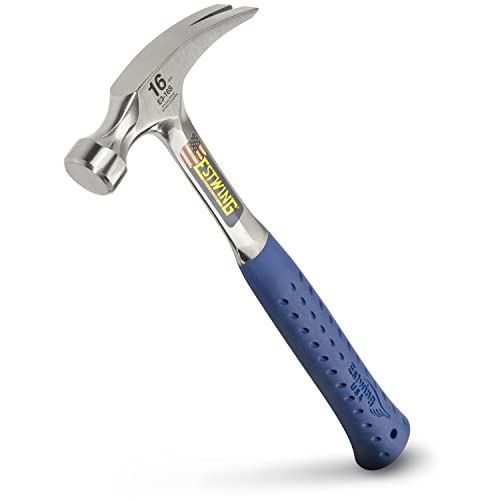

The best 16 oz hammer for most homeowners
The best 16 oz hammer for most everyday work is a well-balanced steel claw hammer with a smooth, slightly domed face, a straight ripping-style claw, and a securely bonded, vibration-damping handle. It offers enough striking weight for nails and light framing while remaining manageable for household repairs. Choose a curved claw instead if pulling finish nails and general-purpose nail removal matter more than prying.
“Best” depends less on a brand name than on how the head, face, claw, and handle suit your work. A 16-ounce rating usually describes the hammer head, not the full tool, so compare overall weight and balance before buying. The figures below are practical selection targets, not specifications for one particular model.
As an Amazon Associate we earn from qualifying purchases at no extra cost to you.



What to compare before choosing
| Feature | Useful target for everyday work | Why it matters |
|---|---|---|
| Head weight | 16 oz (454 g) | A versatile middle ground for common nails, trim repairs, and light framing. |
| Overall weight | About 20–24 oz (567–680 g) | Includes the handle; lower weight can reduce fatigue, while added mass may improve driving power. |
| Handle length | About 13–16 in (33–41 cm) | Longer handles can add reach and leverage but need more swing clearance. |
| Face diameter | About 1–1¼ in (25–32 mm) | A broader face is easier to land on a nail; a compact face suits tighter work. |
| Handle material | Steel with a grip, fiberglass, or hickory | Materials differ in vibration feel, maintenance needs, and how damage becomes visible. |
Head hardness and face finish
A properly hardened striking face resists mushrooming and denting in normal use. Hardness numbers are not always published consistently, so don’t treat a number alone as a quality guarantee. Inspect the face for even machining, a clean edge, and no chips or visible cracks. A damaged face can send fragments flying; retire the hammer if it chips, cracks, or deforms noticeably.
A smooth face is a good default for household repairs and finished wood because it leaves fewer marks if a strike lands slightly off-center. A milled, checkered, or waffle face grips nail heads better and is useful for rough framing, but it can leave a pronounced pattern in the wood. Avoid striking hardened steel, masonry, or other materials the hammer is not designed for.
Claw shape and handle feel
A curved claw gives leverage for pulling common nails and is comfortable for general home maintenance. A straighter ripping claw is better for prying boards apart and reaching into tighter gaps, but it can be less convenient for routine nail pulling. Neither shape is ideal for delicate surfaces without protection: place a thin wood scrap under the hammer head to spread the load and reduce dents.
Steel handles are durable and often have a shock-reducing grip, but vibration can travel through the handle, especially during repeated strikes. Fiberglass can damp vibration and resists weather-related swelling, though a split or badly damaged shaft means the hammer should be replaced. Hickory is traditional, comfortable, and replaceable on some models, but it needs to stay dry and should be checked for cracks, looseness, or splintering. Grip comfort is personal: the handle should feel secure without requiring a tight, tiring squeeze.
Choose by the work you actually do
| Your situation | What to look for | Best fit |
|---|---|---|
| Occasional household repairs, beginner | Smooth face, curved claw, comfortable non-slip grip | A balanced steel or fiberglass 16 oz claw hammer |
| Frequent light framing or rough carpentry | Milled face, straight claw, secure grip, sturdy construction | A framing-oriented 16 oz hammer; choose a heavier head if a 16 oz model struggles with the nails you use. |
| Trim work and visible wood | Smooth face, controlled balance, curved claw | A smooth-face 16 oz hammer, used carefully or with a nail set for finish nails |
| Limited swing space or frequent overhead work | Compact handle and manageable overall weight | A shorter-handled 16 oz model; prioritize control over maximum reach |
| Repeated nail pulling and prying | Claw shape and leverage suited to extraction | A straight-claw option for prying, or a curved-claw option for everyday nail removal |
For a budget-conscious buyer, focus on a sound head-to-handle connection and a comfortable grip rather than cosmetic features. Mid-priced models often offer a more refined grip or balance, but a premium finish does not make a poor swing fit better. If possible, hold the hammer before buying: make a few controlled practice swings and check that the head tracks naturally without twisting in your hand.
How to judge balance and durability in the shop
Hold the hammer near the end of its grip and make a slow, controlled swing. A balanced tool should feel steady through the arc, not as if the head is dragging your wrist or the handle is whipping around. A heavier head can drive nails with fewer swings, but it can also tire a new user sooner. For occasional repairs, control is usually more valuable than maximizing impact.
Check that the head sits straight on the handle and that there is no movement at the joint. On a one-piece steel hammer, inspect the grip for tears or exposed metal. On fiberglass or wood, look for cracks, soft spots, or splinters. Don’t buy a hammer with a loose head or damaged striking face: these are safety issues, not minor cosmetic flaws.
Ownership: what wears and how to avoid premature damage
The grip commonly shows wear first, followed by damage to a wood or fiberglass handle if the tool is dropped, stored wet, or used as a pry bar beyond its design. The face can also chip or mushroom if struck against hard materials. Keep the hammer dry, wipe off dirt and moisture after use, and store it where the head cannot fall onto concrete. Don’t use the handle as a lever or strike the side of the head with another hammer.
Before each job, check the handle and head connection. Stop using the hammer if the head loosens, the handle cracks, or the face becomes chipped. Some hickory-handled hammers can be rehandled, but replacement handles must fit the eye securely and be installed correctly. Many steel and fiberglass designs are not intended for handle replacement; follow the maker’s instructions rather than improvising a repair.
Bottom line
For most people searching for the best 16 oz claw hammer, a smooth-face, curved-claw model with a comfortable grip is the most adaptable pick for household repairs. Choose a milled face and straighter claw when rough framing and prying are regular tasks. Above all, match the handle length and balance to your swing space and experience; a hammer that feels controlled is more useful than one with features you rarely need.