What's inside
As an Amazon Associate I earn from qualifying purchases. This post may contain affiliate links at no extra cost to you.
Our Top Picks


Best Budget Claw Hammers for DIY and Woodworking
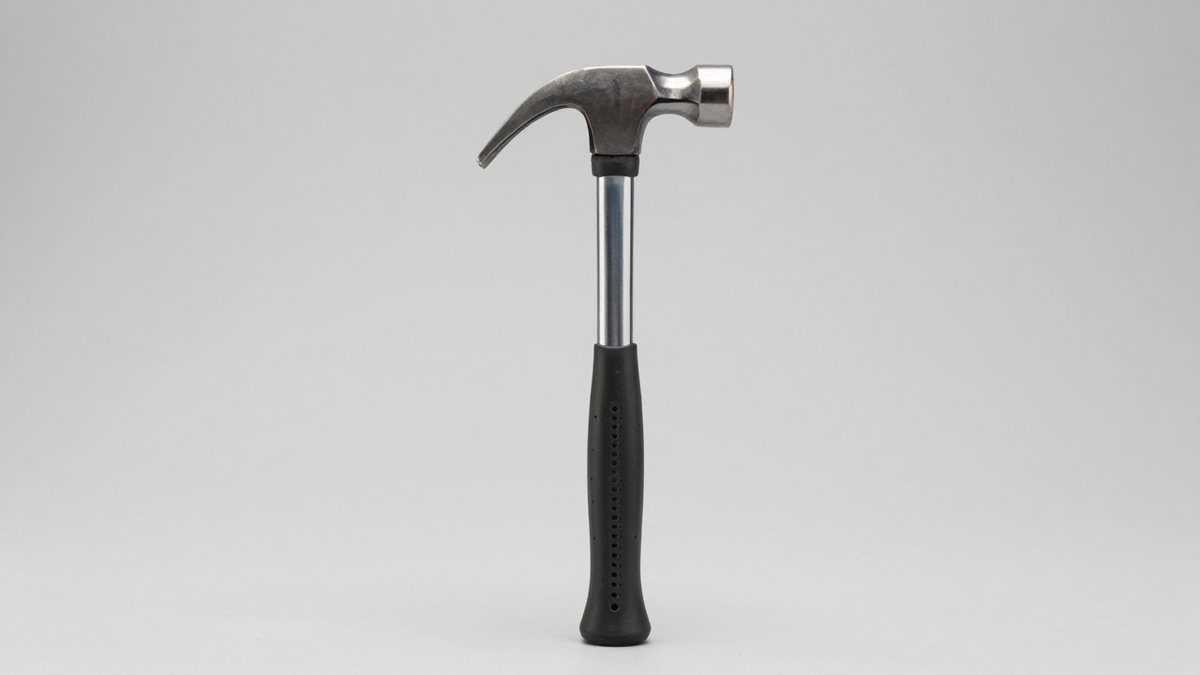
The best budget claw hammer for most DIY and woodworking jobs is a 16-ounce hammer with a forged steel head, a moderately curved claw, and a handle that reduces vibration without making the tool top-heavy. For occasional household repairs, the Stanley 51-163 16-ounce hammer is a practical low-cost choice; for more frequent use, the Estwing E3-16 or Fiskars IsoCore 16-ounce model offers a more comfortable upgrade.
Quick comparison: budget claw hammers worth considering
| Hammer | Head weight | Handle material | Claw style | Best suited to | Typical market range |
|---|---|---|---|---|---|
| Stanley 51-163 | 16 oz | Fiberglass with molded grip | Curved claw | General DIY and occasional repairs | $15–$25 |
| Estwing E3-16 | 16 oz | One-piece forged steel with shock-reducing grip | Curved claw | Frequent household work and woodworking | $30–$45 |
| Fiskars IsoCore 16 oz | 16 oz | Fiberglass-reinforced handle with IsoCore shock control | Curved claw | Users who value lower vibration | $25–$40 |
| Vaughan & Bushnell 20 oz California Framer | 20 oz | Hickory | Straight rip-style claw | Framing, demolition, and stubborn nails | $35–$55 |
| 16 oz hickory-handled claw hammer | 16 oz | American hickory | Moderately curved claw | Traditional woodworking and easy handle replacement | $20–$40 |
Prices vary by retailer, handle finish, and sales, so treat these as broad 2026 market ranges rather than fixed prices. Head weight refers to the metal head, not the total weight of the hammer.
As an Amazon Associate we earn from qualifying purchases at no extra cost to you.


Best choices by situation
| Your situation | Best choice | Why |
|---|---|---|
| Lowest sensible cost for occasional use | Stanley 51-163 | Enough striking power for trim, picture hooks, small framing repairs, and furniture work without premium pricing. |
| One hammer for regular DIY | Estwing E3-16 | The one-piece steel construction removes the separate head-and-handle joint that can loosen over time. |
| Vibration is your main concern | Fiskars IsoCore 16 oz | The handle system is designed to reduce shock reaching the hand during repeated strikes. |
| Heavy nail pulling or demolition | Vaughan & Bushnell 20 oz California Framer | The heavier head and straighter claw provide more leverage and useful access in rough construction. |
| Traditional woodworking and repairability | 16 oz hickory hammer | A damaged handle can usually be replaced instead of discarding the entire tool. |
What matters more than the lowest price?
Head weight and striking control
A 16-ounce head is the most versatile size for DIY. It drives common 4d to 10d nails effectively while remaining controllable for cabinet backs, small boxes, trim, and shop fixtures. It is also less tiring than a 20-ounce model during repeated light work.
A 20-ounce hammer delivers more energy per blow, but the additional mass can make accuracy worse for a beginner. It is useful when driving longer nails, starting framing nails, or pulling embedded nails. A 12-ounce hammer is easier to control for delicate work but may require more blows and can encourage over-swinging on larger nails.
A useful approximation is that impact energy rises with both head mass and swing speed. Doubling the head weight does not automatically make a hammer twice as effective if it reduces your control or swing speed. For most owners, a well-balanced 16-ounce hammer is a better first purchase than a cheap 20-ounce hammer.
Handle material
Fiberglass handles are common on affordable hammers because they resist splitting and usually cost less than premium one-piece steel designs. Their molded rubber or elastomer grips can be comfortable, although low-quality grips may become slippery, hard, or sticky with age.
Hickory handles absorb vibration naturally and have a traditional feel. They can be replaced when broken, which improves long-term ownership value. However, hickory should be kept dry and inspected for cracks, loose wedges, and crushed wood near the head.
One-piece forged steel handles, such as the construction used by Estwing, are highly resistant to head separation. Their downside is that they transmit more vibration unless the grip and design control it effectively, and a damaged handle generally means replacing the whole hammer.
Grip and balance
Look for a grip that remains secure when your hand is dusty or slightly sweaty but does not feel excessively soft. A flared butt helps prevent the hammer from sliding out of the hand, while a narrow upper grip allows small changes in hand position for controlled finish work.
Balance is easy to check in a store: hold the hammer loosely near the end of the handle and let the head hang naturally. The tool should not twist sharply sideways. A head-heavy design can hit hard, but it requires more wrist correction. A balanced 16-ounce hammer usually makes accurate nail placement easier, especially when working overhead or near finished surfaces.
Curved versus straight claws
A curved claw is the best general-purpose shape. Its curve provides leverage for pulling standard nails, and the narrow gap near the tip can grip exposed nail heads. It is especially useful for trim, pallets, furniture, and household repairs.
A straight or rip-style claw is better for prying, splitting wood, and demolition. It can reach into tighter gaps and exert more direct leverage, but it is less forgiving around finished surfaces. A straight claw can also damage boards more easily if you pry without a wood block underneath.
Claw length matters as much as curvature. Longer claws generally improve leverage, while shorter claws are easier to control in confined spaces. For a first hammer, choose a moderately curved claw rather than an extreme framing claw unless demolition is a major part of the job.
Head-to-head: the three strongest budget categories
Stanley 51-163 versus Estwing E3-16
The Stanley is the better value when the hammer will spend most of its time in a drawer. Its fiberglass handle, curved claw, and 16-ounce head cover routine repairs at a modest cost. The Estwing costs more, but its one-piece forged construction is appealing if you use the hammer weekly or expect rougher treatment. Choose Stanley for occasional use; choose Estwing when minimizing head-loosening risk matters more than replaceable parts.
Fiskars IsoCore versus a traditional hickory hammer
The Fiskars is the more convenient choice for repeated nail driving because its handle is designed around shock reduction and requires little maintenance. A hickory hammer offers a warmer, more traditional feel and can be economically repaired with a replacement handle. Choose Fiskars for convenience and vibration control; choose hickory if repairability, balance, and classic woodworking feel are priorities.
16 ounces versus 20 ounces
For a first and only hammer, 16 ounces wins for versatility. Move to 20 ounces when your work includes framing, deck repairs, demolition, or frequent nail pulling. If you are building small furniture, installing trim, or assembling shop projects, the 20-ounce option may add fatigue without adding useful precision.
Ownership costs and maintenance
Suppose a $20 hammer is used for 40 projects over five years. Its tool cost is about $0.50 per project. A $40 hammer used for 160 projects costs about $0.25 per project, even before considering comfort or reduced replacement risk. This is why a more durable hammer can be the budget choice for frequent users, while the cheaper hammer remains sensible for occasional repairs.
- Keep the face clean and lightly smooth. A deeply mushroomed or chipped striking face should not be ignored.
- Inspect the handle before use, especially around the head and grip.
- Do not use the hammer as a pry bar unless its claw is designed for that job.
- Place a scrap wood block under a curved claw when protecting a finished surface.
- Never strike hardened steel, masonry chisels, or other tools unless the hammer is rated for that purpose.
- Store hickory handles indoors and away from prolonged moisture.
The face is usually the first working area to show damage, while grips wear from sweat, solvents, and abrasion. On traditional hammers, the handle and wedge are the likely replacement parts. On one-piece steel models, grip deterioration is usually the practical limit of service.
Final verdict
For most people seeking the best budget claw hammer, buy a 16-ounce model with a curved claw and a comfortable fiberglass, hickory, or shock-reducing handle. The Stanley 51-163 is the sensible occasional-use pick, the Estwing E3-16 is the durable frequent-use option, and the Fiskars IsoCore is a strong choice when vibration control matters. Choose a 20-ounce straight-claw framing hammer only when heavy driving, prying, and demolition justify its extra weight.