What's inside
As an Amazon Associate I earn from qualifying purchases. This post may contain affiliate links at no extra cost to you.
Pulling nails from reclaimed lumber is a different job from driving new nails. The wood may be brittle, twisted, painted, or full of hidden fasteners. Nails are often rusted in place, and the goal is usually to remove them without splitting a board you cannot easily replace. A claw hammer can handle most of this work. A framing hammer can be faster and more forceful, but its advantages come with a higher risk of damage.
As an Amazon Associate we earn from qualifying purchases at no extra cost to you.

Our Top Picks



The short answer
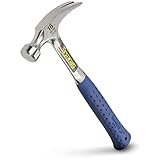
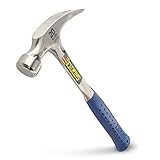
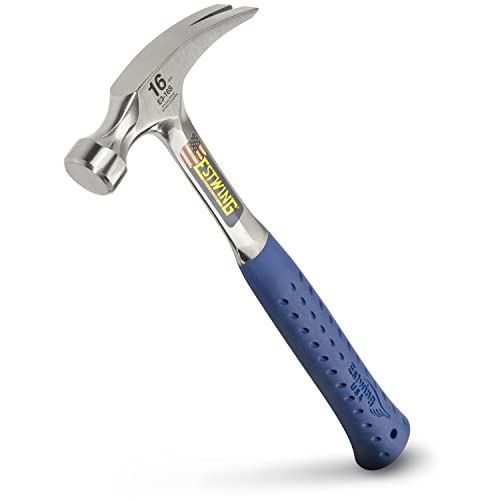
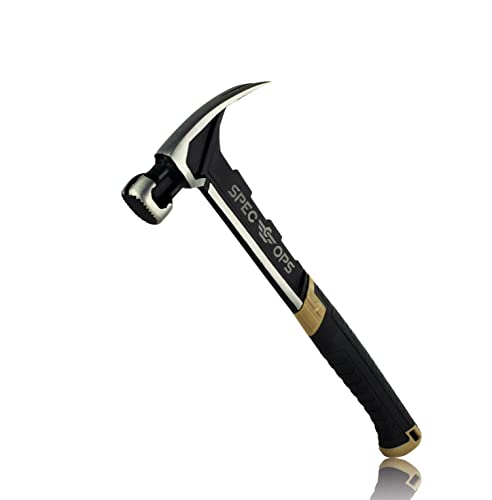
For most reclaimed-lumber projects, buy a 16-ounce claw hammer with a moderately curved claw and a smooth face. It offers the best control around old boards and is less tiring during repeated detail work. A framing hammer makes sense when you are stripping large quantities of heavy timbers, pulling long nails, or dealing with nails driven deep into dense hardwood.
If you are buying one tool specifically for salvage work, a 16-ounce curved-claw hammer is the safer choice. A cheap, soundly made hammer is fine; reclaimed wood does not require a premium brand. Avoid loose heads, damaged claws, and smooth handles that are difficult to control with gloves.
How the two hammers differ
| Feature | Claw hammer | Framing hammer |
|---|---|---|
| Typical weight | 12 to 20 ounces | 20 to 32 ounces |
| Claw shape | Curved claws for leverage and flush nails | Often straighter claws for prying and demolition |
| Best advantage | Control and reduced surface damage | Power and faster removal of stubborn nails |
| Main drawback | Slower on large, deeply driven nails | More likely to split boards or crush edges |
| Typical user fatigue | Lower during careful, repeated pulls | Higher, especially overhead or one-handed |
A claw hammer’s curved claw gives you a rolling action. Once the claw is under the nail head, pulling the handle backward lifts the nail with relatively little effort. A framing hammer’s claw is commonly straighter and thicker. It can bite into a board or pry against a surface more aggressively, which is useful when the nail head is buried or broken off.
The heavier head also delivers more momentum. That helps with 16d framing nails, spikes, and nails embedded in oak or old-growth pine. It does not make every nail easier to remove, though. Extra weight can cause the claw to enter too far, tear out a chunk of wood, or snap a weakened nail instead of extracting it.
Why reclaimed wood changes the decision
Old lumber often has a dry, brittle surface. Nail holes may already be surrounded by cracks, and the board can split along its grain when you apply sideways force. Paint and rust can hide the nail head, while years of compression can lock the nail tightly in place.
Reclaimed boards also contain surprises. A framing hammer can drive its claw into a buried screw, masonry fragment, or hardened nail and transfer a sharp shock into your wrist. Inspect both faces with a bright light and use a metal detector when the wood is valuable. A broken nail or hidden screw is a good reason to stop forcing the claw rather than simply swinging harder.
For boards you intend to leave exposed, surface damage matters. Place a thin scrap of hardwood or a steel nail-puller plate under the hammer head when levering. This spreads the load and reduces dents. The spacer also gives the claw a better pivot point, particularly on thin flooring or siding.
When the claw hammer is the better tool
Choose a claw hammer for pallet boards, barn siding, flooring, trim, and furniture lumber where preserving the board matters more than speed. A 16-ounce model is strong enough for most nails from about 1 1/4 to 3 1/2 inches. A 20-ounce model adds useful leverage without becoming as unwieldy as a framing hammer.
The curved claw is especially helpful when the nail head is intact. Work one claw under the head, then rock the hammer a few degrees in each direction before pulling. If the nail moves only a few millimeters, reset the claw closer to the wood and repeat. Short pulls reduce the chance of bending the nail and enlarging the hole.
A nail-puller plier is a useful companion for finish nails and partially exposed heads. It grips low on the shank and rolls against the jaw, often leaving less damage than a hammer claw. It is slower, but that trade-off is worthwhile on visible faces.
When the framing hammer earns its place
Use a framing hammer when you are processing a pile of heavy beams or dismantling a structure where speed and brute leverage matter. Its 24- to 28-ounce head can loosen long, rusted nails with fewer strikes. Straight claws can also reach deeper into a board when the nail head has snapped off below the surface.
That power is most useful on thick timbers, not delicate boards. On a 3/4-inch reclaimed plank, a framing hammer may pull out a 2-inch nail while removing a walnut-sized chunk of wood. It can also split an end grain area if you pry near the edge. Keep the hammer for rough removal, then switch to a smaller claw hammer or pliers for nails close to the finished surface.
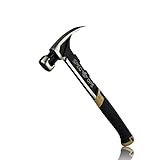
A framing hammer’s waffle face is not a benefit for nail pulling. It is designed to grip nail heads during driving and will leave deep marks if it contacts the lumber. If you buy one for mixed demolition and framing work, choose a smooth face for salvage projects whenever possible. You can compare smooth-face framing hammers rather than the more common checkered-face versions.
A safer nail-removal method
Start by brushing dirt away from the nail head. Set the claw parallel to the grain, not across it, and tap it under the head with light blows. If the head is buried, expose it with a small cold chisel or a nail punch rather than levering against an unknown area.
Pull gradually. If the board begins to lift or crack, stop and add a spacer beneath the hammer head. For very stubborn nails, pry the head out 1/4 inch, cut or bend it if necessary, and then pull the remaining shank from the opposite face with pliers. This is often safer than applying enough force to destroy the board.
Wear eye protection and gloves, but do not rely on gloves to protect against a snapped nail. Rusty nails can break unpredictably, and old paint may contain lead. If the lumber predates the late 1970s or has unknown paint layers, avoid sanding it until you have tested the coating and set up appropriate dust control.
Which one should you buy?
Buy the claw hammer if you want one affordable tool for occasional salvage work, furniture projects, and general repairs. The cheaper option is completely adequate when nails are visible and the boards are thin or valuable. Spend more only for better balance, a comfortable grip, and a properly fitted head—not because the reclaimed wood demands it.
Choose a framing hammer if you regularly dismantle buildings, recover heavy beams, or remove long nails by the bucketful. It is a productivity tool, not automatically a better nail puller. Many serious salvage jobs are best handled with both: use the framing hammer for the first stubborn pull, then the claw hammer or heavy-duty nail puller when the wood needs to stay intact.