What's inside
- Which Lincoln 110V Welder Should You Buy? The Short Answer
- Lincoln 110–120V Welder Specs Compared
- Head-to-Head: Easy MIG 140 vs. Power MIG 140 MP
- Where the Invertec 120S Fits: The Stick Option
- Match the Welder to Your Situation
- Household Circuit Requirements: The Part Listings Skip
- Ownership Realities and Consumables
- FAQ
- Related Guides
As an Amazon Associate I earn from qualifying purchases. This post may contain affiliate links at no extra cost to you.
Our Top Picks


Which Lincoln 110V Welder Should You Buy? The Short Answer
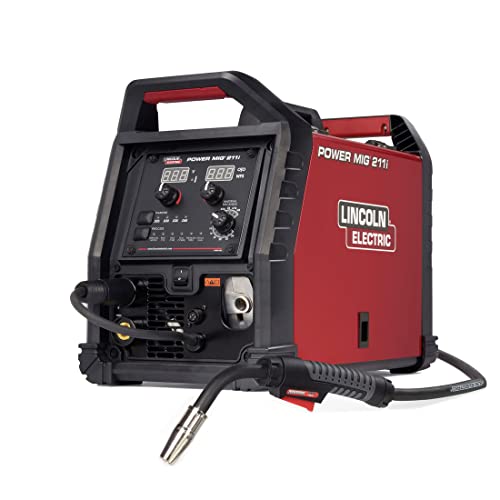
For most home repairs and DIY fabrication, the best lincoln 110 welder is the Lincoln Electric Easy MIG 140 — it plugs into a standard 120V household outlet, handles steel from 24-gauge sheet up to 3/16-inch, and switches between flux-cored and solid MIG wire so you can weld outside or in a garage without gas. If you want a single machine that also does stick and TIG, step up to the Lincoln Power MIG 140 MP. If you specifically need a lincoln 110 stick welder for farm-type repairs on dirty metal, the dual-voltage Lincoln Invertec 120S is the only Lincoln stick unit realistically usable on 120V household power.
The right choice depends on what you weld, how often, and what your circuit can handle — so here’s the full comparison before you commit.
As an Amazon Associate we earn from qualifying purchases at no extra cost to you.


Lincoln 110–120V Welder Specs Compared
All three machines below run on a standard NEMA 5-15/5-20 household receptacle, but they differ sharply in duty cycle, processes, and what that means for real projects.
| Model | Processes | Rated Output (120V) | Duty Cycle | Weld Thickness (Steel) | Weight | Typical Price Range |
|---|---|---|---|---|---|---|
| Easy MIG 140 | MIG / Flux-cored | 30–140A | 20% @ 90A | 24 ga – 3/16″ | ~50 lbs | $600–$750 |
| Power MIG 140 MP | MIG / Flux-cored / Stick / DC TIG | 20–140A | 20% @ 90A | 24 ga – 3/16″ | ~46 lbs | $950–$1,200 |
| Invertec 120S | Stick / DC TIG (lift start) | 20–120A (120V); up to 160A on 230V | 30% @ 90A | 1/16″ rods, up to ~1/8″ steel on 120V | ~14 lbs | $450–$600 |
Two numbers matter most. The 140-amp ceiling on the MIG units is the practical limit of a 20-amp household circuit — claims of welding 3/16″ steel assume a single clean pass with flux-cored wire, which is realistic but at the top of the machine’s ability. The 20% duty cycle at 90A means you can weld 2 minutes out of every 10 at that setting. For short beads on lawn equipment or gate hinges, you’ll never notice. Trying to weld a trailer frame continuously, you will hit thermal cutoff regularly — that’s normal behavior, not a defect.
Head-to-Head: Easy MIG 140 vs. Power MIG 140 MP
These two machines share the same core wire-drive and transformer platform, so arc quality on MIG and flux-core is essentially identical. The differences are about flexibility:
- Processes: The 140 MP adds stick output and a DC TIG setting (you supply a lift-start TIG torch). The Easy MIG 140 is wire-only.
- Controls: The 140 MP uses a digital interface with synergic-style setup — dial in wire size and material thickness, and it suggests voltage/wire speed. The Easy MIG uses manual voltage tap switches and a wire-speed dial, which is simpler but requires you to learn the settings chart inside the door.
- Value: You pay roughly $300–$450 more for the MP. That premium only makes sense if you’ll actually use stick or TIG — otherwise buy the Easy MIG and put the savings toward a gas regulator, .035 flux-cored wire, and an auto-darkening helmet.
For pure home repair — gates, mower decks, brackets, exhaust hangers — the Easy MIG 140 is the better buy. For someone building skills or wanting to TIG weld stainless and mild steel eventually, the lincoln electric 110 welder worth the premium is the 140 MP.
Where the Invertec 120S Fits: The Stick Option
Buyers searching for a lincoln 110 stick welder usually have one of two jobs in mind: repairing rusty or painted metal that MIG hates, or outdoor work where wind blows away shielding gas. The Invertec 120S addresses both, and at ~14 pounds it’s something you can carry up a ladder or to a fence line with one hand.
The caveat: on 120V input, you’re limited to roughly 120A, which means 1/16″ and small 3/32″ 6013/7018 electrodes, and material up to about 1/8″ thick comfortably. On 230V it jumps to ~160A for 1/8″ rods. If you only have household outlets, treat it as a light-repair machine, not a structural one. It’s also transformer-free (inverter-based), so it’s far lighter than any transformer MIG — but the arc on thin sheet metal is harder to control than MIG, and it demands more skill.
Match the Welder to Your Situation
| Your Situation | Best Pick | Why |
|---|---|---|
| First welder, occasional repairs, thin steel | Easy MIG 140 | Easiest process to learn; flux-core works with no gas bottle |
| Want room to grow (TIG/stick later) | Power MIG 140 MP | Four processes on one 120V unit |
| Dirty, rusty, or outdoor repairs; limited outlets | Invertec 120S | Stick tolerates contamination; 14 lbs portability |
| Auto body / sheet metal under 18 ga | Easy MIG 140 with gas | Low end of 30A gives controllable thin-metal arc |
| Repeated welding on 1/4″+ steel | None — step up to a 230V class machine | 120V units lack the amperage and duty cycle for sustained heavy work |
Household Circuit Requirements: The Part Listings Skip
Every lincoln welder 110 buyers consider lists “120V input,” but the circuit details determine whether the machine performs:
- Dedicated 20-amp circuit strongly recommended. On a shared 15-amp circuit, expect nuisance breaker trips above ~100A output. A 20A circuit with 12-gauge wiring lets the machine reach full output.
- Extension cords: If unavoidable, use 12-gauge or heavier, 25 feet or less. A 16-gauge cord at 50 feet drops voltage enough to cause sputtering arcs and false “machine is defective” complaints — this is the single most common setup mistake with 120V welders.
- GFCI outlets: Inverters (the Invertec) can occasionally trip sensitive GFCIs; transformer MIGs are generally fine. Test before a big project, not during it.
Ownership Realities and Consumables
Budget beyond the machine. On the MIG units, contact tips (~$1–2 each) are the first consumable to wear — a burnt tip causes erratic feeding, so keep a 10-pack on hand. Drive rolls should match your wire size; running .035 flux-core through a .030 smooth roll causes slipping and bird-nesting. The liner lasts years if you don’t run rusty wire. On the Invertec, consumables are just electrodes — buy 5-pound boxes of 6013 for general work and keep them dry.
Common first-timer mistakes: running flux-core polarity on MIG settings (the leads are swapable on Lincoln machines — check the decal), welding at max amperage on a 15A circuit and blaming the breaker, and skipping a dedicated ground point on painted metal. A cheap angle grinder for prep pays for itself in bead quality.
FAQ
Can a lincoln 110 welder weld aluminum?
Only with caveats. The MIG units can run aluminum with a spool gun (sold separately) on 120V, limited to thin material. The Invertec is steel/stainless only — DC stick and TIG cannot weld aluminum (that requires AC TIG).
Is flux-cored or gas MIG better for home use?
Flux-core first: no gas bottle, works outdoors, better penetration on rusty metal. Add a 75/25 argon/CO2 bottle later if you do thin auto body work or want cleaner beads indoors.
Will a 110 lincoln welder run off a generator?
Yes, but size it properly — these machines pull roughly 20–25A input at full output, so you need a generator rated around 4,000+ watts continuous, and inverter-type generators with clean power are safer for the 140 MP’s electronics.
Bottom line: get the Easy MIG 140 for straightforward home repair, the 140 MP if multi-process flexibility is worth $400 to you, and the Invertec 120S if portability and stick welding dirty metal are the priority. Any of the three will handle the overwhelming majority of jobs a homeowner actually encounters.