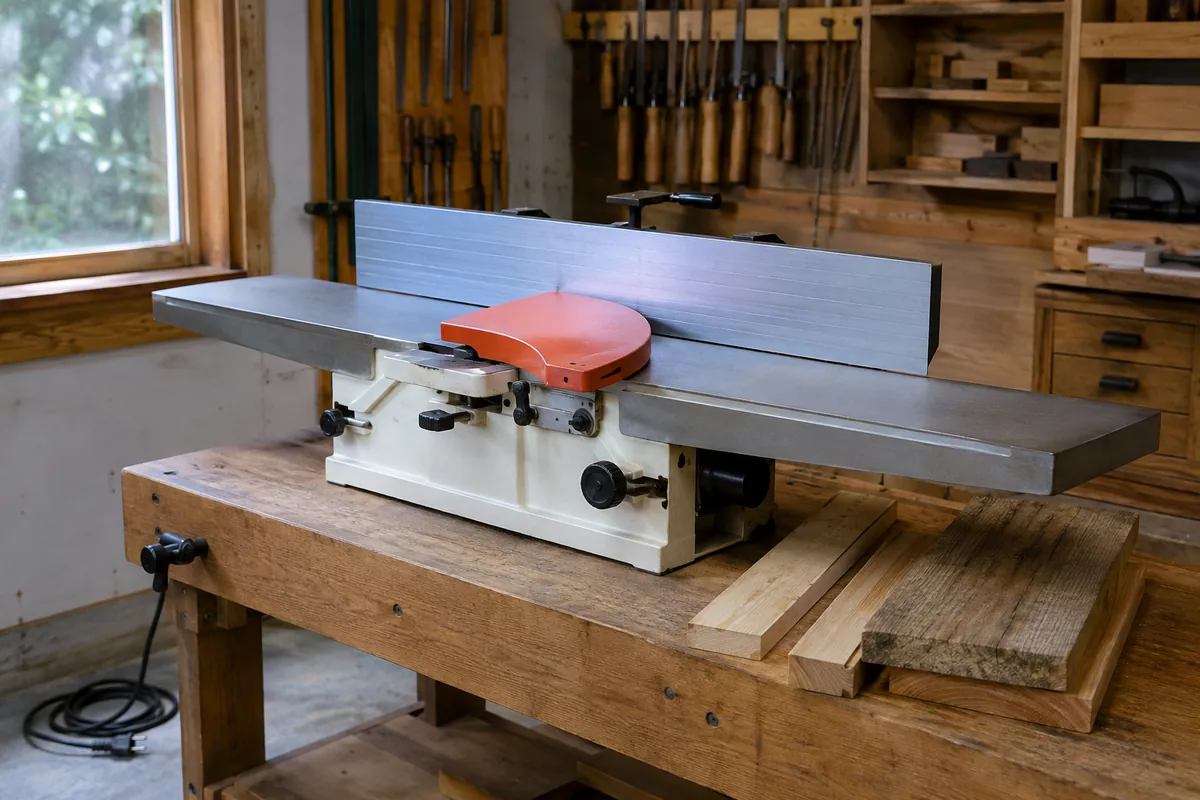
What's inside
As an Amazon Associate I earn from qualifying purchases. This post may contain affiliate links at no extra cost to you.
Our Top Picks
 Cutech 401120HI-IF 12-Inch Spiral Cutterhead Benchtop Jointer with12 inch w/ Cast Iron Fence34 x 23.75 x 13.25 inchesCheck on Amazon
 Cutech 40180HI 8-Inch Spiral Cutterhead Benchtop Jointer with8 inch34 x 19.75 x 13.25 InchesCheck on Amazon
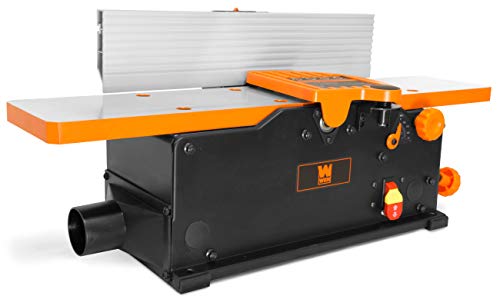


Best Benchtop Jointer for Straightening Narrow Hardwood Boards
A benchtop jointer is useful when a board is too narrow for a wide jointer but too rough to glue reliably. It flattens one face and creates one square edge, giving you a reference surface for a planer, table saw, or hand plane. For narrow hardwood boards, the best choice is usually a 6-inch benchtop jointer with a rigid fence, carbide cutterhead, and enough table length to support the stock.
That does not mean every inexpensive benchtop jointer is a good buy. Short tables, flexible fences, poor dust collection, and shallow adjustment mechanisms can make a machine harder to use than a hand plane. The tool needs to remove material consistently without rocking the board or leaving a tapered edge.
As an Amazon Associate we earn from qualifying purchases at no extra cost to you.


What Matters Most for Narrow Boards
Table length is more important than maximum width. A 6-inch cutting width is enough for most cabinet parts, trim, and narrow hardwood strips. Long infeed and outfeed tables are more valuable because they keep a 24- to 36-inch board from tipping as it enters or leaves the cutterhead. A short table can produce a concave or convex edge even when the machine is adjusted correctly.
Fence rigidity determines whether the edge is actually square. The fence should lock firmly at 90 degrees and remain parallel to the table during adjustment. A fence that flexes when you press a board against it will create an edge that looks straight but is not square. That problem becomes obvious during glue-up, when the boards touch at one end and open at the other.
A helical or spiral carbide cutterhead is a worthwhile upgrade. It runs more quietly than a straight-knife head and tends to leave fewer long tear-out streaks in curly maple, oak, and figured walnut. Carbide inserts are also easier to replace than knives that must be aligned across the full cutterhead. Straight knives are still acceptable if the board is mostly plain-grained and the machine has a reliable knife-setting system.
Check the minimum stock size. Narrow does not mean tiny. Most benchtop jointers are intended for stock roughly 1/4 inch or thicker and at least a few inches long, depending on the manufacturer. Very short pieces are unsafe and difficult to control. For small parts, use a carrier sled or joint a longer board before cutting it into pieces.
Benchtop Jointer Types Compared
| Type | Best use | Advantages | Limitations |
|---|---|---|---|
| 6-inch straight-knife benchtop jointer | Plain-grain boards and occasional furniture work | Lowest purchase price; simple cutter changes | More noise; greater tear-out risk; knives need careful alignment |
| 6-inch helical or spiral benchtop jointer | Hardwood, figured grain, and regular use | Cleaner finish; quieter operation; replaceable carbide inserts | Higher cost; inserts still need inspection and replacement |
| Benchtop jointer with short tables | Small shop use and boards under about 24 inches | Compact and easier to store | More sensitive to board tipping and snipe |
| Long-table benchtop jointer | Long cabinet parts and furniture stock | Better support and straighter results | Heavier, larger, and usually more expensive |
For most buyers, I would start by comparing 6-inch helical benchtop jointers. They cost more than basic straight-knife machines, but the cutterhead is a better match for dense hardwood and occasional figured stock. If your material is inexpensive pine, poplar, or straight-grained ash, a 6-inch straight-knife benchtop jointer can be the cheaper, sensible option.
How to Get a Straight Edge
Before jointing, mark the board’s high spots with pencil. Put the concave face down for the first pass, then take light cuts—about 1/32 inch for hardwood is a practical starting point. A 1/16-inch cut can work on a stable machine, but it increases feed effort and tear-out. Keep the board moving at a steady rate rather than stopping over the cutterhead.
Use the front of the board to establish the cut, then transfer pressure to the outfeed table as soon as enough jointed surface is available. Pressing down on the infeed table throughout the pass can force the board to follow its original bow, leaving the edge curved. On the edge pass, keep the board tight to the fence without pushing it sideways after it has passed the cutterhead.
Take two or three light passes instead of trying to remove all the waste at once. After each pass, check the edge with a straightedge and a square. A board can be straight but not square if the fence has moved or the pressure against it was inconsistent.
Common Failure Modes
Snipe or a tapered end: This usually comes from the board tipping as it leaves the outfeed table, or from tables that are not coplanar. Support long boards with an auxiliary stand at the same height as the outfeed table. Do not lift the trailing end while it is still over the cutterhead.
Burn marks: Dull knives, a slow feed rate, or taking too deep a cut can burn dense hardwood. Clean resin from the cutterhead and replace damaged inserts. A faster, consistent feed often solves the problem, but never rush the board through the machine.
Tear-out: Feed against the grain direction when possible, reduce the cut depth, and use a spiral cutterhead for figured material. No cutterhead eliminates tear-out in every grain orientation.
Edges that will not glue: Check the fence with a reliable square and verify that the board is not rocking on a crowned face. If the edge is hollow, your hand pressure may be concentrated at both ends. If it is rounded, you may be pressing in the center or using a short table.
When the Cheaper Jointer Is Enough
Buy the less expensive straight-knife machine if you joint a few narrow, straight-grained boards each month and are comfortable setting knives. It can produce excellent edges when the tables are aligned and the fence locks securely. Spend the extra money on a spiral cutterhead when you regularly work with hard maple, walnut, figured wood, or boards that would be expensive to replace.
Also compare the machine’s footprint and dust port before buying. A jointer that fits on a shelf but cannot connect to your shop vacuum will quickly cover the area in chips. For a compact setup, a benchtop jointer dust collection setup is often more useful than a slightly higher motor rating. If your boards are mostly shorter than 24 inches, short tables are tolerable; for longer stock, choose a long-table design or plan on building solid infeed and outfeed support.
Finally, do not buy based only on a 6-inch width rating. For narrow hardwood boards, a firm fence, coplanar tables, controllable depth adjustment, and usable dust collection matter more than an extra fraction of horsepower.