What's inside
As an Amazon Associate I earn from qualifying purchases. This post may contain affiliate links at no extra cost to you.
For a cabinet face frame, both a biscuit joiner and a Domino-style loose-tenon joiner can make accurate, strong joints. The Domino generally has the strength advantage because it cuts a deeper, tighter-fitting mortise for a solid wood tenon. But that advantage matters most when the joint is heavily loaded or the work must withstand rough handling. For ordinary face-frame rails and stiles, a well-glued biscuit joint is often strong enough—and is cheaper and faster to set up.
As an Amazon Associate we earn from qualifying purchases at no extra cost to you.


Our Top Picks


What each joiner puts inside the joint
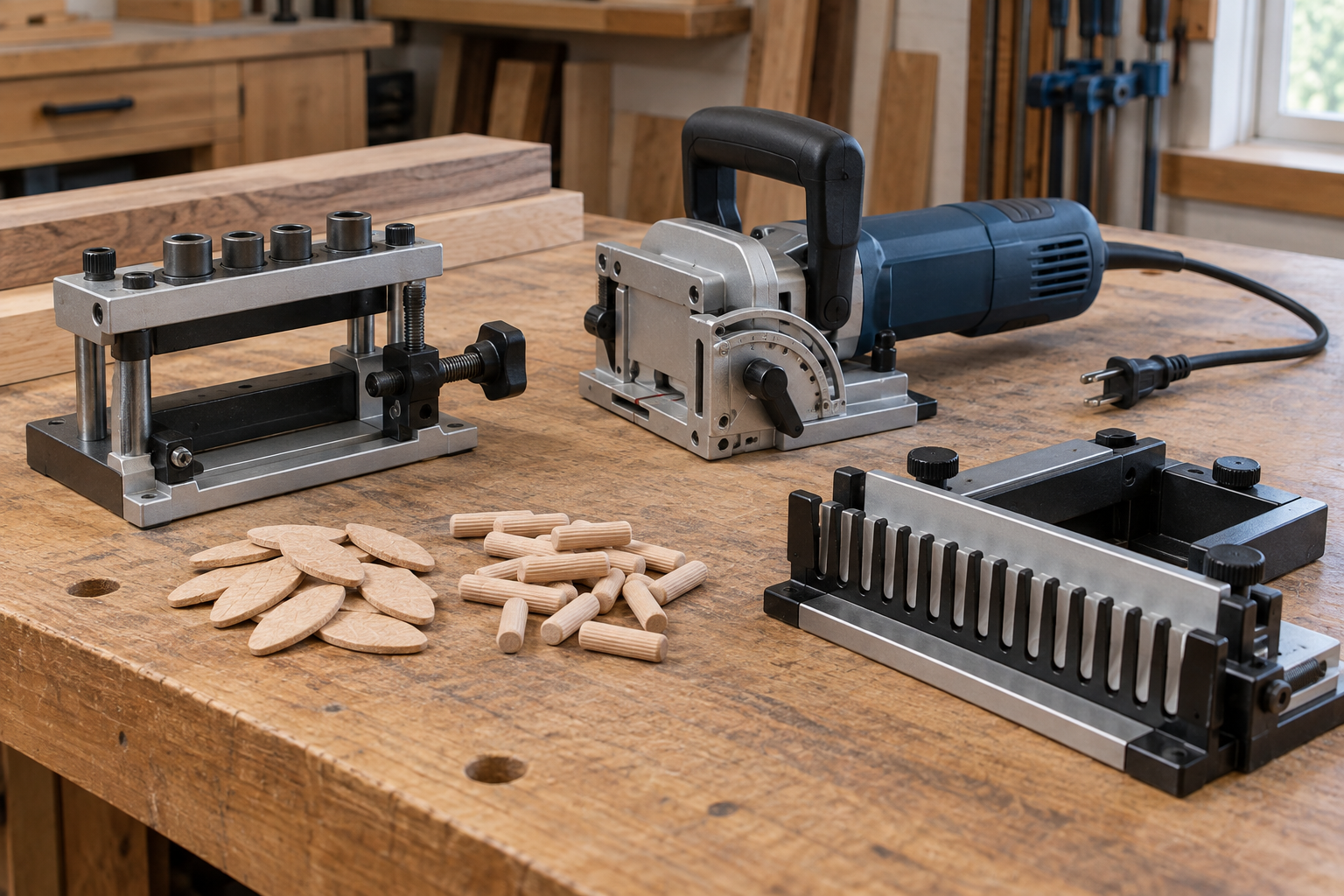
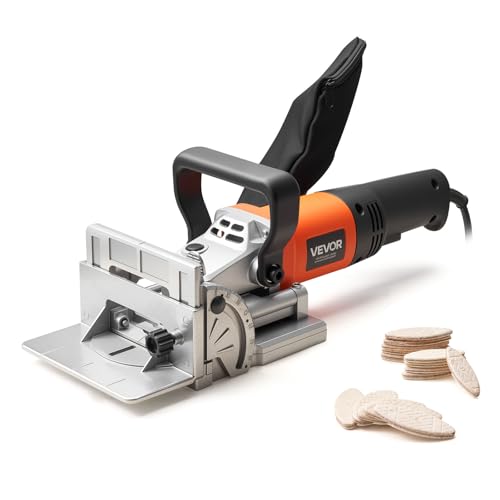
A biscuit joiner cuts a crescent-shaped slot across the mating edges. A compressed beech biscuit, usually size 0, 10, or 20, goes in with glue. The biscuit swells as the glue’s moisture reaches it, helping fill the slot and align the pieces. It adds some resistance to the joint pulling apart, but much of a biscuit’s value in face-frame work is keeping the surfaces flush while the glue sets.
A Domino-style joiner cuts a rectangular mortise in each piece. A solid beech tenon bridges the two mortises, providing more long-grain glue area and a thicker, deeper connection than a biscuit. The fit is generally more substantial, and the joiner’s fence and settings can make repeatable mortises quickly once adjusted.
Which joint is stronger in a face frame?
In a properly fitted, well-glued joint, the Domino is usually stronger in direct pull-apart and twisting tests. Its tenon has more material and more glue surface engaged inside the rail and stile. It also provides a more positive mechanical connection if the frame gets racked during installation.
That does not mean a biscuit joint is weak in normal cabinet service. A face frame glued to a cabinet box is supported along much of its length, and its rails and stiles are not typically carrying a large isolated load at every corner. With sound stock, clean cuts, and enough clamping pressure, biscuits are adequate for many face frames. The joint may fail before the surrounding wood if the parts are poorly glued, but a Domino is not a substitute for a bad fit or weak material.
Joint dimensions matter. A biscuit slot close to the edge can leave little wood to resist splitting, particularly in narrow stiles. A Domino mortise can also be too close to an edge, too deep, or oversized for the part. On typical 3/4-inch-thick frame stock, avoid cuts that leave thin cheeks or break through the face; follow the joiner’s depth limits and test the setup on scrap.
At a glance
| Factor | Biscuit joiner | Domino-style joiner |
|---|---|---|
| Joint strength | Adequate for many glued face frames; useful mainly for alignment | Usually stronger, with a more substantial tenon connection |
| Alignment | Good, though the slot allows some lateral play | Good; some systems offer wider mortises for easier assembly |
| Setup and pace | Simple, quick cuts and widely available biscuits | More settings and cost, but efficient for repeated mortises |
| Best fit | Budget builds and routine face frames | Higher loads, frequent joinery, or work needing robust joints |
| Cost | Lower tool and consumable cost | Higher initial investment and tenon cost |
Alignment can matter more than extra strength
Face-frame joints need to meet cleanly, with the front faces flush. Biscuits help prevent a rail from sliding up or down as clamps tighten, but the slot is longer than the biscuit, so it allows movement along the joint. That can be useful: a little adjustment makes it easier to align a long frame without fighting tight-fitting parts.
Domino mortises can be cut at a close, repeatable fit for accurate positioning. Some joiners also let you use a wider mortise on one side, keeping alignment while allowing enough clearance to assemble a frame without forcing every tenon into a tight fit. If you are making many frames, that combination of accuracy and repeatability can save time. If you only make a few, careful layout and clamping blocks can get a biscuit-jointed frame straight.
How these joints fail
With either method, the common problems are preventable. A shallow or misaligned cut reduces engagement; glue-starved slots, dusty mortises, and joints assembled after the glue begins to tack can leave a weak bond. Too much glue in a close-fitting mortise can hydraulically resist seating the tenon, so use a modest amount and spread it where it can coat the surfaces. Dry-fit first, especially when the frame has multiple rails and several joints must close at once.
Biscuits can swell before the joint is together if they are coated heavily or left sitting in wet glue. Keep assembly moving, and use enough clamps to bring the shoulders fully closed without bowing the frame. For narrow stock, check biscuit placement on scrap; a slot that breaks through a face is an obvious failure, but a slot that leaves a very thin wall can also split under clamping pressure.
With Dominos, the main risks are a mortise cut at the wrong height or depth, and a fit so tight that assembly becomes difficult. Mark the reference face, support long rails, and make a test joint with the same stock thickness. Neither tool corrects warped or poorly milled parts.
Which should you buy?
For occasional cabinet work and standard face frames, a biscuit joiner is the sensible budget choice. It is inexpensive compared with a Domino system, simple to learn, and sufficient when the frame will be glued and attached to a cabinet box. Choose this route if your main needs are alignment and ordinary shop-built cabinets, not maximum joint strength.
Consider a Domino-style loose-tenon joiner if you build cabinets regularly, make freestanding frames, or want a stronger joint for larger doors, furniture, and other work beyond face frames. Its higher price is easier to justify when you use it across many projects. Check the cost and availability of compatible tenons as well as the tool itself.
If you already own a biscuit joiner, there is little reason to replace it just for typical cabinet face frames. Spend the difference on straight stock, accurate milling, and a reliable clamping setup. If you are buying a joiner for broader furniture work and want a more substantial mechanical joint, the Domino is the stronger and more versatile choice.