What's inside
As an Amazon Associate I earn from qualifying purchases. This post may contain affiliate links at no extra cost to you.
Our Top Picks
 Hoteche 10-Inch Benchtop Planer and Jointer Combo with36.22" x 13.38" x 16.14"36.22 x 13.38 x 16.14 inchesCheck on Amazon
 Cutech 40180HI 8-Inch Spiral Cutterhead Benchtop Jointer with8 inch34 x 19.75 x 13.25 InchesCheck on Amazon


The short version
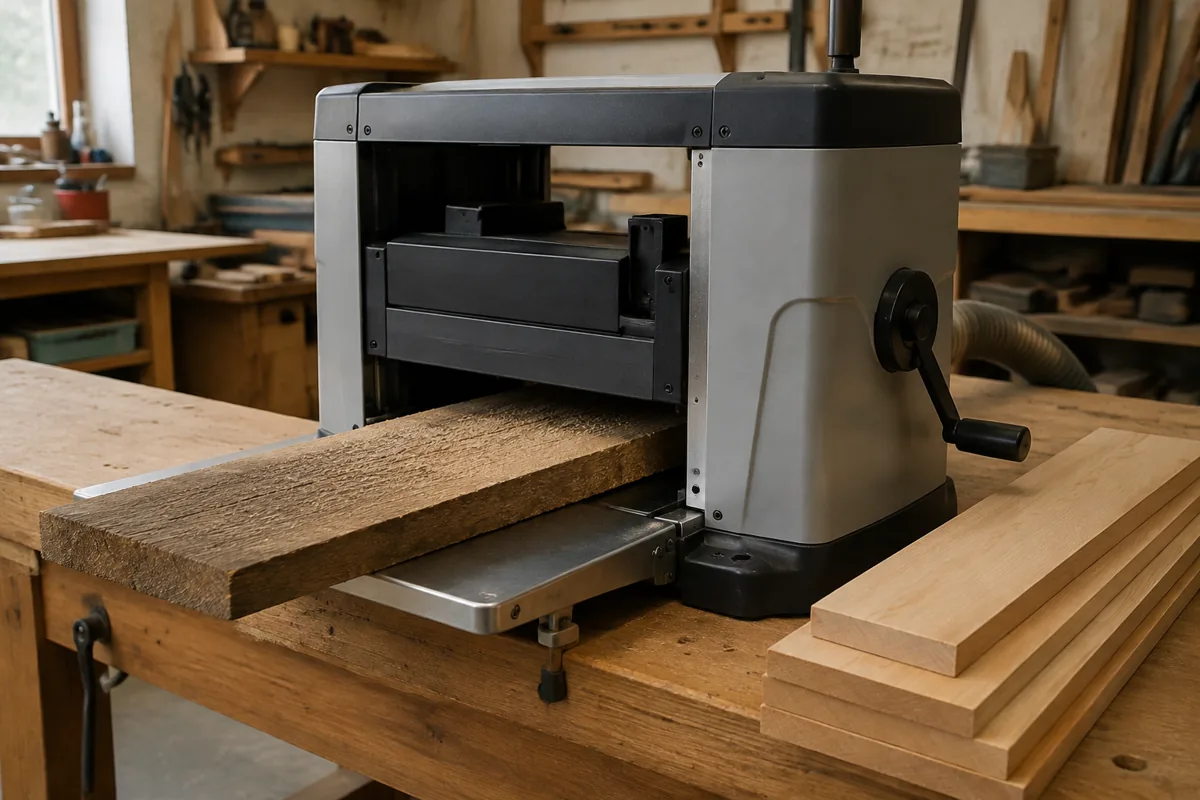
The Grizzly G0940 and Jet JJP-8BT are compact, benchtop jointer-planers meant to perform two jobs in a small shop: flatten an edge or face as a jointer, then thickness boards as a planer. Both have 8-inch-wide capacity and a 10-amp, 120-volt motor. Neither is a substitute for a long-bed floor jointer when you routinely flatten long, twisted stock.
The main practical difference is cutterhead design: the G0940 uses a helical-style head with carbide inserts, while the JJP-8BT uses straight knives. That makes the Grizzly appealing if you value quieter, less tearout-prone cutting and easy-to-replace inserts. The Jet is a reasonable choice for lighter work, especially if its lower price or local availability matters more than cutterhead refinement.
As an Amazon Associate we earn from qualifying purchases at no extra cost to you.


At a glance
| Feature | Grizzly G0940 | Jet JJP-8BT |
|---|---|---|
| Machine type | Benchtop jointer-planer | Benchtop jointer-planer |
| Working width | 8 inches | 8 inches |
| Motor and power | 10 amps, 120 volts | 10 amps, 120 volts |
| Cutterhead | Helical-style head with carbide inserts | Two straight knives |
| Jointer tables | About 33 inches overall | About 29 inches overall |
| Planer depth of cut | Up to 1/8 inch | Up to 1/8 inch |
| Use case | Small-shop stock prep; favors reduced tearout and simpler edge maintenance | Small-shop stock prep; favors a conventional knife setup |
Specifications can vary by production version, so check the current manual before buying, particularly for table dimensions, included accessories and electrical requirements. Both machines need a stable, level bench and dust collection. Their compact beds also put a hard limit on how comfortably they handle long lumber.
Cutterhead and surface finish
The G0940’s carbide inserts are set at an angle to the work. When an edge chips, you rotate that insert to a fresh cutting edge rather than sharpening or replacing a full-length knife. This is convenient, but not magic: damaged inserts still need attention, and a badly nicked insert can leave a repeatable line in the surface. Replacement inserts cost money, and you should keep the head clean when rotating them.
The Jet’s straight knives cut across the width in the familiar way. Properly set sharp knives can leave a good finish on ordinary stock, but knife changes and height setting take more care. A small mismatch between the knives can show up as a ridge. Knots, reversing grain and figured hardwood can tear out on either machine; the helical-style head generally has an advantage there, but shallow cuts and sensible feed direction still matter.
For a hobby shop processing mostly pine, poplar, maple or other cooperative stock, the Jet’s knife system may be perfectly adequate. If you routinely work with difficult grain or would rather rotate a small insert than set full-width knives, the Grizzly’s cutterhead is the more useful feature—not a promise of tearout-free boards.
Using one machine for two jobs
On the jointer, you reposition the tables and guard to change over to planer mode. That saves floor space and the cost of buying two machines, but the changeover takes time. If you switch modes repeatedly during a project, expect the setup to become part of the work rather than an instant adjustment. Keep the cutterhead covered and the guard in place when operating in jointer mode.
For face-jointing, feed the board with firm, even pressure over the infeed table, then transfer pressure to the outfeed table as the cut progresses. A short bed is unforgiving of long, bowed boards: it can follow the bow instead of removing it. You can still true short and medium-length pieces, but flattening a long door stile or tabletop component is slower and less reliable than on a long-bed machine.
In planer mode, the 1/8-inch maximum cut is a limit, not a sensible default for every board. Take lighter passes on wide or hard stock, and reduce the cut further if the motor bogs down, the board chatters or the finish gets rough. A 1/16-inch pass is a safer starting point on demanding material. Neither machine replaces a wide planer: the 8-inch capacity means you will need to rip wider boards into narrower sections and glue them back together.
Which one should you buy?
Choose the Grizzly G0940 if the insert head is worth the added cost to you, you work with figured or variable-grain hardwood, or you want to avoid conventional full-width knife changes. It remains a benchtop machine, so do not buy it expecting a heavy production planer or a cure for long-board jointer limitations.
Choose the Jet JJP-8BT if you want an 8-inch combination machine for occasional furniture or repair work and are comfortable maintaining straight knives. When sharp and correctly set, it can make sound stock prep possible for less money. The cheaper option is fine when your lumber is manageable, your cuts are light and you do not mind taking time over knife setup.
Before ordering either, check your bench depth and height, how you will support boards entering and leaving the machine, and whether your dust collector can keep up with planer chips. A compact tool still needs room for long stock. If you have the space and regularly prep lumber longer than a few feet, a separate floor-standing jointer and planer are usually a better investment; compare benchtop jointer-planers with 8-inch jointers and benchtop thickness planers before deciding which compromise fits your shop.