What's inside
As an Amazon Associate I earn from qualifying purchases. This post may contain affiliate links at no extra cost to you.
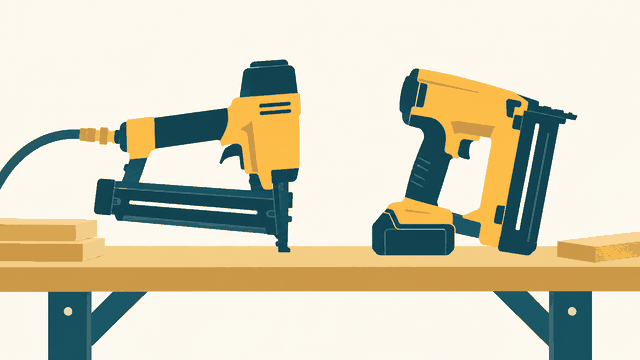
Milwaukee’s 2746-20 and DeWalt’s DCN680 are both 18-gauge, battery-only brad nailers built to replace pneumatic and gas-cartridge guns for trim. Neither needs a compressor or fuel cell, both shoot the same 5/8″ to 2-1/8″ 18ga brads, and both are aimed at finish carpenters who are tired of dragging a hose. The difference is how they get there, and which battery system you’re already invested in matters more than the marketing sheet.
As an Amazon Associate we earn from qualifying purchases at no extra cost to you.



Our Top Picks


How they fire without gas
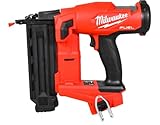
Both are true cordless brad nailers, but the drive mechanisms are different. The Milwaukee 2746-20 (M18 FUEL) uses a nitrogen air-spring. A small motor compresses air in a sealed cylinder, then releases it to drive the piston. The DeWalt DCN680 (20V MAX, also sold as DCN680B bare tool) uses a flywheel and clutch system. The motor spins up a flywheel, a clutch engages, and a driver blade fires the nail.
In practice, that changes the feel. The Milwaukee has almost no spin-up time before each shot and does not need to rev between nails in sequential mode. The DeWalt has a slight whine as the flywheel spins up; if you pull the trigger too quickly after the previous shot, you get a micro-delay. Neither is slow, but rapid bump firing feels more immediate on the Milwaukee, while the DeWalt feels a little more mechanical.
Both offer sequential and contact-actuated (bump) modes selectable on the tool, tool-free depth adjustment via a thumbwheel at the nose, and a dry-fire lockout that stops the gun when you’re down to 4-5 nails. Both also have an LED work light and a reversible belt hook. Neither requires any break-in like the old gas guns did.
Specs head-to-head
| Feature | Milwaukee 2746-20 | DeWalt DCN680 |
|---|---|---|
| Battery Platform | M18 (18V) | 20V MAX (18V nominal) |
| Gauge / Fastener Range | 18ga, 5/8″ – 2-1/8″ | 18ga, 5/8″ – 2-1/8″ |
| Magazine Capacity | 110 nails | 110 nails |
| Tool Weight (bare, no battery) | 6.2 lbs | 5.8 lbs |
| Tool Weight (with 2.0Ah/3.0Ah battery) | ~7.1 lbs | ~6.8 lbs |
| Height / Length | 10.6″ H x 11.1″ L | 11.5″ H x 10.5″ L |
| Firing Modes | Sequential + Bump | Sequential + Bump |
| Dry-Fire Lockout | Yes | Yes |
| Jam Clearing | Tool-free nose latch | Tool-free nose latch |
| Stall Release | Top-mounted reset | Top-mounted stall release lever |
On paper they look nearly identical. The DeWalt is a few ounces lighter and a bit taller due to the flywheel housing on top. The Milwaukee is shorter and feels more balanced with a compact 2.0Ah or 3.0Ah battery. Put a 5.0Ah High Output battery on the Milwaukee and the balance shifts rearward noticeably.
Driving power and battery life
For softwoods like pine, poplar, and MDF, both guns will sink 2″ brads flush every time with depth set at mid-range. The test is hardwoods. In red oak and hard maple, both guns need full depth to bury a 2″ or 2-1/8″ brad. The Milwaukee tends to leave 1/32″ proud less often than the DeWalt on long brads in oak if your battery is low. The DeWalt flywheel system is more sensitive to battery voltage – on a nearly depleted 2.0Ah pack, you will see more shallow drives and the motor will stall more easily.
Battery life is excellent on both because an 18ga brad takes little energy. Expect roughly 1,200 to 1,500 nails per charge from a 3.0Ah/4.0Ah-class battery and 600-750 from a compact 2.0Ah. Milwaukee advertises up to 1,500 per charge on a 3.0Ah XC, DeWalt claims up to 1,300 on a 2.0Ah – real-world numbers track close if you are not constantly leaving the light and flywheel spinning. For a day of casing windows and baseboard in a single room, a single compact battery is usually enough. For a whole-house trim job, carry a spare.
If you are already on one platform, that should decide you. Buying a Milwaukee M18 brad nailer just to get the nailer means adding batteries and a charger, which erases any small performance edge. The same is true in reverse for the DeWalt 20V MAX brad nailer if you live on M18 tools.
Handling, size, and ergonomics
This is where preference splits crews. The DeWalt DCN680 has a longer, slimmer nose that makes it easier to see exactly where the brad will land in tight corners, like inside cope joints or the edge of pre-assembled casing. The tip has a non-marring pad that actually stays on. The Milwaukee 2746-20 has a wider nose housing and a slightly larger sight window, but the body is more compact front-to-back, which helps when you are nailing overhead crown or working inside a cabinet.
Trigger feel favors Milwaukee – shorter travel and a cleaner break in sequential mode. DeWalt’s trigger is longer and stiffer, which some guys prefer to prevent accidental doubles when bump firing. Both have a lockout button to prevent firing when you are climbing a ladder.
Recoil is light on both, but slightly sharper on the Milwaukee due to the air-spring. The DeWalt’s flywheel softens the impulse a bit. Noise is similar at around 95-98 dB at the tool; you still want hearing protection in a closed room.
For maintenance, both are designed to be sealed units. No oiling, no gas cartridges. Clear a jam by opening the nose latch and pulling the bent brad with pliers. If the driver blade stalls mid-stroke – common if you jam the nose into the workpiece or try to fire a 2-1/8″ brad into a knot – use the stall release on top to reset the driver. DeWalt’s stall lever is larger and easier to work with gloves on.
Failure modes and long-term reliability
Neither gun is perfect. The most common failure on the Milwaukee 2746-20 is inconsistent depth on long brads when the tool gets hot after several hundred rapid shots. The nitrogen cylinder heats up and depth drifts. Let it cool for 10 minutes and it returns. You may also see the dry-fire lockout engage early if you use off-brand brads with slightly inconsistent heads.
The DeWalt DCN680’s weak point is the flywheel clutch. If dust packs into the housing, bump firing gets sluggish and you will get stalls that require two or three lever resets. Blow it out with compressed air at the end of the day. DeWalt also has a known issue where the driver blade develops a burr after 15,000-20,000 nails and starts to leave a small dimple or tear-out around the nail hole in soft pine. Milwaukee’s driver stays cleaner longer but costs more to replace.
Both will occasionally leave a proud nail in dense engineered lumber like LVL or heavily glued plywood – that is not a failure, it is the limit of an 18ga brad gun. If you are routinely nailing into those materials, you want a 16ga or 15ga finish nailer instead.
Which should you buy
Buy on battery platform first. If you run M18 FUEL for your drill, impact, and saw, get the Milwaukee 2746-20. It is slightly faster in rapid sequential work, sinks long brads a little more consistently in hardwood, and has a more compact body for overhead work.
If you run DeWalt 20V MAX, get the DCN680. It is lighter, has better sight lines, and the stall release and jam clearing are more glove-friendly. It is also often $50-$80 cheaper as a bare tool, which matters if you only use a brad nailer a few times a year for baseboard, shoe, and small crafts.
If you own neither platform and are buying specifically for trim, the cheaper option is fine. For occasional DIY and light professional use, the DeWalt kit with a 2.0Ah battery is the better value. For daily trim work where you need to run 2″ brads into oak casing all day, the Milwaukee justifies the extra money.
Either way, skip the compressor for this class of work. A modern cordless 18 gauge brad nailer will handle 90% of what you would have pulled a hose out for, with less setup and no hose to trip over on stairs. Keep a pneumatic 18ga in the shop only if you shoot thousands of brads per week and want the lightest possible tool in hand.