What's inside
As an Amazon Associate I earn from qualifying purchases. This post may contain affiliate links at no extra cost to you.
Our Top Picks
 Cutech 401120HI-IF 12-Inch Spiral Cutterhead Benchtop Jointer with12 inch w/ Cast Iron Fence34 x 23.75 x 13.25 inchesCheck on Amazon
 Makita XPK01Z 18V LXT Lithium-Ion Cordless 3-1/4-Inch PlanerOne Size14 x 9 x 8 inches7.2 poundsCheck on Amazon


The short answer
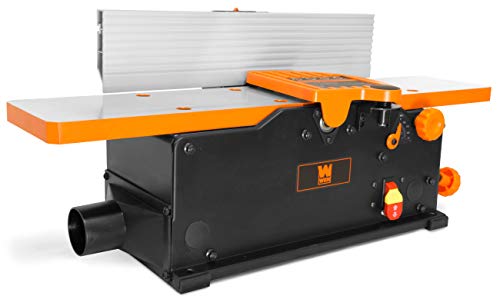
For flattening the edge of several boards, a benchtop jointer is faster and more repeatable—provided the board fits the machine and the cutter is set up correctly. A hand planer costs less, takes up little space, and can handle a long or awkward board that won’t sit safely on a short jointer table. It also asks more of your technique and usually takes longer.
One important distinction: a standard hand planer, meaning a powered handheld planer, is not a substitute for a jointer used by simply running it along an edge. It can remove material, but it has no long reference bed to keep the edge straight. If you need a straight, square edge for a glue-up, a jointer or a hand plane used with a reliable straightedge is the better route.
As an Amazon Associate we earn from qualifying purchases at no extra cost to you.


What a straight edge requires
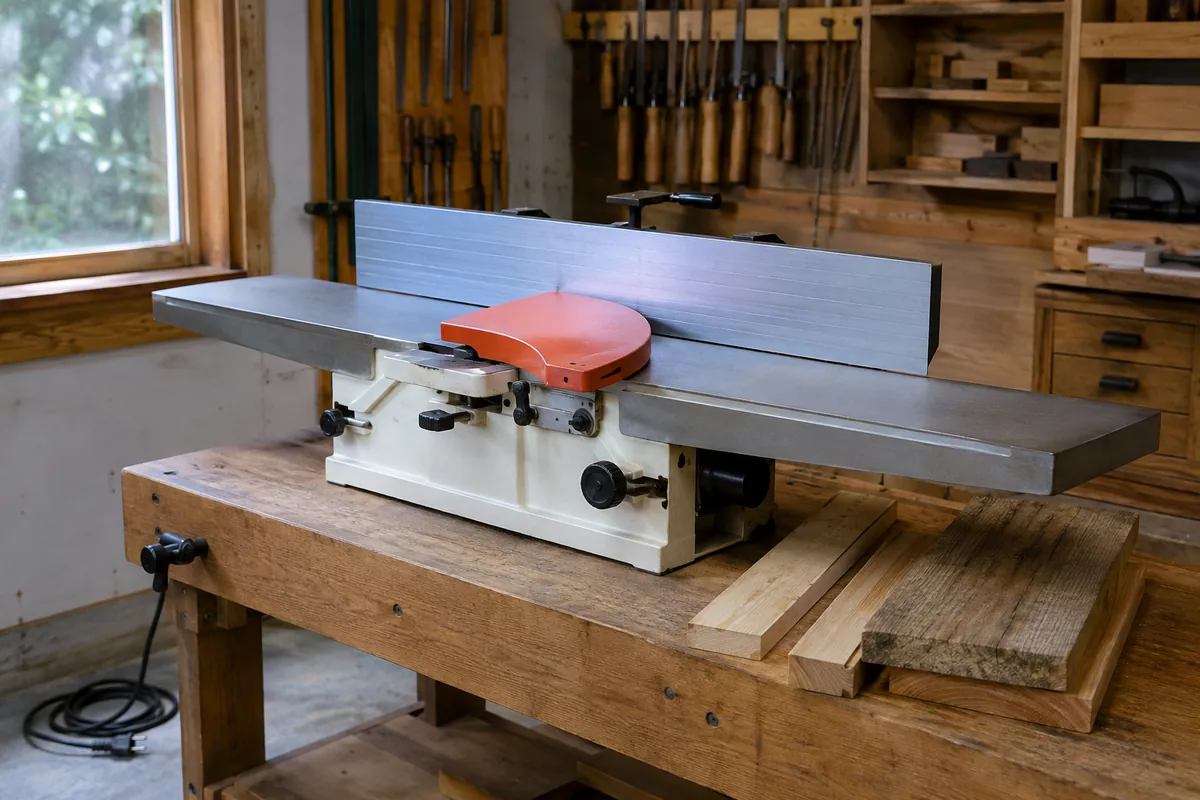
To make a board edge straight, the tool needs to reference the board’s length rather than follow every dip and bump. A jointer does this with its infeed and outfeed tables: the outfeed table supports the freshly cut edge, while the fence guides the board and keeps the edge square to the face. A properly set-up machine removes high spots until the edge is straight.
A handheld power planer references only the small sole under the tool. On a long board, that short sole can ride over dips or tilt into them, leaving a wavy edge, a hollow in the middle, or ends that are thinner than the center. You can improve control with a long straightedge or a guide, but setup and passes matter. A conventional bench plane, by contrast, can be used with a long sole to true an edge, though it takes practice.
Benchtop jointer vs. handheld power planer
| Factor | Benchtop jointer | Handheld power planer |
|---|---|---|
| Best use | Straightening and squaring board edges | Removing material from a face, trimming a proud edge, or fitting a board |
| Typical working width | Often 6 inches; check the actual machine | Usually about 3 to 3¼ inches per pass |
| Board length | Short tables limit safe support; long stock needs adequate infeed and outfeed support | Can reach awkward places, but keeping a long edge straight is difficult |
| Setup | Needs a stable stand, aligned tables, a square fence, and dust collection | Needs a firm grip and controlled passes; a guide helps with straight edges |
| Learning curve | Moderate; poor technique can cause snipe or an out-of-square edge | Moderate to high for straight, consistent edges; easy to create dips or gouges |
| Practical advantage | Repeatable results on suitable stock | Portable, versatile, and useful for fitting or surface removal |
When a benchtop jointer makes sense
Choose a jointer if you regularly prepare lumber for edge-glued panels, need square edges for casework, or process multiple boards at a time. Once the fence and tables are aligned, each pass follows the same reference. That repeatability is hard to match with a handheld planer, especially when the boards need to meet without visible gaps.
Check the machine’s capacity against your stock. A 6-inch jointer cannot flatten an edge wider than its cutter, and a short benchtop model may not support a 6-foot board well without roller stands or careful infeed and outfeed support. For long stock, poor support can lift or tip the board, producing a tapered or uneven cut. A jointer also removes material quickly: take light cuts, often around 1/32 inch or less for final passes, and keep hands clear of the cutterhead. A jointer is not the right tool for end grain.
Before buying, account for the footprint and dust. A jointer needs a stable surface and produces chips quickly; a shop vacuum may struggle with a small port. If those costs and space requirements are acceptable, compare benchtop jointers by cut width, table length, fence adjustment, and parts support—not just motor power.
When a handheld planer is enough
A handheld power planer is a sensible purchase if you mostly trim doors, level a proud joint, ease an edge, or remove material from a small workpiece. It is usually cheaper and easier to store than a benchtop jointer, and you may already own one for other jobs. For a short board or a rough edge that only needs to fit, a few controlled passes can be perfectly adequate.
It is a weaker choice when a board must be straight over its full length. A 3-inch-wide tool needs overlapping passes on a wider face, and those passes can leave ridges. On an edge, tilting the planer slightly can make the edge no longer square; pausing at one end can create a low spot. Set the cut shallow, support the board firmly, and check frequently with a straightedge and square. For a long edge, use a clamped guide or another reliable reference rather than steering by eye. Browse handheld power planers if portability and general fitting work matter more than jointer-like accuracy.
A cheaper method for occasional boards
If you only need to flatten an edge now and then, you may not need either power tool. A sharp bench plane, a straightedge, and patience can produce an excellent edge. A longer plane is generally easier to use for straightening than a short block plane, because its sole bridges small dips. The trade-off is time: dull iron, poor adjustment, or an uneven planing stroke can leave tear-out and a wandering edge.
For a one-off project, a neighbor’s jointer, a community workshop, or a lumberyard’s milling service may cost less than buying and storing a machine. You can also rough-fit a board with a handheld planer and finish with a hand plane, checking with a straightedge as you go. Don’t rely on a powered planer alone for a glue joint that must be straight end to end; the finished test is whether the mating edges close without force and show no persistent gaps.
How to decide
Buy a benchtop jointer if edge jointing is a regular part of your work and your boards fit its capacity. Choose a handheld planer if you need a portable tool for trimming and fitting, and accept that straightening long edges will take a guide, careful checks, and more practice. For occasional work, a hand plane or paid milling may be the better value. Whatever you use, verify straightness with a long straightedge and check squareness before committing to a glue-up.