What's inside
- Best Adult Bunk Beds for Small Spaces
- Quick comparison: which adult bunk bed suits your space?
- Best choices by situation
- Ladder versus stairs: the safety and space trade-off
- Materials and construction details that determine durability
- Measure before buying: a simple fit calculation
- Installation and maintenance for adult use
- Safety details worth verifying
As an Amazon Associate I earn from qualifying purchases. This post may contain affiliate links at no extra cost to you.
Our Top Picks
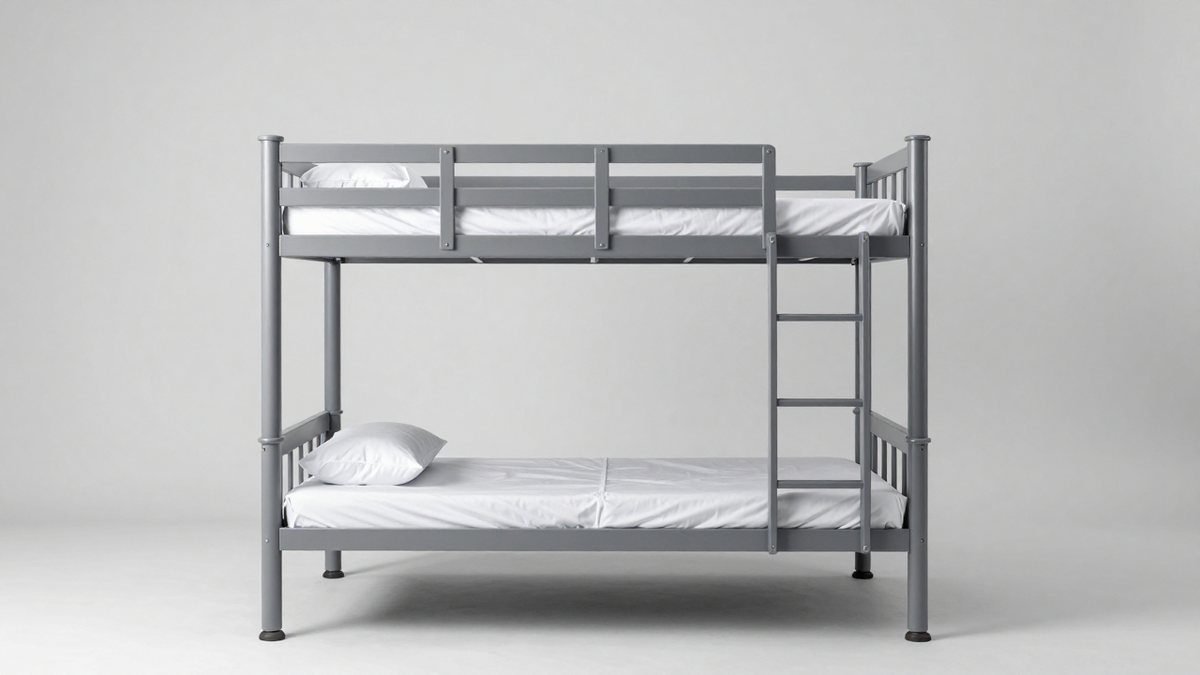
 XUWANSHANG Queen Over Queen Bunk Bed FrameQueen over Queen82.7 x 62.2 x 64.6 Inches117.95 poundsCheck on Amazon
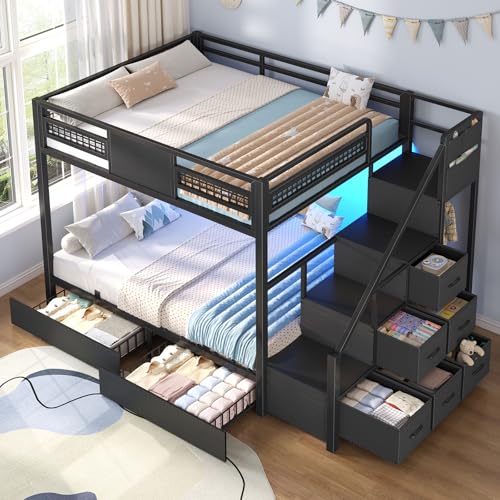 BTHFST Bunk Bed Full Over Full with StairsFull Over Full94 x 57 x 63 inches158 poundsCheck on Amazon


Best Adult Bunk Beds for Small Spaces
The best adult bunk beds are reinforced metal or hardwood frames with a clearly stated weight capacity of at least 400 pounds per sleeping level, a full-length guardrail, and a ladder or stair design that fits the room without weakening access or stability.
Adult bunk beds are not simply oversized children’s beds. An adult sleeper adds more weight, produces greater movement during entry and exit, and may use a thicker mattress that reduces guardrail height. For a guest room, rental, or compact cabin, compare the complete sleeping system—frame, slats, mattress, ladder, and anchoring hardware—rather than choosing by appearance or advertised bed size alone.
As an Amazon Associate we earn from qualifying purchases at no extra cost to you.



Quick comparison: which adult bunk bed suits your space?
| Bed type | Typical footprint | Practical capacity target | Best for | Main compromise |
|---|---|---|---|---|
| Twin-over-twin metal | 75–80 in long × 39–43 in wide | 400–600 lb per level | Two adults in the smallest room | Narrow sleeping surface and more potential for noise |
| Twin XL-over-twin XL | 80–85 in long × 39–43 in wide | 400–600 lb per level | Taller adults and frequent guests | Requires XL bedding and a longer room |
| Full-over-full | 75–80 in long × 56–61 in wide | 500–800 lb per level | Couples, larger sleepers, and rental use | Uses substantially more floor area |
| Loft with desk or storage | 75–85 in long × 40–45 in wide | 300–500 lb sleeping level | One adult and a work area | Usually unsuitable for two adult sleepers |
| Staircase bunk | 75–85 in long × 55–75 in wide | 400–800 lb per level | Frequent use and easier climbing | Stairs can consume 15–30 additional inches of width |
These are useful comparison ranges, not substitutes for the manufacturer’s specification. A capacity number should state whether it includes the mattress and bedding. If it does not explain the testing method or whether the limit applies to each level, treat the rating cautiously.
Best choices by situation
Best for the smallest guest room: reinforced twin-over-twin metal
A twin-over-twin frame generally gives the greatest sleeping capacity per square foot. Look for square or rectangular steel tubing, welded joints at the main load points, full-length guardrails, and slats spaced closely enough to support the intended mattress. A ladder integrated into the end of the frame usually takes less space than stairs.
For adult guests, choose a model rated for at least 400 pounds per bunk and preferably 500 pounds or more. A 200- or 250-pound rating may be adequate for a child but leaves little margin for an adult, mattress, bedding, and movement. Metal frames can be excellent in rentals, but loose bolts and metal-on-metal contact may create squeaks. Plan to retighten the fasteners after the first week of use.
Best for taller adults: twin XL-over-twin XL
Twin XL mattresses are usually 80 inches long rather than 75 inches, giving taller guests five additional inches of usable length. Confirm that the frame accepts standard twin XL bedding; a regular twin mattress will leave a gap at one end.
Allow at least 30 inches of clear space between the end of the bed and the opposite wall or furniture where possible. Also check ceiling height. A top mattress placed on a frame 60–65 inches high may leave only 30–36 inches above the mattress in an eight-foot room. That can make sitting up awkward and increases the chance of striking the ceiling.
Best for frequent rental use: full-over-full hardwood or heavy steel
A full mattress is approximately 54 inches wide, compared with about 38 inches for a twin. That extra width matters when adults sleep in the bed regularly, but it can make a small room feel crowded. Full-over-full frames are worth considering when guest comfort and durability matter more than the smallest footprint.
Hardwood frames made from properly joined solid wood can resist vibration well, especially when the side rails use substantial bolts or metal brackets rather than small screws. Heavy-gauge steel can provide similar strength in a slimmer frame. Avoid choosing solely by wood species: joinery, rail thickness, center support, and hardware are more important than whether the listing says pine, rubberwood, or hardwood.
Best for easier access: bunk beds with stairs
Stairs are preferable when the upper bunk will be used every night, when guests have limited climbing confidence, or when the bed is installed in a rental where repeated ladder use may damage paint and flooring. Broad treads distribute pressure across the foot better than narrow rungs, and built-in drawers can add useful storage.
The cost is floor area. A ladder may project roughly 10–16 inches from the frame, while a staircase can project 30–45 inches. Measure the walking path, not just the mattress footprint. A stair unit that blocks a doorway or leaves less than about 24 inches of walking clearance can make the room impractical.
Ladder versus stairs: the safety and space trade-off
- Ladder: smallest footprint, lower price, and easier to move; choose angled or wide-rung designs when possible.
- Stairs: easier to climb and more comfortable for frequent use; they require extra width and add more parts that can loosen.
- End ladder: keeps the long side of the bed clear but may interfere with a doorway.
- Side ladder: can improve room circulation but may reduce the usable wall length beside the bed.
- Removable ladder: useful for changing the room layout, but only if the attachment remains rigid when installed.
Do not rely on a ladder angle alone. Check whether the rungs are fixed against twisting, whether the top and bottom are secured, and whether the feet have non-skid contact with the floor. On a rental property, wall anchoring is especially valuable because repeated climbing can gradually shift a free-standing frame.
Materials and construction details that determine durability
Steel: Look for thicker tubing, continuous welds at high-stress joints, and a powder-coated finish. Inspect the bolt connections between the side rails and end panels; these are common sources of movement and squeaking. A steel slat system should not have sharp edges that can catch bedding.
Solid wood: Side rails should use substantial metal brackets, bolts, or purpose-made bed connectors. Wood screws alone can loosen as the frame flexes. Check for a center beam and legs that transfer its load to the floor, especially on full-size beds.
Engineered wood: It can be suitable for stairs, panels, or storage components, but exposed edges and fastener locations deserve close inspection. Repeated assembly and disassembly can enlarge particleboard holes. For a bed that will move between tenants, a metal or solid-wood frame is usually the more forgiving choice.
Measure before buying: a simple fit calculation
Start with the room’s clear floor dimensions. Add the frame’s actual outside width and length, then add the ladder or stair projection. For example, a twin XL frame measuring 82 by 42 inches with a 14-inch ladder projection needs about 96 inches of uninterrupted length on the ladder side. A room that is 10 feet long provides 120 inches, leaving 24 inches before accounting for a dresser, door swing, or baseboard.
For ceiling clearance, subtract the frame height and mattress thickness from the ceiling height. In an eight-foot room, a 72-inch-high frame with a 10-inch mattress leaves only 14 inches above the top mattress. That is an uncomfortable arrangement for most adults, even if it is technically possible. A lower bunk frame is often a better choice than sacrificing headroom.
Installation and maintenance for adult use
- Assemble on a level floor. Uneven flooring can preload one corner and make the frame rock.
- Install every slat and support. Missing slats concentrate weight and may invalidate the stated capacity.
- Square the frame before tightening. Measure both diagonals; they should be close to equal before final tightening.
- Anchor where practical. Use the supplied wall hardware or an appropriate anti-tip solution, especially for tall frames and rental bedrooms.
- Recheck fasteners after several uses. Tighten bolts after one week, then inspect every three to six months.
- Keep the mattress within the stated thickness. A thick mattress can reduce the guardrail’s effective height.
- Inspect wear points. Check ladder rungs, welded joints, slats, guardrail brackets, and wood around bolt holes.
Clean with a dry or lightly damp cloth and avoid soaking unfinished wood. Do not use the top bunk as a seat, jump onto the frame, or place heavy storage boxes on the upper level. Replace bent rails, cracked wood, missing hardware, or damaged welds rather than attempting a cosmetic repair.
Safety details worth verifying
In the United States, look for a frame designed to comply with applicable bunk-bed requirements, including the federal bunk-bed standard in 16 CFR Part 1213 and relevant ASTM guidance. These standards address guardrails and entrapment hazards, but compliance does not mean every adult weight or mattress combination is safe. Follow the specific instructions, age warnings, guardrail requirements, and maximum mattress thickness supplied with the bed.
For most adult guest rooms, the best overall specification is a twin XL or full-size frame with a per-level capacity of at least 400 pounds, a rigid full-length guardrail, closely spaced slats, and wall anchoring. Choose a ladder when floor space is the priority; choose stairs when the upper bunk will be used frequently. The most durable frame is the one whose joints, supports, and access hardware are designed for repeated adult use—not merely the one with the highest headline weight rating.