What's inside
As an Amazon Associate I earn from qualifying purchases. This post may contain affiliate links at no extra cost to you.
Our Top Picks
 DICTAC Loft Bed Twin Size with Storage StairsTwin94.3 x 40.83 x 72.1 inches135.7 poundsCheck on Amazon
 Mirightone Queen Size Loft Bed with Stairs andQueen99.4 x 63.4 x 73.4 Inches168.3 poundsCheck on Amazon
 Mirightone Full Size Loft Bed with Stairs andFull94.3 x 57.2 x 73.4 inches162.8 poundsCheck on Amazon
 Bellemave Full loft Bed with Storage StairsFull loft78.34 x 55.9 x 67 inches60 poundsCheck on Amazon
Best Loft Beds for Adults
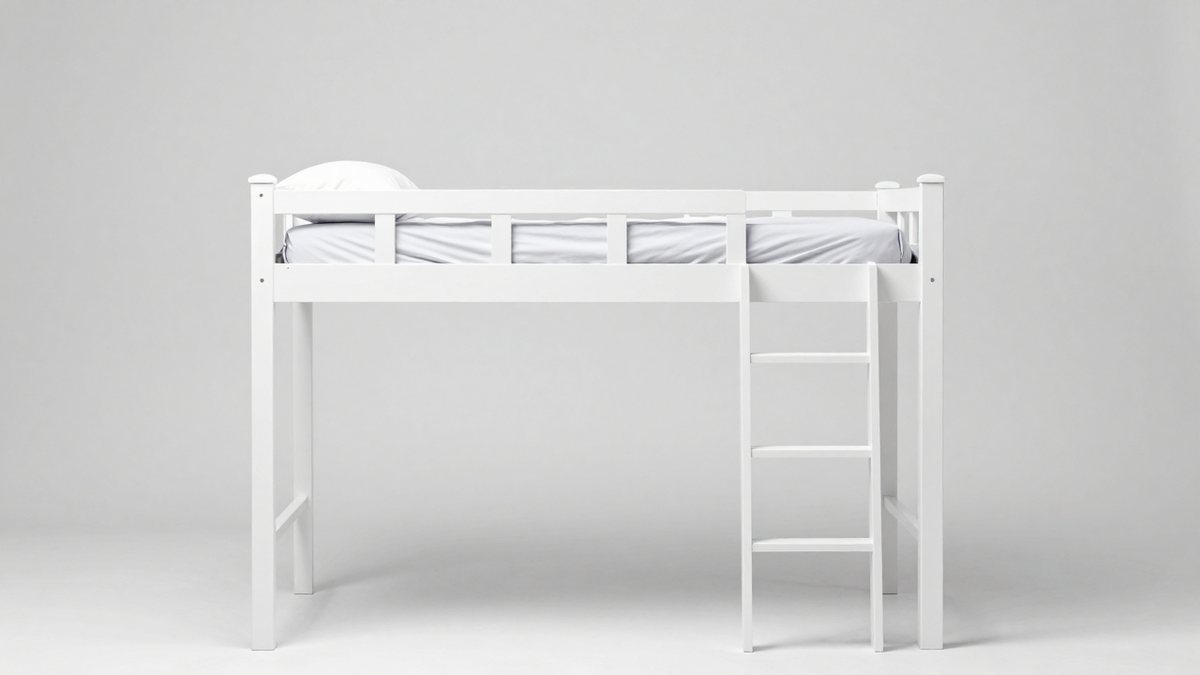
The best loft beds for adults are full- or queen-size steel or solid-wood frames rated for at least 600 pounds, with a guardrail at least 5 inches above the mattress, a comfortable ladder, and enough ceiling clearance to sit upright below and above the sleeping platform.
Best adult loft bed by situation
| Situation | Best choice | Minimum specification to target | Why it fits |
|---|---|---|---|
| Small studio or office | Twin steel loft bed | 300–400 lb capacity; 75 x 38 in mattress area | Smallest footprint and usually the lowest price |
| Adult sleeper needing more width | Full-size loft bed | 500–600 lb capacity; 75 x 54 in mattress area | More comfortable for regular nightly use |
| Couple or guest room | Queen loft bed or custom platform | 600–800 lb capacity; 80 x 60 in mattress area | Provides adult-length sleeping space, but requires a larger room |
| Frequent moving or rented accommodation | Bolt-together steel frame | Under 150 lb shipping weight; replaceable hardware | Easier to disassemble and transport than a heavy wood structure |
| Maximum stability and low noise | Solid-wood frame anchored to a wall | 600 lb or higher capacity; 3 x 3 in posts or larger | Thicker structural members reduce sway and vibration |
What makes a loft bed suitable for adults?
Weight capacity is more than body weight
Check whether the advertised capacity includes the mattress and bedding. A 600-pound rating should not be treated as 600 pounds of available sleeper weight. For example, two adults weighing 190 and 160 pounds, plus a 70-pound mattress and 20 pounds of bedding, create a 440-pound static load. That leaves 160 pounds of stated capacity, but movement creates greater stress than simply lying still.
As an Amazon Associate we earn from qualifying purchases at no extra cost to you.


For one adult, look for a published capacity of at least 400 pounds. For heavier sleepers, frequent use, or two occupants, 600–800 pounds is a more appropriate target. Avoid frames that give only vague wording such as “heavy duty” without a numerical rating.
Mattress dimensions and support
Twin mattresses are normally about 75 x 38 inches, full mattresses about 75 x 54 inches, and queen mattresses about 80 x 60 inches. A full-size loft is often the best compromise for adults: it is substantially more comfortable than a twin while remaining easier to fit than a queen.
Measure the actual sleeping deck rather than relying only on the product name. The mattress should fit without a large side-to-side gap, and the slat spacing should be compatible with the mattress manufacturer’s requirements. Slats spaced around 3 to 4 inches apart are common; wider gaps may require a bunkie board or additional support.
Guardrail height
The guardrail should extend at least 5 inches above the top of the mattress, and more is preferable for a thick mattress. A 10-inch mattress placed on a frame with a 5-inch rail leaves little effective containment. Look for a rail height of 12–15 inches above the platform when using a typical 8–10-inch mattress.
Guardrails should run along the exposed sides and have openings small enough to prevent an adult’s body from sliding through. Do not assume a taller mattress is automatically compatible; it can reduce the usable rail height.
Ceiling clearance: the measurement people get wrong
Measure from the floor to the ceiling, then subtract the frame height, mattress thickness, and a sitting allowance. A practical formula is:
Available sitting space = ceiling height − platform height − mattress thickness.
For example, in an 8-foot room, a 58-inch-high platform and a 10-inch mattress leave 28 inches above the mattress. That may be enough for lying down but is uncomfortable for sitting. If you want to sit upright with approximately 36 inches of headroom, the mattress surface should be no higher than 60 inches in an 8-foot room—and that leaves only 36 inches underneath.
Before buying, mark the mattress height on the wall with painter’s tape and sit beneath it. Also account for ceiling fans, sprinkler heads, pendant lights, sloped ceilings, and the space needed to climb the ladder safely.
Steel versus wood frames
| Frame material | Typical advantages | Common drawbacks | Best for |
|---|---|---|---|
| Powder-coated steel | High strength-to-weight ratio; slimmer posts; easier to move | Can transmit vibration; hollow tubing may squeak if joints loosen | Renters, frequent moves, modern rooms |
| Solid pine or hardwood | Quieter feel, warmer appearance, easy to reinforce | Heavier; can split if over-tightened or poorly assembled | Long-term ownership and low movement |
| Engineered wood panels | Often affordable and visually enclosed | Fastener holes can wear after repeated disassembly | Fixed locations and moderate use |
Stability depends on design as much as material. Wide legs, diagonal bracing, closely spaced crossmembers, and a secure connection between the ladder and frame are more important than a heavy-looking finish. A tall frame with narrow legs can sway even when its nominal weight rating is high.
Ladder comfort and assembly difficulty
A ladder that is technically safe can still make an adult loft bed unpleasant to use. Prefer broad, flat rungs about 12–16 inches apart, with rounded edges and enough clearance for the front of the foot. Thin round rungs concentrate pressure and become uncomfortable during frequent nighttime use. An angled ladder is usually easier on the knees than a vertical one, but it increases the room’s footprint.
Assembly is usually a two-person job. Expect roughly 2–4 hours for a basic steel frame and 4–8 hours for a tall wood frame with stairs, shelves, or a desk. Difficulty rises when the instructions require the frame to be held upright while bolts are inserted. Confirm that all parts are present before starting, assemble on a level floor, and leave every connection slightly loose until the frame is square.
A safer tightening sequence
- Sort bolts by length before attaching any panels or rails.
- Build the lower structure and check that it sits flat.
- Install the upper platform without fully tightening the fasteners.
- Measure the two diagonals of the platform; adjust until they are nearly equal.
- Tighten bolts gradually in alternating corners rather than forcing one corner tight first.
- Install the guardrails and ladder, then inspect every joint under load.
- Recheck all fasteners after one week and again after the first month.
Price and ownership realities
Basic twin steel loft beds commonly fall in the approximate $150–$300 range. Full-size steel or simple wood models are often around $250–$600, while queen models, stairs, built-in desks, and custom heavy-duty frames can cost $600–$1,500 or more. The lowest purchase price may not be the lowest ownership cost if the ladder is uncomfortable, the frame cannot be anchored, or replacement slats are unavailable.
The parts most likely to need attention are joint fasteners, ladder contact points, slats, and plastic feet. Squeaking usually indicates a loose connection or rubbing surface rather than a mattress problem. Tighten fasteners to the manufacturer’s instructions, add felt only where it will not reduce structural grip, and replace cracked slats instead of bridging them with improvised boards.
For steel, inspect chipped paint and surface rust, particularly near floor-level feet. For wood, check for split grain around bolt holes and avoid soaking the frame during cleaning. Keep the mattress dry, vacuum beneath the platform periodically, and never exceed the stated capacity by adding heavy storage bins to the upper deck.
Final buying recommendation
For most adults, a full-size loft bed with a 600-pound rating, 12-inch-or-taller guardrails, a 58–64-inch platform height, broad ladder rungs, and a solidly braced steel or wood frame is the strongest all-purpose choice. Choose a twin only when floor space is the overriding constraint. Choose a queen only after confirming both the room dimensions and the ceiling clearance. The decisive checks are not decorative features: verify the real mattress size, effective guardrail height, usable headroom, numerical weight rating, and whether the frame can be anchored or braced against movement.