What's inside
- Best 75 TV Models for Bright 4K Viewing
- Quick picks by living-room situation
- Best 75-inch TVs compared by panel type
- How far away should you sit from a 75-inch 4K TV?
- Brightness numbers: what actually matters
- Size, stand, and installation calculations
- Features worth paying for in 2026
- Ownership realities: what wears first
- Final buying recommendation
As an Amazon Associate I earn from qualifying purchases. This post may contain affiliate links at no extra cost to you.
Our Top Picks
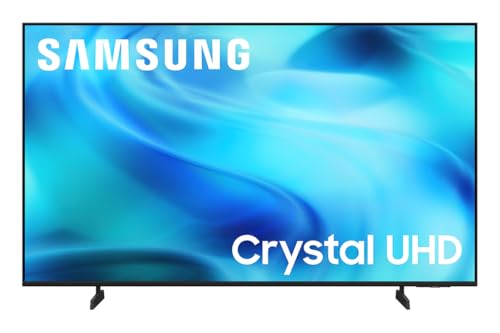 Samsung 75-Inch Class U8000H Series Crystal UHD75 Inch11 x 65.7 x 39.7 Inches48.6 poundsCheck on Amazon


Best 75 TV Models for Bright 4K Viewing
The best 75 TV for a bright living room is usually a mini-LED model such as the TCL QM8K, Hisense U8QG, or Samsung QN90F; choose an OLED instead when controlled lighting, wide seating, and movie quality matter more than peak brightness.
A 75-inch screen is large enough to make 4K detail worthwhile, but the right choice depends on three things that product listings often blur together: how much daylight reaches the room, how far you sit, and whether you value contrast, reflection control, gaming, or price most. The models below are organized by situation rather than by a single “best” ranking.
As an Amazon Associate we earn from qualifying purchases at no extra cost to you.


Quick picks by living-room situation
| Situation | Best fit | Why it makes sense | Typical 75-inch price range |
|---|---|---|---|
| Bright room and strong value | TCL QM7K | Mini-LED backlight, local dimming, high HDR brightness, 144Hz gaming | $1,000–$1,500 |
| Maximum brightness and HDR impact | TCL QM8K | More dimming control and higher peak brightness than the QM7K | $1,500–$2,200 |
| Bright room with difficult reflections | Samsung QN90F | Strong anti-reflection treatment, high brightness, low-lag gaming | $1,800–$2,600 |
| Movie nights in a dim room | LG OLED C5 77-inch | Perfect black levels, excellent viewing angles, fast response | $2,000–$3,000 |
| Wide seating and premium cinema picture | Sony BRAVIA 8 II 77-inch | OLED contrast with Sony processing and strong off-axis color | $3,000–$4,000 |
| Lower-cost large-screen viewing | Hisense U7QG 75-inch | Mini-LED contrast and gaming features at a more accessible price | $900–$1,400 |
Prices are broad 2026 market ranges and can change substantially during seasonal sales. A 77-inch OLED is included because many premium OLED lines skip the exact 75-inch size. Its screen is about 6% larger diagonally than a 75-inch model, so check furniture width before buying.
Best 75-inch TVs compared by panel type
Mini-LED LCD: the safest choice for bright rooms
Mini-LED TVs still use an LCD panel, but their backlights contain many small LEDs divided into local-dimming zones. The television can brighten highlights while dimming darker areas, producing much stronger HDR than a basic edge-lit LCD.
The TCL QM8K is the pick when brightness and contrast are the priority. The TCL QM7K is a better value choice: it gives up some peak brightness and backlight precision but retains a fast refresh rate and useful gaming support. Hisense’s U8QG sits in the same performance class, while the U7QG is generally the more sensible purchase when the room is bright but not dominated by direct sunlight.
Mini-LED is not flawless. Bright objects can create a halo around themselves, called blooming, especially when viewed from an angle. Subtitles over a black background may also reveal the backlight’s limitations. More dimming zones reduce the problem but do not eliminate it.
Premium LED: best reflection handling and consistency
Samsung’s QN90F uses a high-end LCD design with strong local dimming and an anti-reflection screen. It is particularly suitable when windows or lamps face the television. Reflection treatment is more useful than a higher brightness number if glare is the thing preventing you from seeing shadow detail.
The Samsung QN85F is a less expensive alternative with many of the same smart-TV and gaming features, although its contrast and brightness headroom are lower. Samsung’s processing is polished, but the company does not support Dolby Vision HDR; it uses HDR10, HDR10+, and related formats instead. This is rarely a deal-breaker, but it matters if your streaming and disc collection relies heavily on Dolby Vision.
OLED: best black levels and viewing angles
OLED pixels emit their own light, so they can switch completely off for true black. There is no LCD backlight blooming, and picture quality remains consistent for viewers sitting well to the side. The LG OLED C5 and Sony BRAVIA 8 II are strong 77-inch alternatives to a 75-inch LCD.
OLED is less ideal in a sunlit room. Modern OLED panels can become bright, but a large white webpage, sports scoreboard, or daytime scene may not stay as bright as a good mini-LED. OLED also has a long-term risk of image retention or burn-in when the same high-contrast graphic is displayed repeatedly for many hours. Normal mixed viewing is less demanding, but a news channel, game interface, or commercial display deserves caution.
How far away should you sit from a 75-inch 4K TV?
For a 75-inch 16:9 screen, a useful starting range is approximately 7.5 to 12.5 feet. Around 8 to 10 feet gives an immersive 4K image without making ordinary lower-quality broadcast video look excessively rough.
| Viewing distance | What a 75-inch 4K TV feels like | Most suitable content |
|---|---|---|
| 6–7 feet | Very immersive; compression flaws are easy to notice | 4K movies, console games, high-quality sports streams |
| 8–10 feet | Balanced size and detail | Mixed streaming, sports, movies, gaming |
| 11–13 feet | Comfortable but less cinematic | Broadcast TV and general family viewing |
| Over 13 feet | A larger screen may provide more impact | Consider 85 inches if the wall and budget allow |
This is a practical guideline rather than a rule. If you mainly watch 1080p cable, sitting slightly farther back can hide softness. If you watch 4K films or play games, moving closer lets you benefit from the resolution.
Brightness numbers: what actually matters
Look for measured HDR brightness, not only a manufacturer’s maximum figure. A short-lived small-window peak can exceed 2,000 nits while the full screen is much dimmer. For a bright living room, a TV that can sustain roughly 500–800 nits across a large portion of the screen is usually more useful than one with an impressive but brief highlight peak.
- Direct sunlight or large uncovered windows: prioritize 1,000 nits or more for small HDR highlights, strong anti-reflection treatment, and a matte or semi-matte viewing surface.
- Normal daylight: a capable mini-LED in the 600–1,000-nit class is generally sufficient.
- Dim or controlled lighting: OLED’s black level matters more than extreme brightness.
- Sports: prioritize motion handling, uniformity, and reflection control as well as brightness.
- Movies: prioritize local dimming or OLED contrast, accurate filmmaker modes, and support for Dolby Vision if relevant to your library.
Size, stand, and installation calculations
A 75-inch 16:9 television is approximately 65.4 inches wide and 36.8 inches tall without its stand. Allow at least 2 inches on each side for visual breathing room, and check the manufacturer’s exact width because bezels and feet vary. A 70-inch media cabinet is therefore a tight fit; a cabinet around 72–78 inches wide is more comfortable.
Wall mounting requires a second check: the set commonly weighs about 80–115 pounds with its stand, while the stand itself may add 5–15 pounds. Use a wall mount rated above the television’s weight and attach it to suitable studs or approved structural anchors. Also leave space for HDMI cables, ventilation, and a soundbar. Some low-profile mounts place a 75-inch screen so close to the wall that downward-facing ports become awkward to reach.
Features worth paying for in 2026
- 120Hz or 144Hz panel: useful for sports and current consoles; 144Hz mainly benefits compatible PC gaming.
- HDMI 2.1: look for at least two ports supporting 4K at 120Hz, variable refresh rate, and automatic low-latency mode if gaming matters.
- Full-array local dimming: more meaningful for HDR contrast than vague “AI picture” labels.
- Dolby Vision: useful for compatible streaming services and discs, but not essential if most viewing is broadcast or HDR10.
- Viewing-angle performance: important when seats spread across a wide room; OLED generally has the advantage.
Ownership realities: what wears first
Dust, fingerprints, and careless cleaning are more common problems than panel failure. Turn the TV off, let it cool, and use a clean, dry microfiber cloth. If necessary, lightly dampen the cloth with distilled water; never spray liquid onto the screen, use window cleaner, or press hard against the panel.
LCD televisions can develop dead pixels, backlight uniformity issues, or local-dimming blooming that is visible only in dark scenes. OLED televisions can show temporary image retention after a static graphic, while permanent burn-in is the longer-term concern. Reduce unnecessary maximum brightness, enable the panel’s pixel-refresh and screen-protection features, and avoid leaving a static channel logo or game HUD displayed for many hours every day.
Also budget for sound. A 75-inch television may have impressive picture quality but still use small downward-firing speakers. A soundbar with a separate subwoofer or a basic AV system can make dialogue and film sound far more satisfying than upgrading from one premium TV model to another.
Final buying recommendation
Choose the TCL QM7K or Hisense U7QG when value is the main concern, the TCL QM8K when you want the brightest and most dramatic HDR image, and the Samsung QN90F when reflections are your biggest problem. Choose the LG OLED C5 or Sony BRAVIA 8 II in the 77-inch size for dark-room movies, wide seating, and the cleanest contrast. Before ordering, measure the cabinet, confirm the viewing distance, count HDMI 2.1 devices, and decide whether your room needs brightness or black-level performance more.