What's inside
- How to Choose a Pliers Set for Home and Workshop Use
- The core three: a practical starting point
- How the main plier types compare
- When to add slip-joint, locking, and groove-joint pliers
- Decision matrix: match the set to your work
- Jaw design, leverage, and materials to inspect
- Ownership costs and maintenance
- Related Guides
As an Amazon Associate I earn from qualifying purchases. This post may contain affiliate links at no extra cost to you.
Our Top Picks

How to Choose a Pliers Set for Home and Workshop Use
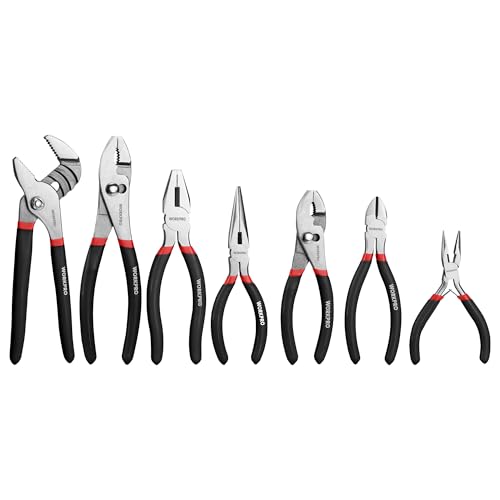
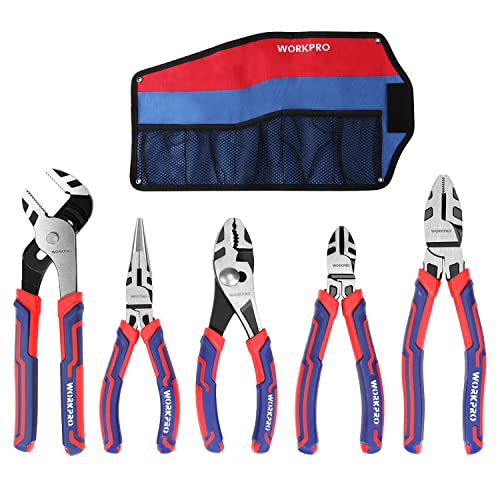
To choose a pliers set, start with a combination pair, long-nose pair, and diagonal cutters, then add slip-joint, locking, or groove-joint pliers only when your work requires their particular jaw shape, reach, or gripping capacity.
The best set is not necessarily the one with the most pieces. A useful selection should cover three different jobs: gripping and twisting, reaching into confined spaces, and cutting wire. For plumbing, automotive repair, or heavy fabrication, larger adjustable or locking pliers may be more valuable than extra specialty shapes.
As an Amazon Associate we earn from qualifying purchases at no extra cost to you.
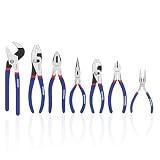

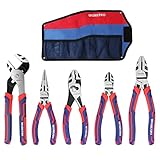
The core three: a practical starting point
Combination pliers
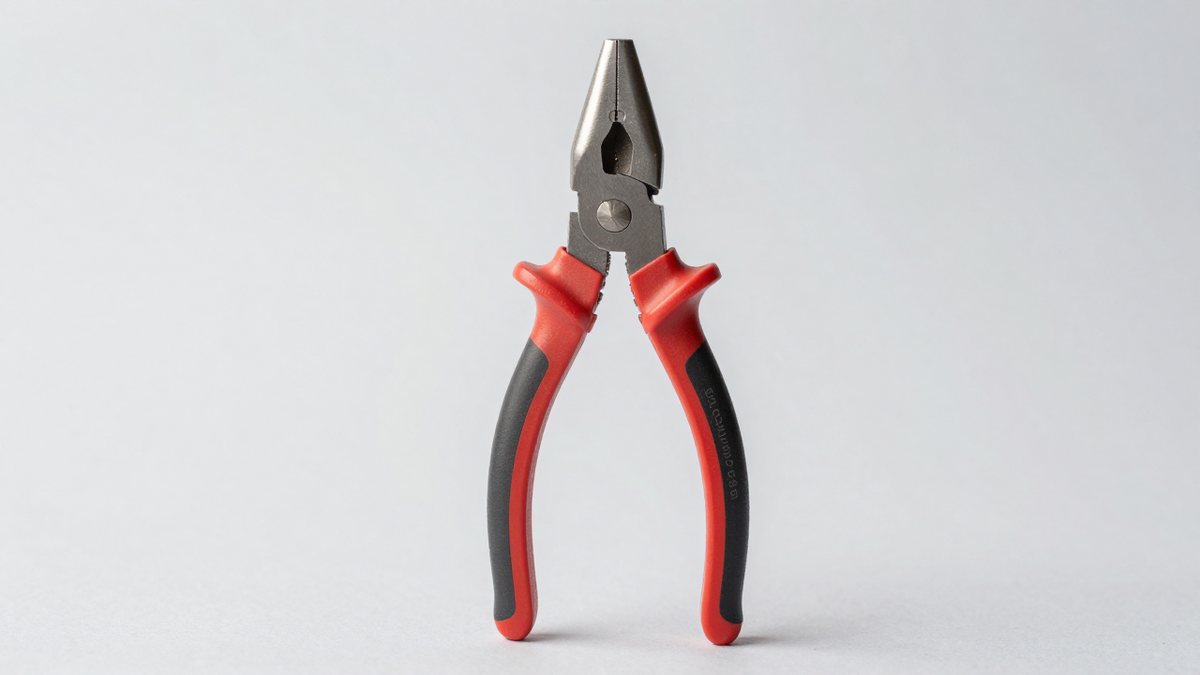
Combination pliers are the general-purpose choice for holding, bending, twisting, and cutting light-to-medium wire. Their jaws usually combine a serrated gripping area near the nose, a broader section for holding hardware, and cutters close to the pivot.
Look for a 7- to 8-inch model made from forged alloy or carbon steel, with induction-hardened cutting edges and a reasonably slim head. A 7-inch pair is easier to control for household repairs; an 8-inch pair supplies more leverage for stiff wire and fasteners. Serrations should be sharply defined without being so aggressive that they damage finished surfaces.
Long-nose pliers
Long-nose pliers are worth owning when you work inside electrical boxes, appliances, small engines, or crowded assemblies. Their narrow jaws provide reach and precision that combination pliers cannot match.
Choose a 6- to 8-inch model with jaws that remain aligned when squeezed. Smooth or lightly serrated tips are useful for positioning small components, while deeper serrations are better for gripping wire. If the jaws taper too sharply, the tips can twist or spread under load. A built-in cutter is convenient, but it should not be treated as a substitute for dedicated diagonal cutters.
Diagonal-cutting pliers
Diagonal cutters, also called side cutters, are designed to sever wire rather than hold it. Their angled jaws let you place the cutting edges close to a surface, making them useful for electrical wire, cable ties, tie wire, and small nails.
Pay attention to the cutter rating. A typical 7-inch household model may be intended for copper or soft steel wire around 2.0 to 2.5 mm in diameter, while heavier models can handle substantially larger material. Do not infer capacity from size alone: high-leverage cutters may cut larger wire but can be unsuitable for hardened wire, piano wire, or nails unless specifically rated for it.
How the main plier types compare
| Pliers type | Typical useful size | Jaw or cutter design | Best tasks | Main limitation |
|---|---|---|---|---|
| Combination | 7–8 in; about 220–350 g | Serrated gripping jaws with integrated cutters | General repairs, bending wire, holding parts | Less reach and precision than long-nose pliers |
| Long-nose | 6–8 in; about 120–250 g | Narrow tapered jaws, sometimes with cutters | Confined spaces, small components, wire loops | Tips can bend if used for heavy twisting |
| Diagonal-cutting | 6–8 in; about 160–300 g | Angled hardened cutting edges | Wire and cable ties, close flush cutting | Cannot grip or turn parts effectively |
| Slip-joint | 6–10 in; about 180–400 g | Two-position pivot with general-purpose jaws | Household repairs, small nuts, clamps | Limited adjustment and leverage |
| Locking | 5–10 in; about 250–600 g | Adjustable jaws that lock under tension | Clamping, seized fasteners, temporary holding | Can crush or mark the workpiece |
| Groove-joint | 8–12 in; about 300–750 g | Multiple-position sliding pivot and broad jaws | Pipe, fittings, large nuts, irregular parts | Bulky for small precision work |
When to add slip-joint, locking, and groove-joint pliers
Slip-joint pliers: inexpensive general adjustment
Slip-joint pliers have a pivot that moves between two or more holes. The narrow setting handles smaller objects; the wider setting increases jaw opening for larger parts. They are useful for pulling pins, holding flat stock, squeezing hose clamps, and making occasional household adjustments.
Their jaws often have both flat gripping surfaces and serrated sections. This makes them versatile, but the small contact area can damage polished hardware. Use a cloth or thin protective material when appearance matters. Slip-joint pliers are a sensible fourth tool for a homeowner, but they are rarely the best choice for large plumbing fittings.
Locking pliers: controlled clamping rather than ordinary gripping
Locking pliers use an adjustment screw and release lever to clamp onto a part and remain closed. They are valuable when you need both hands for another task, when a fastener is rounded, or when two pieces must stay aligned during drilling or welding.
Jaw shape matters more than the brand name. Curved jaws suit nuts, bolts, and rounded stock; straight jaws grip flat material; long-nose versions reach into narrow spaces; and clamp-style versions spread pressure over a wider area. Locking pliers are not automatically stronger than ordinary pliers, and excessive tightening can deform thin tubing, soft brass, or finished surfaces.
Groove-joint pliers: the choice for pipe and large irregular parts
Groove-joint pliers, often called tongue-and-groove pliers, offer a broad opening through a sliding pivot. Their long handles create useful leverage, and their offset jaws can grip pipe, couplings, filters, and irregular shapes.
An 8- or 10-inch model is usually more manageable for home plumbing. A 12-inch model offers greater capacity and leverage but is heavier and easier to over-tighten. Choose jaws with clearly machined teeth, a pivot that does not bind, and a guard or handle shape that reduces the chance of pinching fingers.
Decision matrix: match the set to your work
| Your situation | Recommended starting selection | Why |
|---|---|---|
| Occasional home repairs and limited storage | 7-inch combination, 6- or 7-inch long-nose, 7-inch diagonal cutters | Covers most wire, gripping, and small repair jobs without duplication |
| Electrical and electronics work | Long-nose, flush or fine diagonal cutters, compact combination pliers | Reach and controlled cutting matter more than large jaw capacity |
| Frequent plumbing maintenance | Combination pliers, 10-inch groove-joint, 8-inch slip-joint | Combines general gripping with larger pipe and fitting capacity |
| Automotive repair | Combination, long-nose, locking curved-jaw, and diagonal cutters | Provides reach, clamping, wire cutting, and help with damaged fasteners |
| Workshop fabrication or welding | Combination, locking straight-jaw, long-nose, and larger groove-joint | Prioritizes holding and alignment, with adjustable capacity |
| Heavy use but a tight budget | Buy three durable core tools first; add one specialty tool at a time | Better steel and pivots usually outlast a large low-cost assortment |
Jaw design, leverage, and materials to inspect
Jaw reach and handle length work together. Long handles generally increase leverage, but they also reduce control in small spaces. A narrow head is valuable around wiring and fasteners; a broad head spreads force better on large objects. For repeated work, choose a handle that opens naturally without forcing your fingers apart.
Forged steel is preferable to inexpensive stamped construction for tools expected to handle twisting and clamping. Chromium-vanadium steel is common in quality hand tools, while hardened high-carbon steel is often used for cutting edges. The important detail is selective hardening: jaws need toughness, while cutters need a hard, wear-resistant edge.
Comfort grips can reduce hand fatigue, but soft overmolded handles do not make a tool insulated. For electrical work, use pliers specifically marked and rated for the relevant voltage category, and de-energize circuits whenever possible. Do not use ordinary pliers as a substitute for certified insulated tools.
Ownership costs and maintenance
A basic three-piece set can commonly cost about $25–$60, a better professional-grade trio about $70–$180, and a broader set with groove-joint and locking models roughly $100–$250 or more. A simple cost-per-use calculation helps: a $120 set used for 300 repair sessions costs about $0.40 per session, while a $35 set used ten times costs $3.50 per session. Durability and correct task fit matter more than the lowest purchase price.
- Wipe dirt and moisture from the jaws and pivot after use, especially after plumbing or outdoor work.
- Apply one small drop of light machine oil to the pivot when movement becomes stiff, then open and close the tool several times.
- Keep cutting edges away from hardened steel, screws, and nails unless the manufacturer rates them for those materials.
- Do not hammer on ordinary plier handles or use them as adjustable wrenches; this can damage the pivot and round hardware.
- Replace cutters when the edges chip, develop a visible gap, or require excessive force for material within their rating.
- Discard tools with cracked insulation, loose pivots, bent tips, or jaws that no longer meet evenly.
For most households, the strongest buying order is combination pliers, long-nose pliers, and diagonal cutters, followed by groove-joint pliers for plumbing or locking pliers for clamping and seized parts. Select sizes according to the workpiece, not just the number of pieces in the package, and prioritize accurately aligned jaws, hardened cutters, a smooth pivot, and handles you can control.