What's inside
As an Amazon Associate I earn from qualifying purchases. This post may contain affiliate links at no extra cost to you.
Our Top Picks
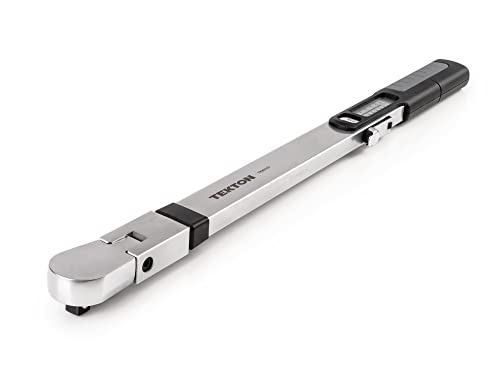 TEKTON 1/2 Inch Drive 72-Tooth Split Beam Torque1/2 Inch Drive (40-250 ft.-lb.)22.8 x 1.7 x 1.4 inches3.7 poundsCheck on Amazon
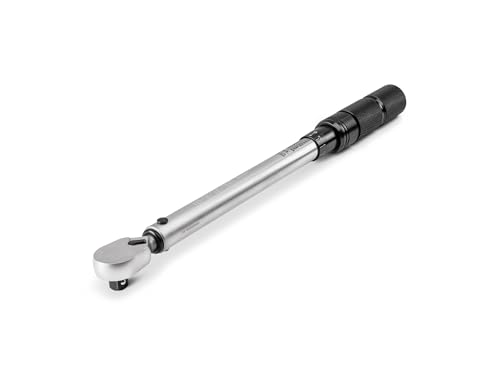


Best Torque Wrenches for Mechanics: Reliable Picks for Daily Use
For most professional mechanics, the best torque wrench setup is a certified 3/8-inch micrometer wrench for common fasteners and a 1/2-inch wrench for higher-torque wheel and suspension work; add a 1/4-inch model when low-torque, small fasteners are frequent. Choose the range around the torque values you actually use, not the biggest number on the box, and verify that a calibration certificate covers the individual tool.
Reliable picks by shop situation
- Daily general repair: CDI 3/8-inch micrometer torque wrench. CDI is a long-established torque-tool brand, and its micrometer-style models suit repeat work across a broad range of common fasteners. Select a specific range that keeps your usual settings away from the ends of the scale, and confirm the model’s certificate and accuracy documentation before ordering.
- Wheel and chassis work: Snap-on 1/2-inch click wrench. A 1/2-inch drive is a practical choice for lug nuts and many suspension fasteners. Snap-on offers professional torque wrenches in this format; compare the particular model’s range, length, ratchet design, and included calibration paperwork rather than assuming every version has the same specifications.
- Low-torque assembly: Wera Click-Torque A 5 or A 6. These 1/4-inch-drive models are intended for lower-torque applications. They can be a better fit for delicate fasteners than a larger wrench whose scale barely covers the target. Check the exact range and drive configuration for the version sold in your region.
- Frequent documentation or angle-sensitive work: a digital wrench from Snap-on or CDI. Digital models can make settings and torque-plus-angle procedures easier to monitor, depending on the model. They cost more and require battery care, so they make most sense when their display, alerts, or data functions will be used regularly.
These are model-family recommendations, not interchangeable specifications: manufacturers sell variants with different ranges, lengths, and included accessories. Check the exact part number and manual before purchase.
As an Amazon Associate we earn from qualifying purchases at no extra cost to you.


Compare drive size, range, and ownership needs
| Shop task | Useful drive size | Typical range to look for | What to prioritize |
|---|---|---|---|
| Small fasteners and light assembly | 1/4 inch | About 2–25 N·m (18–220 in·lb) | Readable low-end scale, compact head, documented calibration |
| General automotive repair | 3/8 inch | About 10–100 N·m (7–74 lb·ft) | Useful overlap with common fasteners, comfortable length, durable ratchet |
| Wheels and heavier chassis work | 1/2 inch | About 40–200 N·m (30–150 lb·ft) | Strong head, clear scale, enough leverage without an awkwardly long handle |
| High-torque truck or equipment work | 1/2 or 3/4 inch | About 100–500 N·m (74–370 lb·ft) | Range suited to the specification, robust square drive, suitable storage and calibration support |
The ranges above are selection guides, not specifications for a particular product. Always use the vehicle or equipment manufacturer’s torque value and the wrench’s published operating range. Accuracy is commonly stated as a percentage of reading or setting, and may differ by direction; compare the actual model documentation rather than treating all “professional” wrenches alike.
Why two wrenches often beat one
A wrench that covers an unusually broad span may be convenient, but it can leave your routine settings crowded near the bottom or top of its scale. A two-wrench setup gives better coverage and avoids using a high-capacity tool for small fasteners. For example, a shop that regularly needs 20 N·m and 140 N·m should not assume one 1/2-inch wrench is the best choice for both. A 3/8-inch wrench centered on the lower value plus a 1/2-inch model suited to the higher value is easier to select accurately and handle comfortably.
What matters under daily shop workload
Calibration paperwork and serviceability
A calibration certificate is most useful when it identifies the individual wrench, gives calibration results, and states the standard or procedure used. Check whether the certificate is supplied with the tool or available separately, and whether the manufacturer or an authorized service center can recalibrate it later. A certificate records calibration at a point in time; it does not guarantee that a dropped, overloaded, or heavily used wrench remains accurate indefinitely.
For a shop with documented quality procedures, record the tool’s ID, calibration date, and next verification date. Set the interval according to workload, manufacturer guidance, and your quality system. If the wrench takes a hard fall, gets overloaded, or behaves inconsistently, remove it from critical work and have it checked.
Ratchet durability and adjustment speed
Ratchet teeth, the pawl, selector, and square drive take the daily abuse. A fine-tooth ratchet helps in cramped spaces, but tooth count alone does not establish durability. Look for a replaceable ratchet head or service parts if downtime matters, and avoid using the torque wrench as a breaker bar. Loosen stubborn fasteners with a regular ratchet or breaker bar, then use the torque wrench for final tightening.
Micrometer wrenches are usually quick to adjust once familiar: unlock the handle, turn to the setting, lock it, and verify the scale. Digital models can speed up repeated changes and make units or target alerts easier to see, but batteries and electronics add another maintenance point. If your jobs involve only a few fixed settings, a mechanical wrench may be faster overall because it needs no power-up or menu navigation.
Choose by workload, not by maximum capacity
| Your situation | Best fit | Reason |
|---|---|---|
| One-person garage, occasional repairs | Mid-range 3/8-inch micrometer wrench | Covers many routine jobs without paying for features used rarely |
| Professional general-repair bay | 3/8-inch plus 1/2-inch wrench | Separates common fasteners from wheel and chassis work |
| Engine, bicycle, or precision assembly | 1/4-inch low-range wrench | Provides a useful scale and manageable handling for smaller fasteners |
| Fleet or quality-controlled shop | Certified models with available recalibration | Supports traceability and planned verification instead of guesswork |
| Repeated torque-plus-angle procedures | Digital model with the required angle function | Can reduce setting and monitoring friction when the feature is used often |
Professional mechanical torque wrenches commonly range from roughly $100 to several hundred dollars, with digital and premium serviceable models often costing more. Treat that as a broad market range: price varies by drive, capacity, certification, and region.
Care that prevents early wear
- Return adjustable click wrenches to their marked minimum setting for storage unless the manual says otherwise. This reduces sustained spring load; do not wind below the tool’s minimum.
- Keep the wrench clean and dry. Wipe off oil and grit, and store it in its case. Do not immerse it or spray solvent into the ratchet mechanism.
- Apply torque smoothly. Pull steadily at the marked grip area and stop at the click or alert. Repeatedly pulling past the signal can strain the mechanism and over-tighten the fastener.
- Use the correct units and direction. Confirm N·m versus lb·ft, check whether the model measures in both directions, and follow its manual for left-hand threads.
- Do not extend the handle or use a cheater bar. Added leverage changes the applied load and can damage the tool.
The parts most likely to show trouble are the ratchet mechanism, selector, locking collar, and—in digital tools—the battery or controls. A slipping head, inconsistent click, unreadable scale, or damaged square drive is a reason to stop relying on the wrench until it has been inspected or recalibrated.
Bottom line
For a busy automotive shop, start with a certified 3/8-inch micrometer wrench for routine work and a separate 1/2-inch model for higher settings; add a 1/4-inch tool when low-torque fasteners are part of the daily mix. Prioritize a well-matched range, individual calibration documentation, a serviceable ratchet, and quick, unambiguous adjustment. Those details matter more over years of shop use than an impressive maximum torque figure.