What's inside
As an Amazon Associate I earn from qualifying purchases. This post may contain affiliate links at no extra cost to you.
Our Top Picks
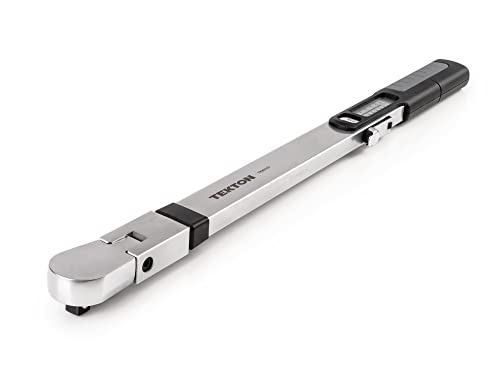 TEKTON 1/2 Inch Drive 72-Tooth Split Beam Torque1/2 Inch Drive (40-250 ft.-lb.)22.8 x 1.7 x 1.4 inches3.7 poundsCheck on Amazon
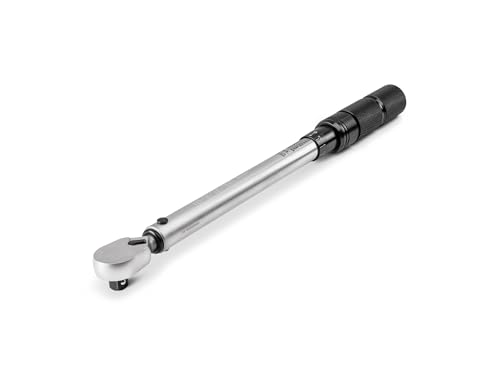


Best Torque Wrenches Under $100 for Reliable Home Repairs
The best torque wrench under $100 for most home repairs is a 3/8-inch click wrench with a range around 10–80 ft-lb, a clearly stated accuracy tolerance, and a calibration certificate or documented factory calibration. If you need higher torque for lug nuts, choose a 1/2-inch model instead; if you work on small fasteners, a 1/4-inch wrench is easier to use without overtightening.
Below, the comparison focuses on specifications manufacturers publish and the practical trade-offs those numbers imply—not hands-on test results. Prices are broad market ranges and can vary by seller and sale.
As an Amazon Associate we earn from qualifying purchases at no extra cost to you.


Shortlist: Which One Fits Your Work?
| Model | Drive | Published range | Accuracy claim | Typical price range | Best fit |
|---|---|---|---|---|---|
| TEKTON 24330 | 3/8 in. | 10–80 ft-lb | ±4% clockwise | $40–$60 | General household, bicycle, and light automotive work |
| GEARWRENCH 85062 | 3/8 in. | 10–100 ft-lb | ±3% clockwise | $60–$90 | More frequent use and a wider mid-range |
| EPAuto 3/8-inch click torque wrench | 3/8 in. | 10–80 ft-lb | ±4% clockwise | $25–$40 | Occasional repairs on a tight budget |
| TEKTON 24335 | 1/2 in. | 10–150 ft-lb | ±4% clockwise | $45–$70 | Wheel fasteners and higher-torque automotive jobs |
Specifications can change by product revision, so confirm the range and included paperwork on the current packaging or manufacturer’s product page before buying. Accuracy claims usually apply only under stated conditions; they are not a promise that every wrench stays within tolerance indefinitely.
Best Picks by Situation
Best all-around: TEKTON 24330
The 3/8-inch TEKTON covers a useful span for many home repairs without pushing the user toward the upper end of a large 1/2-inch wrench’s scale. It has a reversible ratchet head and a micrometer-style scale. Its published ±4% clockwise claim is appropriate for routine work when the fastener specification falls comfortably inside the range. TEKTON generally includes a storage case and calibration documentation with its click wrenches; check the exact kit contents for the model and revision.
Best for more frequent use: GEARWRENCH 85062
Its 10–100 ft-lb span and published ±3% clockwise claim make the 85062 appealing when you regularly work on assemblies that need repeatable mid-range torque. The finer stated tolerance is a useful differentiator, but it does not eliminate the need for correct technique or periodic calibration. It costs more than the basic budget choices, so it makes the most sense if you will use it often enough to value the extra margin and finish.
Lowest-cost option: EPAuto 3/8-inch click wrench
EPAuto’s 3/8-inch wrench is a plausible choice for occasional home use when the required torque sits well within its 10–80 ft-lb range. It is commonly sold with a case and adapters, though kit contents vary. At this price, inspect the scale, lock, ratchet action, and documentation on arrival. A low purchase price matters less if the wrench arrives without credible calibration information or if its scale is difficult to read.
For wheel fasteners: TEKTON 24335
The 1/2-inch TEKTON reaches 150 ft-lb, which gives more headroom for many passenger-vehicle wheel specifications than a typical 3/8-inch wrench. It is bulkier, however, and its low end is not ideal for delicate fasteners. Check your vehicle manual for the required torque and use the correct socket. A torque wrench is for final tightening, not for loosening stubborn nuts.
Why Drive Size and Range Matter More Than the Biggest Number
A wrench is generally easier to read and control when the target torque is not crowded at the very bottom or top of its scale. As a practical buying rule, aim to place your usual setting around the middle portion of the stated range when possible. For example, if a 3/8-inch wrench spans 10–80 ft-lb and your repair calls for 35 ft-lb, the target is comfortably within its working span. If the specification is 90 ft-lb, choose a wrench whose range includes it rather than setting this one beyond its limit.
Drive size is about compatibility and leverage, not accuracy by itself. A 1/4-inch drive suits smaller fasteners and lower torque; 3/8-inch is the versatile home-repair size; 1/2-inch handles larger sockets and higher torque. Avoid using adapters to turn a small-drive wrench into a high-torque tool. Extensions can also change access and technique, and crowfoot attachments may alter effective leverage when installed in line with the wrench. Follow the wrench maker’s instructions or use a suitable torque adapter calculation.
What to Check Before Paying
- Accuracy wording: Look for a numerical tolerance, such as ±3% or ±4%, and note whether it applies clockwise, counterclockwise, or both. Many click wrenches specify clockwise accuracy only.
- Calibration paperwork: A certificate or calibration record is more useful than a vague “precision” claim. Check whether it identifies the tool, documents a calibration date, or gives test results. Paperwork does not guarantee the wrench will remain calibrated after rough handling.
- Scale and lock: The markings should be readable in the units you use, and the handle should lock securely after setting. Confirm whether the scale shows ft-lb, N·m, or both.
- Included accessories: A case protects the mechanism in storage. Adapters may help with socket compatibility, but they do not replace the right drive size or extend the wrench’s rated range.
- Build and service: A solid ratchet, positive setting lock, and available calibration or service support matter more for ownership than a large accessory bundle.
Decision Matrix
| Your situation | Good starting choice | Reason |
|---|---|---|
| First torque wrench; occasional household repairs | 3/8 in., 10–80 ft-lb | Versatile range without paying for capacity you may not use |
| Frequent automotive work; targets mostly mid-range | 3/8 in., 10–100 ft-lb, with documented accuracy | More range headroom and a published ±3% claim on the GEARWRENCH 85062 |
| Wheel fasteners requiring higher torque | 1/2 in., up to 150 ft-lb | Better socket compatibility and capacity for many passenger-car specifications |
| Very small fasteners or torque below 10 ft-lb | Dedicated 1/4 in. low-range wrench | A larger wrench may not cover the required setting accurately or at all |
Setup and Care That Protect Accuracy
- Verify the specification. Use the equipment or vehicle maker’s torque value and units. Do not substitute a general online figure for a model-specific requirement.
- Set the wrench carefully. Unlock the handle, align the scale precisely, and lock it. If converting units, use 1 ft-lb = 1.356 N·m and avoid rounding more than necessary.
- Pull smoothly. Keep your hand on the marked grip area, apply steady force, and stop at the first click. Repeated clicks can continue tightening the fastener.
- Store it unloaded. After use, return a click wrench to its lowest marked setting—not below the scale—and store it in its case. This reduces sustained spring load and protects it from knocks, dirt, and moisture.
- Recheck after rough treatment. A drop, heavy use, or a critical application is a reason to seek calibration or replacement. Calibration intervals depend on use and manufacturer guidance; an inexpensive wrench is not automatically a lifetime-accurate one.
The components most likely to cause trouble are the ratchet mechanism, setting lock, and calibration mechanism—not the visible handle alone. Keep the tool clean and dry, avoid using it as a breaker bar, and do not force the handle past its rated maximum. For safety-critical assemblies, use a recently calibrated wrench and follow the component maker’s procedure.