What's inside
As an Amazon Associate I earn from qualifying purchases. This post may contain affiliate links at no extra cost to you.
Torx Plus and standard Torx look similar, but they are not interchangeable drive systems. The difference matters most when a fastener is tightened with an impact tool, repeatedly serviced, or installed near the limit of the screw’s capacity. For ordinary furniture, appliances, and light automotive work, standard Torx is usually the better value. For production assembly and high-torque service work, Torx Plus has a measurable advantage—provided the recess, bit, and fastener all use the same system.
As an Amazon Associate we earn from qualifying purchases at no extra cost to you.


Our Top Picks
How the Drives Differ
Standard Torx uses a six-lobed star with rounded lobe geometry. Torx Plus also has six lobes, but its flanks are straighter and its valleys are shaped to give the driver more contact area. The result is a drive that transfers force over a larger portion of the recess instead of concentrating it at a few small contact points.
That geometry also reduces the tendency of the bit to climb out of the recess under load. This is not the same as saying either drive is impossible to strip. A damaged recess, undersized bit, corrosion, or an impact driver used at excessive speed can still destroy both systems.
| Factor | Standard Torx | Torx Plus |
|---|---|---|
| Drive shape | Rounded six-lobe profile | More squared six-lobe profile |
| Torque contact | Good for general fastening | More contact area and lower stress concentration |
| High-torque performance | Good when correctly sized and seated | Better resistance to rounding and cam-out |
| Availability and cost | Widely available and inexpensive | Less common and often more expensive |
| Interchangeability | Use standard Torx bits with standard Torx recesses | Use Torx Plus bits with Torx Plus recesses |
Which Holds Up Better Under High Torque?
Torx Plus generally holds up better. Its larger contact surfaces spread load across the fastener recess, which reduces edge deformation and lowers the chance that the bit will ride out. That advantage becomes more useful as torque rises, as the fastener is tightened repeatedly, or as the assembly is exposed to vibration.
In practical terms, a Torx Plus recess is less likely to round when a correctly sized bit is used with a controlled power tool. It is also more tolerant of minor wear than a standard Torx recess. Production lines benefit because fewer damaged fasteners mean fewer interruptions, drilled-out screws, and replacement parts.
Do not treat the drive shape as a substitute for torque control. A small screw with a T25 or T30 recess can still fail long before a larger fastener with the same apparent drive pattern. Fastener diameter, grade, material, thread condition, lubrication, and the depth of the recess all affect the real limit.
How Each System Fails
Standard Torx usually fails by rounding the corners or deforming the upper part of the recess. This often happens when the bit is held at an angle, when the bit is worn, or when the driver is not fully seated. A high-speed impact driver can make the damage happen before the operator notices it.
Torx Plus is more resistant to those problems, but it can still fail in predictable ways. A loose fit lets the bit hammer the recess, while an incorrect size concentrates force on a few contact points. Rust can seize the fastener so firmly that the recess survives but the screw head tears from the shank or the surrounding material breaks.
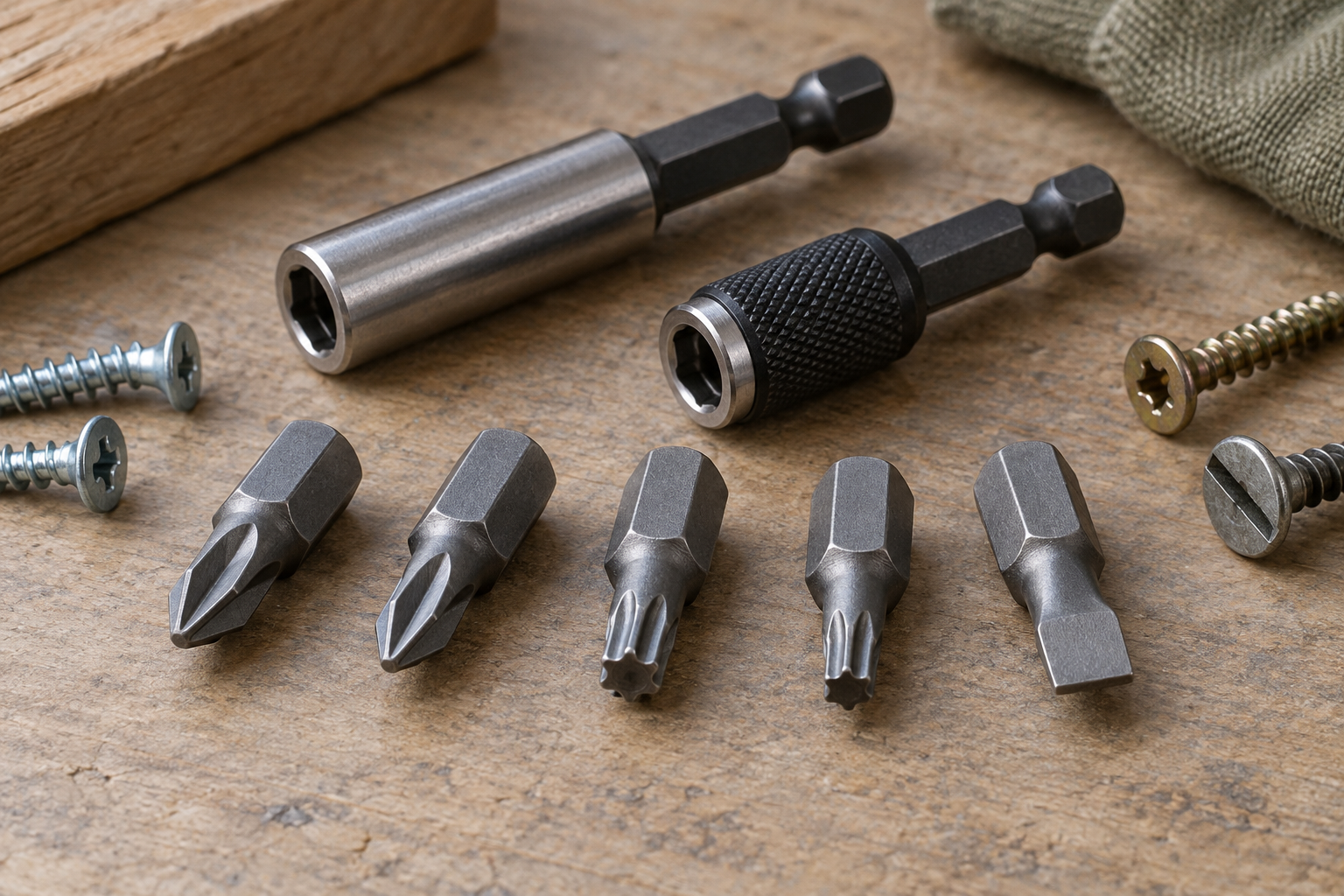
Using a standard Torx bit in a Torx Plus recess is a common mistake. It may appear to fit, especially in a larger size, but the geometry is not correct. The bit can contact only part of the recess and may strip it under load. The reverse combination can also be unreliable. If a manufacturer specifies Torx Plus, buy the matching bit set rather than trying to make an existing standard kit work.
Choosing Bits for the Job
For home repairs and occasional automotive work, a quality standard Torx bit set is the sensible purchase. Look for accurately machined bits in common sizes from T10 through T50, with a solid hex shank or a reliable 1/4-inch quick-change base. Cheap bits are acceptable for light use, but soft tips twist and round quickly when used in an impact driver.
If the fasteners are marked Torx Plus, choose a dedicated Torx Plus bit set. Check whether the kit uses the standard IP size designation rather than assuming a T-size bit is equivalent. The sizes may look similar, but size markings and fit vary by manufacturer and application.
For repeated high-torque assembly, use impact-rated bits when an impact driver is required. Impact bits are made with tougher steel and are designed to tolerate repeated shock. They are not automatically stronger at the tip, however. A long, thin bit can still twist, and no impact-rated bit fixes a poor fit.
Getting the Most From Either Drive
Clean debris from the recess before inserting the bit. Push the bit straight in and keep the tool aligned with the fastener. If the bit rocks noticeably, stop and verify the size. A bit that fits “almost right” is usually the cause of a stripped head.
Use the clutch on a drill driver for small fasteners and a torque-controlled electric or pneumatic driver for production work. If an impact driver is necessary, start at a low setting and finish with a calibrated torque wrench where the specification matters. For a screw specified at 50 inch-pounds, applying 100 inch-pounds can damage the threads or the joint even if the drive survives.
The Buying Decision
Choose standard Torx when the fasteners already use it, the torque is moderate, and replacement bits need to be easy to find. It is inexpensive, widely supported, and fully adequate for most woodworking, appliance, bicycle, and general repair jobs.
Choose Torx Plus when the assembly is designed around it, fasteners are installed and removed frequently, or failure costs more than the price of specialized bits. Its better load distribution gives it the edge in high-torque assembly, but only as a matched system. The strongest choice is not Torx Plus mixed with standard hardware; it is the correct drive, bit, tool setting, and torque specification used together.