What's inside
As an Amazon Associate I earn from qualifying purchases. This post may contain affiliate links at no extra cost to you.
For most deck work, Torx (also called star drive) screws are easier to drive reliably than Phillips screws. Their shape gives the bit more contact with the screw head, so a driver is less likely to cam out—the slipping and grinding that can damage the head or the board. That advantage matters when you’re installing hundreds of screws overhead or near a board edge.
Phillips screws still have a place. They’re widely available, often cheaper, and perfectly serviceable for light-duty work or a small repair. The choice is less about one drive type being indestructible and more about how much frustration you’ll tolerate during installation, and whether the screw itself is rated for exterior use.
As an Amazon Associate we earn from qualifying purchases at no extra cost to you.


Our Top Picks


What the drive types do
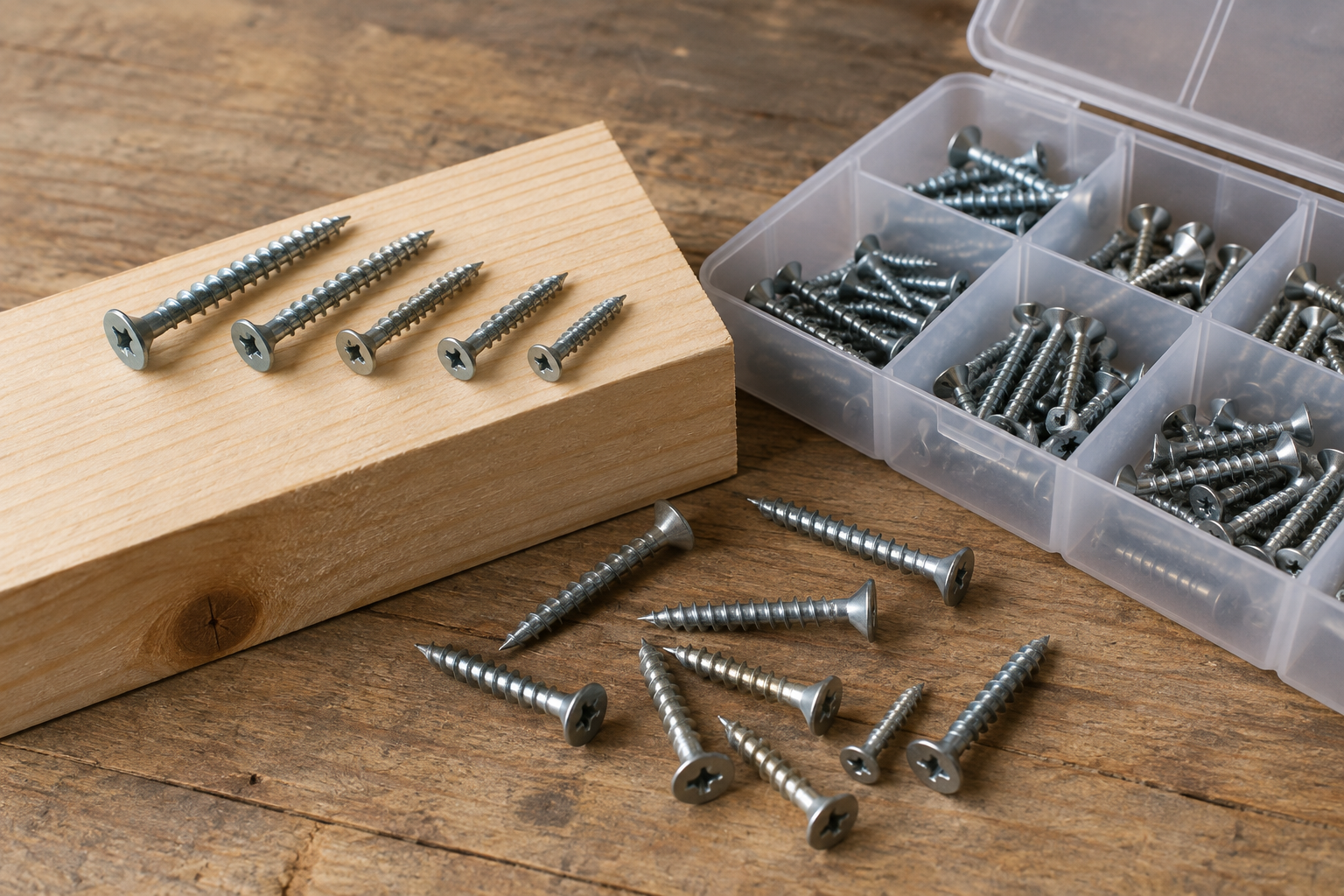
A Phillips head has a cross-shaped recess. Under heavy driving force, the bit can climb out of that recess. This cam-out tendency was designed into the drive, but on a deck it can mean a chewed-up head, a damaged board surface, or a stalled job.
A Torx head has a six-point star-shaped recess. A matching bit engages the sides of the recess, spreading driving force across more contact area. With the correct bit, it tends to stay seated as the screw goes into dense or damp lumber. Torx screws are commonly sold as T25, a size often used for deck screws, though you should check the screw packaging rather than assume every screw takes that bit.
Neither drive type makes a screw immune to stripping. A worn or wrong-size bit, excessive speed, a tilted driver, or a poor-quality screw can ruin either head. The screw’s material and coating matter more for resisting corrosion than the drive shape does.
How they compare on a deck
| Factor | Torx | Phillips |
|---|---|---|
| Bit engagement | Strong with the correct, unworn bit | More prone to slipping under high torque |
| Driving speed | Usually faster for repeated installation | Can require more pressure and attention |
| Cost and availability | Common in deck screws; may cost a little more | Very widely available, often inexpensive |
| Best fit | New builds and jobs involving many screws | Small repairs and light-duty fastening |
| Common failure | Stripped recess from a bad bit or excessive force | Cam-out, damaged head, or marred board |
On a full deck, the difference adds up. A job may require several hundred screws; even one slipped drive every few dozen fasteners means repeated stops to swap bits or remove a damaged screw. Torx generally reduces that risk, especially when driving long screws into hardwood or framing lumber. In softer wood, either drive can work if the screws are installed carefully.
When Phillips is enough
For replacing a handful of loose screws or fastening a small trim piece, Phillips may be the sensible budget choice. If you already have the screws and a good-fitting bit, there’s little benefit in buying a new box solely to change drive type. Keep the driver square to the screw, use moderate speed, and stop once the head is flush. Pressing harder to compensate for a slipping bit can make the damage worse.
Phillips is also reasonable where the fastener is not carrying a major structural load and the material is easy to drive. It is less appealing for repetitive installation with an impact driver, where high torque can make cam-out more likely. If you choose Phillips for a larger job, keep a fresh, correctly sized bit handy and test a few screws before committing to the full run.
Choose the screw for the exposure
Drive style doesn’t protect a deck from rust. For exterior use, choose screws labeled for decks and for the lumber or treatment they’ll contact. Pressure-treated wood can be especially corrosive to unsuitable fasteners. Stainless steel offers strong corrosion resistance, while coated deck screws are a common lower-cost option; compatibility and exposure conditions vary, so follow the fastener maker’s guidance.
For a new build, a box of exterior Torx deck screws is a practical default. Match screw length to the boards and framing, and check local requirements if the fasteners are part of a structural connection. Don’t use drywall screws outdoors: they’re not designed for deck exposure or the same fastening demands.
Drive cleanly without damaging boards
Use a bit that fits the recess snugly; a loose bit can strip a Torx or Phillips head. Replace bits with rounded, worn tips, and keep the driver aligned with the screw. Start at low speed until the screw bites, then increase speed if needed. An impact driver can be useful, but its rapid hammering can drive a screw too deep or snap it if you keep triggering after the head seats.
Set the screw head flush with the board surface, not buried in a crater. Overdriving can crush wood fibers and leave a pocket that holds water. Near board ends, predrilling can help reduce splitting, especially in dry or hard lumber. Follow the decking manufacturer’s spacing and fastening instructions; a particular board may require two fasteners at each joist, but patterns are not universal.
For a deck project, a set of T25 driver bits is worth keeping nearby if your screws use that size. A spare bit avoids pushing on with a worn one, which is a common cause of damaged recesses. Confirm the drive size on the package first—some screws use a different Torx size.
The practical choice
For building or resurfacing a deck, choose Torx screws when the price difference is modest. They’re generally easier to drive consistently, reduce cam-out, and make a large fastening job less tiring. Phillips screws remain a fair choice for a small repair, an existing supply, or an easy-to-drive application where careful technique is enough.
Whichever you choose, prioritize an exterior-rated fastener appropriate for the lumber, use the correct fresh bit, and avoid burying the head. Those decisions do more to determine whether the fastening holds up outdoors than the drive shape alone.