What's inside
As an Amazon Associate I earn from qualifying purchases. This post may contain affiliate links at no extra cost to you.
A left-hand drill bit and a screw extractor can both help remove a broken bolt, but they work differently. A left-hand bit cuts counterclockwise; if it bites, it may turn the bolt out while drilling. An extractor is a hardened, tapered tool that wedges into a pilot hole and turns the fastener out. Start with the drill bit in most cases: it is less likely to expand the bolt in its threads, and it may remove the bolt without needing an extractor at all.
As an Amazon Associate we earn from qualifying purchases at no extra cost to you.


Our Top Picks
Which tool should you try first?
Try a left-hand drill bit first when the bolt is broken near flush or above the surface, you can center a pilot hole, and the fastener is not badly seized. Use a bit smaller than the bolt’s core diameter, run the drill in reverse at low speed, and apply steady pressure. If the bit catches, stop drilling and let the bolt back out.
Reach for an extractor if the left-hand bit has made a centered pilot hole but has not turned the bolt, or if you already have a suitable hole. An extractor needs enough engagement to grip, but it should not be driven in so hard that it wedges the bolt tighter. For a bolt that is deeply corroded, badly off-center, or broken below the surface, neither tool is a sure fix; heat, drilling out the fastener, or professional machining may be safer.
Left-hand bit vs. extractor
| Factor | Left-hand drill bit | Screw extractor |
|---|---|---|
| How it works | Cuts counterclockwise; may spin the bolt out | Bites into a pilot hole as you turn it counterclockwise |
| Best first use | Making a centered hole while giving the bolt a chance to turn | Turning a bolt that already has a suitable pilot hole |
| Main risk | Drilling off-center or through the bolt into the threads | Snapping the hardened extractor in the bolt |
| Cost and versatility | Useful for drilling tasks beyond fastener removal | Often inexpensive, but mainly for extraction |
| When it struggles | Very hard bolts, poor access, or a bolt that will not turn | Overtightened, seized bolts or shallow, oversized, or off-center holes |
Prepare the bolt before drilling
First make the workpiece stable and protect nearby parts. Apply penetrating oil if the fastener is corroded, and give it time to work. If the bolt protrudes, try gripping it with locking pliers before drilling. A punch mark at the exact center helps keep the bit from wandering; on a flush break, this step matters as much as the choice of tool.
Check the bolt size and material, then choose a bit and extractor sized for that fastener. Follow the extractor maker’s chart rather than guessing: too-small a pilot hole may leave insufficient bite, while too-large a hole can weaken the bolt and make the extractor slip. A basic left-hand drill bit set is a reasonable purchase if you remove broken fasteners occasionally. For one easy, exposed bolt, buying a specialty set may not be worth it.
Using a left-hand drill bit
Fit the bit firmly in the chuck, set the drill to reverse, and start slowly. Keep the drill square to the bolt and use cutting oil where appropriate. Small bits can snap from side pressure, so do not rock the drill to steer it. If the bit skates, stop and re-center rather than enlarging the hole at an angle.
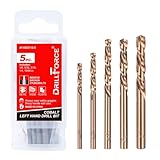
As the hole deepens, the cutting force may loosen the bolt. If it begins to turn, keep the drill aligned and let it come out; do not switch to forward. If it does not, stop before drilling through the bolt and damaging the female threads. A good set of cobalt left-hand bits can help with tougher materials, but cobalt does not make a bit unbreakable. Correct speed, alignment, and pressure still matter.
Using a screw extractor
After drilling the pilot hole to the specified diameter and depth, tap the extractor into the hole only enough for it to grip. Turn it counterclockwise with a tap wrench or another controlled hand tool. Avoid using an impact driver: sudden torque can snap the extractor before you feel that the bolt is not moving.
Extractors are hard and brittle. If one breaks inside the bolt, ordinary drill bits may not cut it, and removing it can become a machine-shop job. This is why more force is not always the answer. A screw extractor set is handy for occasional work, but inspect the included sizes and use the matching drill-size instructions. A bargain set can be fine for soft, accessible fasteners; for a critical bolt or hardened fastener, avoid forcing a low-quality extractor beyond its limits.
When neither tool is the right next step
Stop if the pilot hole is drifting toward the surrounding threads, the bit is overheating, or the extractor starts twisting without moving the bolt. On a corroded steel bolt in an aluminum part, uncontrolled heat or aggressive drilling can damage the softer material. If the broken bolt is below the surface, close to a sealing face, or part of a safety-critical assembly, careful drilling with a guide or professional removal may be cheaper than repairing ruined threads.
Once the bolt is out, inspect the threads. A thread chaser may clean minor damage; a tap can remove more material, so use the correct size and keep it aligned. The practical rule is simple: let the left-hand bit attempt the removal first, then use an extractor only when the hole is centered and sized correctly. If the fastener resists, reassess instead of adding torque.