What's inside
As an Amazon Associate I earn from qualifying purchases. This post may contain affiliate links at no extra cost to you.
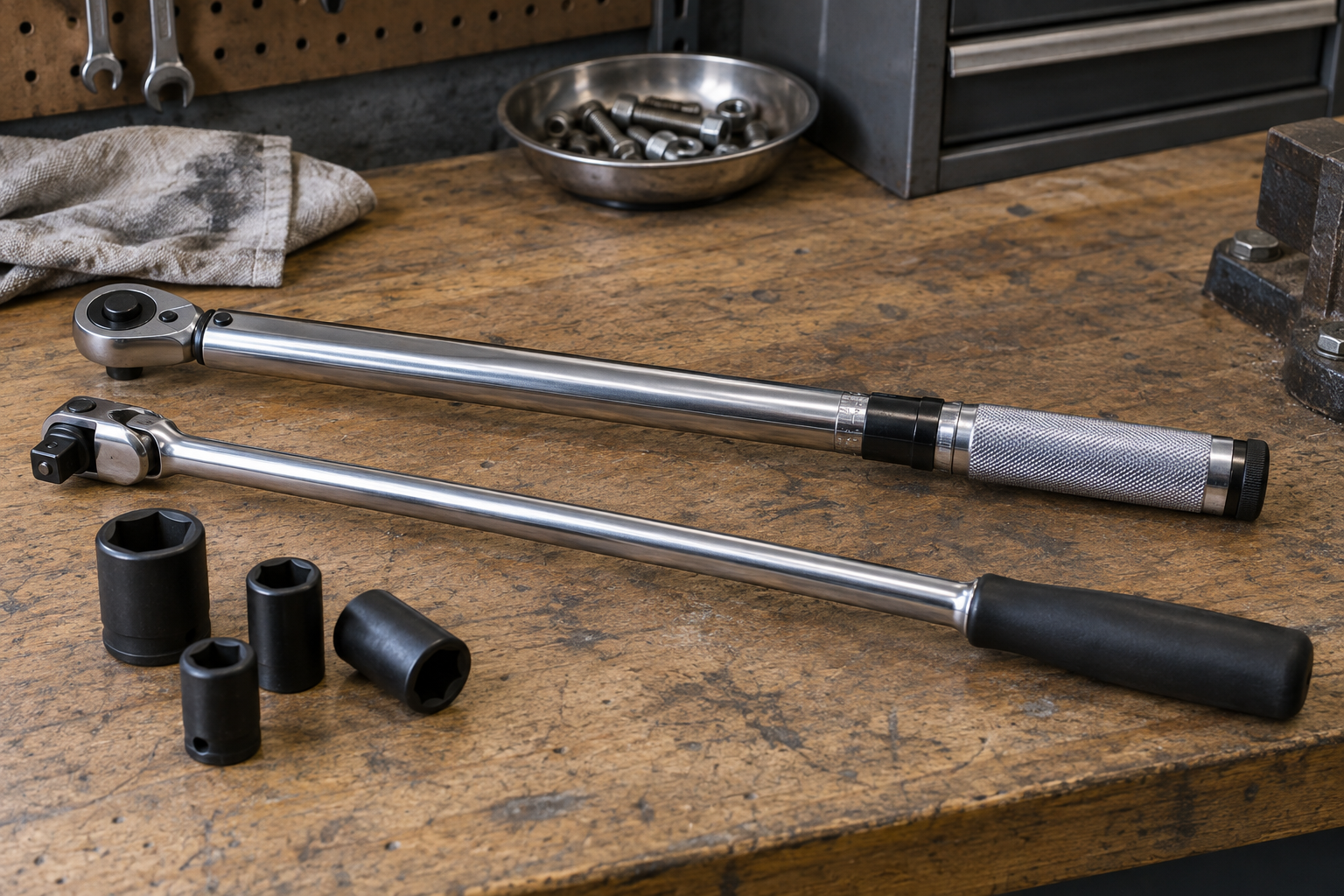
Drive size affects more than which socket fits a torque wrench. It influences the wrench’s torque range, length, weight and usefulness in tight spaces. For most automotive work, a 3/8-inch drive is the practical choice for smaller fasteners, while a 1/2-inch drive covers many wheel and suspension jobs. A 1/4-inch wrench has a place on delicate, low-torque work; a 3/4-inch wrench is rarely needed on passenger cars.
Our Top Picks
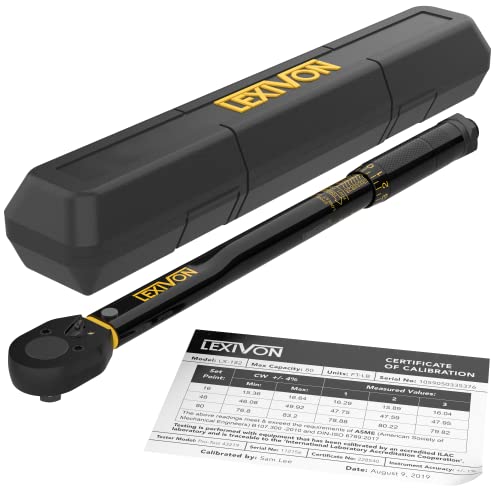 LEXIVON 3/8-Inch Drive Click Torque Wrench 10~80 Ft-Lb/13.6~108.53/8"DR. 10-80 FT-LB2.5 x 3 x 14 inches2.3 PoundsCheck on Amazon
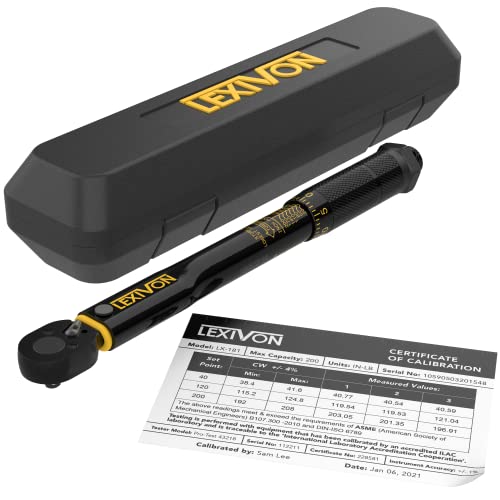
 LEXIVON Torque Wrench 1/2-Inch Drive Click 10~150 Ft-Lb/13.6~203.51/2"DR. 10-150 FT-LB2.5 x 3 x 18 inches3 PoundsCheck on Amazon
Match drive size to the job
Start with the torque values in the vehicle’s service information, then choose a wrench whose range comfortably includes them. Drive size is a useful clue, not a torque standard: two wrenches with the same drive can have different ranges. Check the manufacturer’s stated range and accuracy before buying.
Many spark plugs, small engine fasteners and interior or sensor hardware call for low torque, often in the single digits to a few tens of pound-feet. Brake calipers, suspension fasteners and wheel lug nuts generally require more. Passenger-car lug nuts commonly fall around 80–100 lb-ft, but the correct value varies by vehicle and wheel. Always check the specification for the job; do not use a rule of thumb as a substitute.
| Drive size | Typical automotive use | Main advantage | Common drawback |
|---|---|---|---|
| 1/4 inch | Small, low-torque fasteners; some spark plugs and interior components | Compact, good access in confined spaces | Too limited for many chassis and wheel jobs |
| 3/8 inch | Engine accessories, plugs, smaller brake and suspension fasteners | Useful range of sizes without much bulk | Some wrenches cannot reach higher automotive torque values |
| 1/2 inch | Wheel nuts and many larger chassis fasteners | More leverage and commonly available higher ranges | Can be bulky; low-end readings may be less suitable for delicate work |
| 3/4 inch | Heavy trucks, large equipment and unusually high-torque fasteners | Handles high torque with large sockets | Oversized and unnecessary for most passenger-car repairs |
Why range matters more than drive
A torque wrench is most useful when the required value falls within its specified working range. Avoid choosing a wrench that only just reaches the target at the top or bottom of its scale. For example, if a wheel specification is 90 lb-ft, a 1/2-inch wrench rated for 20–150 lb-ft is a more natural fit than one rated for 50–250 lb-ft. The second may work, but the target sits close to its lower limit.
The same issue applies in reverse. A small 3/8-inch wrench may cover 10–80 lb-ft accurately enough for many engine jobs, but it cannot tighten a 90 lb-ft wheel nut to specification. An adapter does not increase the wrench’s rated range. If one tool cannot cover both delicate and high-torque work, two appropriately ranged wrenches are safer than forcing one to do everything.
Choosing between 3/8 and 1/2 inch
For a first automotive torque wrench, 1/2 inch is often the better choice if you expect to rotate tires or work on larger suspension fasteners. It accepts common impact-style sockets and has the leverage and range needed for many wheel specifications. Its size can be awkward around an engine bay, and it is not the right tool for a 10 lb-ft fastener if its minimum setting is 25 lb-ft.
A 3/8-inch wrench is a stronger all-rounder for engine and brake work where fasteners are smaller and access is tighter. It is usually lighter and easier to control. Its limitation is top-end torque: check the range rather than assuming every 3/8-inch model can reach wheel-nut values. A 3/8-inch click torque wrench makes sense for a buyer who mainly works on engine, brake and smaller chassis fasteners.
If you service a whole car, two wrenches often make more sense than one compromise tool: a low-range 3/8-inch wrench for smaller fasteners and a 1/2-inch wrench for wheels and larger hardware. A 1/2-inch click torque wrench is a straightforward option for wheel work, provided its range includes your vehicle’s specified value.
Consider access and sockets
The drive must match the socket, directly or through an adapter. A reducer can let a 1/2-inch wrench turn a 3/8-inch socket, but it does not make the wrench compact. It also adds another joint that can flex or clutter a tight working area. Use the fewest adapters possible, and keep the wrench aligned with the fastener rather than pulling sideways.
For lug nuts, use the correct socket size and a wheel-safe socket if the wheel finish is vulnerable. A torque wrench is for final tightening, not breaking loose seized fasteners. Loosen with a breaker bar; using the torque wrench for that job can damage or throw off its mechanism. For many lug nuts, tighten by hand with a ratchet first, then apply torque in a star pattern.
Choose a wrench type
Click wrenches are a common, affordable choice. They signal when the set torque is reached, but the user must stop pulling at the click. Continuing to pull can over-tighten the fastener. Beam and dial wrenches show torque continuously and can be inexpensive, though reading the scale while working may be awkward. Digital models are easier to read and may offer alerts, but cost more and still need careful handling.
For a home mechanic who torques wheels a few times a year, a decent click wrench is usually enough; paying extra for a digital display is optional. Whichever type you buy, look for a stated accuracy, a readable scale and a range suited to your jobs. A 1/4-inch inch-pound torque wrench can be useful for low-torque work, but confirm both its units and range: inch-pounds and foot-pounds are not interchangeable. There are 12 inch-pounds in 1 foot-pound.
Use and store it correctly
Set the wrench to the specified value, pull smoothly on the handle, and keep your hand on its marked grip area if it has one. Do not jerk the handle or add a pipe for extra leverage. On a click wrench, stop as soon as it clicks. After use, return an adjustable click wrench to its lowest marked setting without turning it below that point, unless its instructions say otherwise. Store it clean and protected; dropping it can affect accuracy.
Do not use a torque wrench to compensate for dirty or damaged threads. Rust, oil, anti-seize and thread-locking compound can change the clamping force produced at a given torque. Follow the vehicle’s instructions about thread condition and lubrication. If a critical fastener has questionable threads or the wrench has been dropped, it is better to inspect the setup or have the wrench checked than to trust an uncertain reading.