What's inside
As an Amazon Associate I earn from qualifying purchases. This post may contain affiliate links at no extra cost to you.
Our Top Picks


The quick verdict
For smooth, round holes in thin aluminum, a step drill is usually the easier choice—especially for holes larger than about 6 mm (1/4 in.). Its stepped cutting edges enlarge the hole in stages, which helps limit grabbing and makes it easier to stop at a chosen diameter. A twist drill is the cheaper, more versatile option for small holes, and it works well when sharp, properly supported and used at a controlled speed.
Neither tool guarantees a clean edge. A dull bit, unsupported sheet or excessive pressure can leave burrs, chatter or a distorted hole. The right choice depends on hole size, how many holes you need and whether the sheet can be clamped flat.
As an Amazon Associate we earn from qualifying purchases at no extra cost to you.
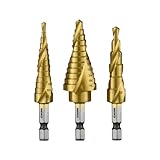
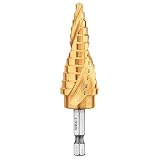

How the two drills cut
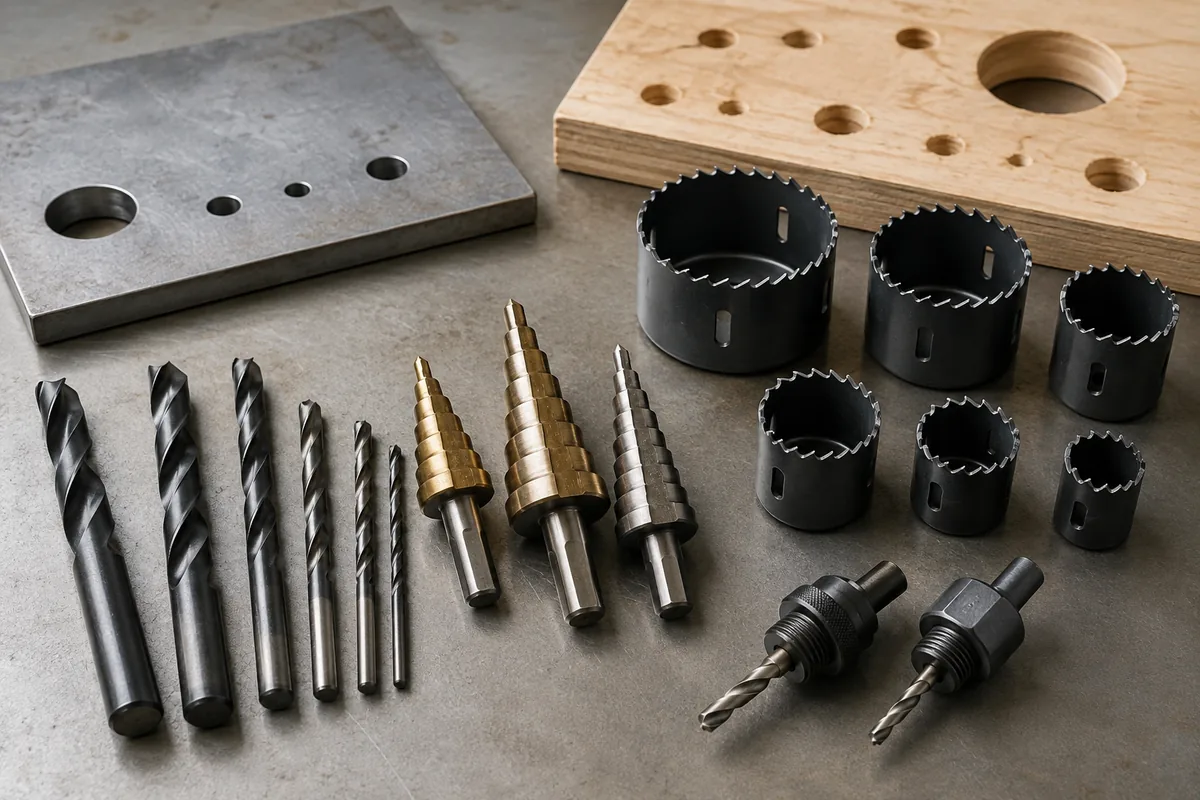
A twist drill has two helical flutes and a pointed tip. Both cutting lips engage the material as the bit advances, carrying chips up the flutes. It is available in many diameters, so it can make small holes and holes larger than a typical step drill can handle. In thin sheet, though, the point can pull through abruptly as it breaks out. That can catch the sheet, enlarge the hole or twist the workpiece if it is not secured.
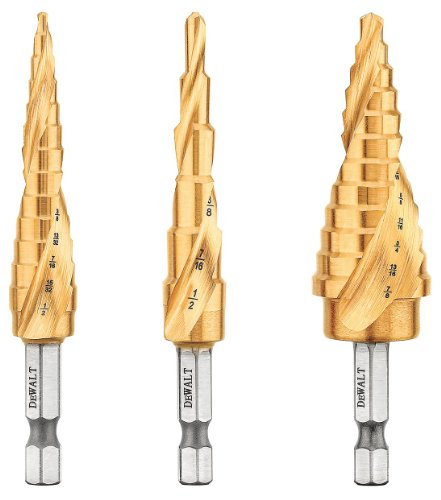
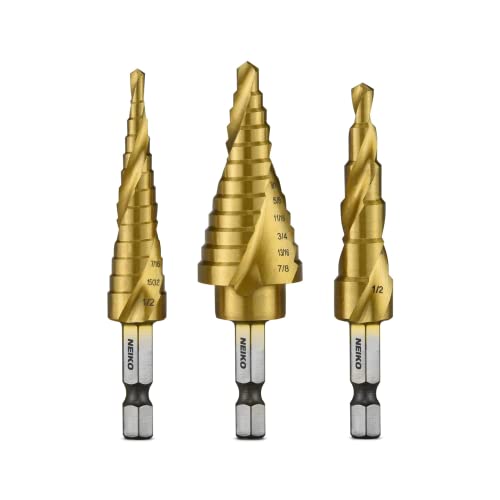
A step drill has a cone-shaped body with several diameter steps. Each step cuts a larger hole than the one before it. This gradual cut is less prone to catching than a large twist drill in thin stock, and the steps provide a built-in depth stop: stop when the step matching your target diameter reaches the sheet. The trade-off is that the hole sizes are limited to the steps on that particular bit.
Side-by-side comparison
| Factor | Step drill | Twist drill |
|---|---|---|
| Best use | Medium or large holes in thin sheet | Small holes and general-purpose drilling |
| Hole sizes | Fixed steps, often in a limited range | Many available diameters; one bit per size |
| Risk of grabbing | Generally lower in thin material | Can catch as the tip breaks through |
| Edge quality | Often clean with firm support and sharp edges | Can be clean, but breakthrough burrs are common |
| Cost | One bit covers several diameters, but a good one costs more than a basic bit | Inexpensive for common small sizes; a full set adds up |
| Limits | Not suited to thick stock or sizes beyond its steps | Large bits can grab; each diameter needs its own bit |
Choose by hole size and job
For holes around 3–6 mm (1/8–1/4 in.), a sharp twist drill is normally the sensible buy. These sizes are easy to control, widely available and inexpensive to replace. If you only need one or two small holes, there is little reason to buy a step drill just for the job.
For a hole around 10–30 mm (3/8–1 3/16 in.), a step drill is often more forgiving in thin aluminum, provided the target diameter is one of its steps. It also avoids buying several large twist drills for different hole sizes. Check the bit’s stated range before ordering; step patterns vary, and some jump over the exact diameter you need.
If the diameter must be exact, use a bit made for that size and verify the finished hole with calipers. A step drill’s nominal size does not remove the need to measure, especially if you push past the shoulder or let the drill wobble. For a range of sheet-metal work, compare step drill bits for aluminum by their size range and cutting material, not just the number of steps.
How to get a smoother hole
Clamp the sheet flat to a scrap piece of wood or a drill backing block. The support should sit directly under the hole; otherwise the sheet may flex, chatter or tear as the bit exits. Keep loose sheet metal out of your hand while drilling. Thin aluminum can spin suddenly when a bit catches, so use a clamp or vise and keep fingers clear.
Mark the center with a light center-punch tap or a fine marker. A deep punch mark can deform very thin sheet. For larger holes, drill a small pilot hole first—about 3–4 mm (1/8 in.) is usually enough to guide a step drill. A pilot hole is not always necessary with a step drill, but it can help the tip stay centered.
Use a variable-speed drill at a moderate speed, apply steady pressure and let the cutting edge do the work. Do not force the bit when it squeals, chatters or produces long, smeared chips; stop and check the setup. For twist drills, a cutting speed around 60–100 surface feet per minute is a useful starting range for aluminum. That works out to roughly 300–500 rpm for a 1/2-inch bit, and 600–1,000 rpm for a 1/4-inch bit. A drill’s speed settings may not land exactly on those figures, so treat them as a guide rather than a rule.
A little aluminum-compatible cutting fluid can reduce friction and help prevent aluminum from sticking to the cutting edges. Use only a small amount, keep it off the drill’s grips, and follow the fluid’s label. If the bit starts rubbing rather than cutting, continuing to press harder usually makes the edge rougher, not smoother.
Burrs, rough edges and common mistakes
Expect a small burr on at least one side of a drilled hole. Remove it with a deburring tool, a hand countersink or a fine file, using light pressure. A countersink can also lightly break the edge, but it is easy to remove too much material and create a visible chamfer. For a cleaner finish on a few holes, a hand deburring tool gives more control than spinning a large countersink in the drill.
A ragged, oversized hole often means the sheet was unsupported or the drill grabbed at breakthrough. A rough, heat-marked edge can point to a dull bit, excessive speed or too much pressure. Aluminum can pack into the flutes, so stop the drill and clear chips rather than forcing a clogged bit through. Inspect the cutting edges, too: a polished-looking edge may be dull even if it has not visibly chipped.
What to buy
Buy a step drill if you regularly make medium or large holes in thin aluminum and can use its listed diameters. A coated high-speed-steel step drill is a reasonable starting category for occasional DIY work; choose a more durable construction if you expect frequent use. Buy standard high-speed-steel twist drills if most of your holes are small or you need exact, varied diameters. A high-speed-steel twist drill set is often the cheaper and more useful purchase for general repairs.
For one large hole in thin sheet, borrowing or buying a step drill is usually safer than trying to push a big twist drill through unsupported material. For a few small holes, a sharp twist bit, a backing block and careful deburring are enough. In either case, clamping and support matter more to the final finish than buying the most expensive bit.