What's inside
As an Amazon Associate I earn from qualifying purchases. This post may contain affiliate links at no extra cost to you.
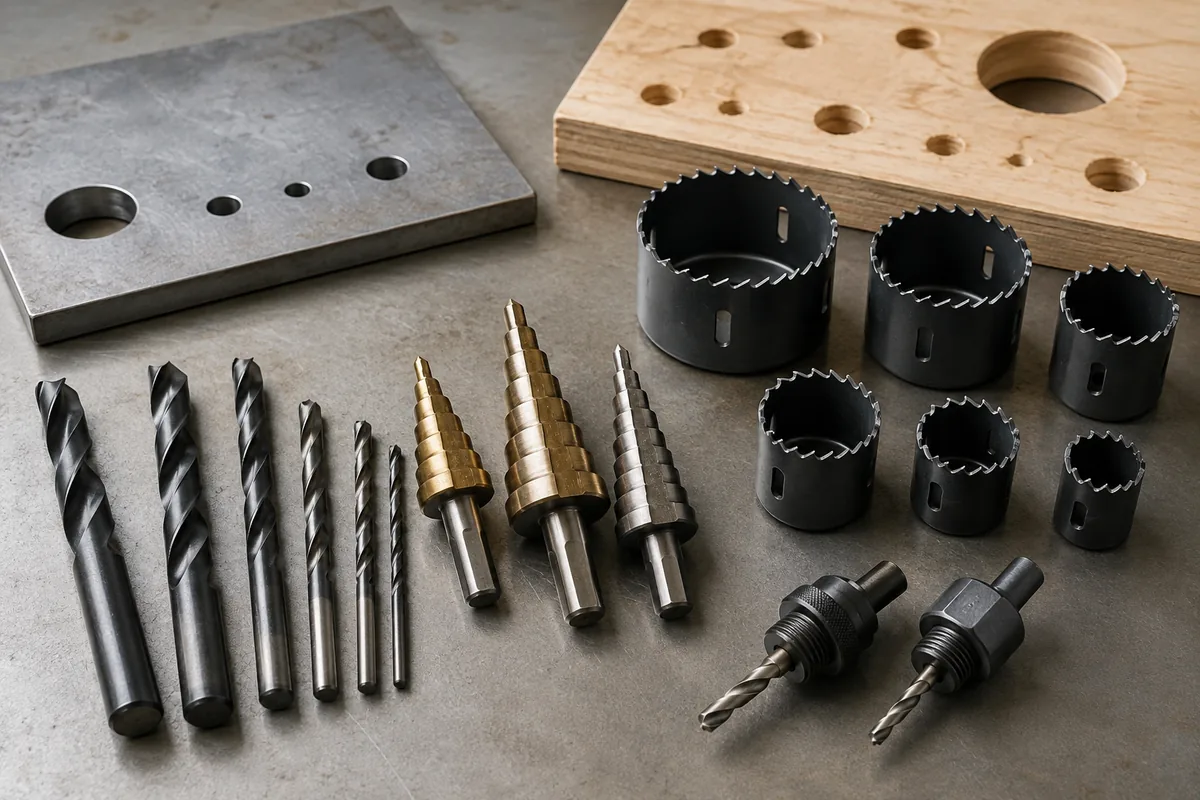
A step drill is often the cleanest way to enlarge a hole in thin sheet metal, especially when the new hole is only a few sizes larger than the old one. Its stepped cones cut progressively, so the sheet is less likely to grab than it would with a large twist drill. But the bit still needs the right material, speed, and support. Pick the wrong one and you can get a ragged edge, an out-of-round hole, or a bit that overheats before the job is done.
As an Amazon Associate we earn from qualifying purchases at no extra cost to you.


Our Top Picks


Choosing a step drill
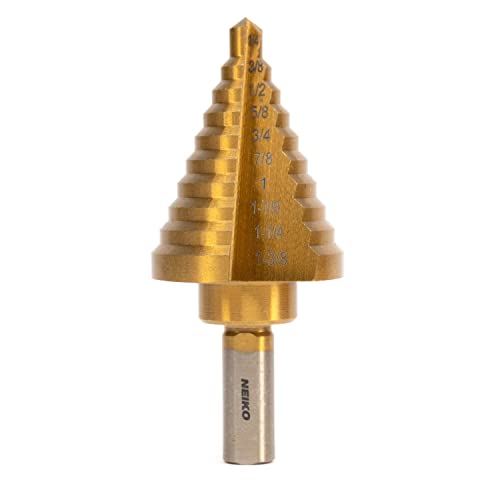
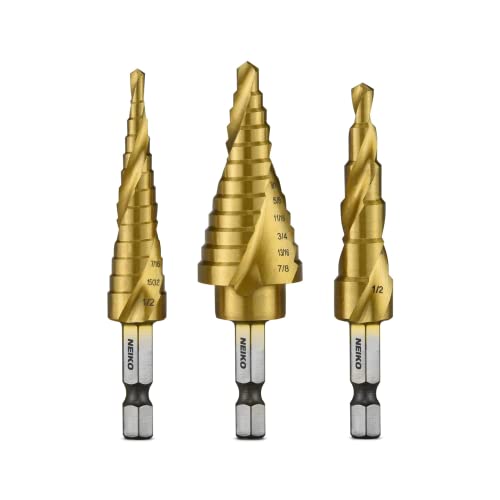
For occasional work in mild steel, aluminum, or plastic, a basic high-speed-steel (HSS) step drill is usually enough. Check its printed step sizes and maximum diameter against your job before buying: common sets cover roughly 1/8 to 1/2 inch, while larger bits may reach 3/4 inch or more. A bit can only make the diameters marked on its steps, so it is not a substitute for a continuously adjustable boring tool.
If you regularly drill stainless steel or make many holes, look for a cobalt HSS bit, often marked M35 or M42, or a quality bit with a titanium-aluminum-nitride (TiAlN) coating. These can tolerate more heat, but they are not immune to dulling or burning. Coating alone is not a guarantee of quality; flute geometry, sharpness, and secure size markings matter too. Browse cobalt step drill bits if stainless is part of the work.
How the main options compare
| Tool | Best for | Main trade-off |
|---|---|---|
| HSS step drill | Occasional holes in thin steel or aluminum | Affordable, but wears faster in tough alloys |
| Cobalt step drill | Repeated work or stainless sheet | Costs more; still needs low speed and lubrication |
| Twist drill set | Small holes and materials thicker than typical sheet | Large bits can catch and distort thin sheet |
| Hole saw | Large holes in sheet or panels | Can chatter and leave a rough edge if poorly supported |
For a one-off hole in thin mild steel, paying extra for cobalt is rarely necessary. A sharp, inexpensive HSS bit can do the job. For a hole much larger than the bit’s rated range, use a hole saw or another tool sized for that diameter rather than forcing a step drill past its last step.
Check the fit before you buy
Measure the existing hole and the target diameter, then choose a bit with a step at the exact size you need. For example, if a cable gland needs a 7/8-inch opening, a bit that stops at 3/4 inch will not do, even if the rest of its range suits your work. Read both the diameter range and the step increments; markings in fractions of an inch may not match metric hardware.
Also check the shank. A three-flat shank helps reduce slipping in a drill chuck, while a hex shank can make bit changes quicker in a compatible driver. Either way, clamp the shank firmly. Do not use a worn or undersized chuck, and avoid an impact driver unless the bit maker explicitly rates the bit for it. Impacts can damage cutting edges and make control harder.
How to make a clean hole
Clamp the sheet flat against a piece of scrap wood. The backing supports the metal as the cutting edge exits and reduces the chance of a burr or a distorted hole. Mark the center and make a small pilot hole if the bit manufacturer recommends one; a 1/8-inch pilot is often useful, but follow the bit’s instructions. Wear eye protection, secure loose clothing, and keep fingers clear of the workpiece.
Use a variable-speed drill and start slowly. Thin sheet usually calls for a steady, light feed rather than high speed and hard pressure. As a practical starting point, many small step bits cut well at several hundred RPM; larger diameters and stainless need slower speeds. The maker’s speed chart should take precedence because recommended RPM varies with bit size and material. Apply cutting fluid for steel, especially stainless, and let the bit cut instead of leaning heavily on the drill.
Stop as soon as the cutting edge reaches the required step. Continuing into the next step enlarges the hole, often without an obvious warning. Withdraw the bit while it is still turning slowly, then deburr both sides with a hand deburring tool or a light touch from the next step. Avoid using the drill at high speed to “clean up” the edge; that can take away too much material.
Common problems and what they mean
If the bit squeals, smokes, or turns blue, stop. The usual causes are excessive speed, too much pressure, a dull cutting edge, or drilling stainless without adequate lubrication. Let the tool cool, inspect the cutting edge, and restart more slowly. A cooked edge may stay dull even after it looks clean.
If the bit grabs, the sheet may be flexing or the drill may be tilted. Re-clamp the work, add backing, and keep the drill square to the surface. A step bit also becomes less stable near its maximum diameter, so do not use it as a lever to correct a crooked hole. For thin sheet, a burr on the underside is normal; a large flap or torn edge usually points to poor support, a loose workpiece, or a dull bit.
If you only need a few holes in aluminum or mild steel, a modestly priced HSS bit is a sensible buy. For frequent stainless work, choose cobalt and budget for cutting fluid. Compare HSS step drill sets against coated step drill bits, but prioritize the right diameter range and a secure shank over a long list of included sizes.