What's inside
As an Amazon Associate I earn from qualifying purchases. This post may contain affiliate links at no extra cost to you.
Our Top Picks
 Klein Tools KTSB15 Step Drill Bit #15 Double7/8 to 1-3/8-Inch5.2 x 3.4 x 0.7 inches0.4 PoundsCheck on Amazon
Quick answer
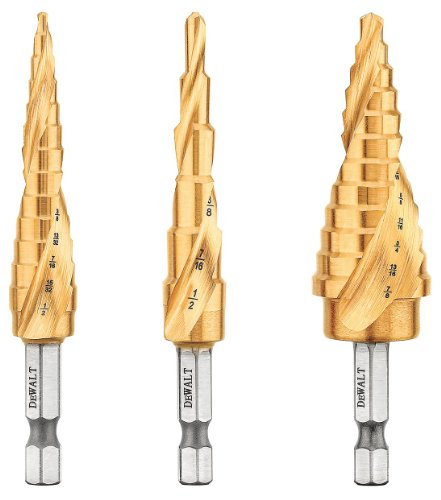
For most clean holes in thin stainless sheet, a sharp, single-flute Unibit-style step bit is the better choice. Its wide, polished flute clears chips readily, and each step enlarges the hole gradually. A multi-flute step bit can cut faster and leave a more even edge when it is sharp and used in a rigid setup, but it is less forgiving of poor speed control, dull edges, and hand-drill wobble.
Neither bit is a cure for bad technique. Stainless work-hardens if the cutting edge rubs instead of cutting, so use low speed, firm feed, cutting oil, and a firmly supported sheet. For occasional holes in thin panels, the cheaper single-flute bit is usually enough. If you need repeatable holes or a finer finish, consider a quality multi-flute bit and test it on scrap from the same material.
As an Amazon Associate we earn from qualifying purchases at no extra cost to you.


How the two designs cut
A Unibit is a type of step bit, usually with one cutting flute. Each step has a larger diameter than the one before it, so the bit makes a round hole and enlarges it as it advances. The single cutting edge takes a relatively broad bite, while the open flute gives chips a clear path out.
A multi-flute step bit has two or more cutting edges. More edges share the work, which can make the cut feel smoother and reduce the rough, faceted finish a worn single-flute bit may leave. But the extra edges also make chip clearance and sharpening more important. If chips pack into the cut, or one edge is damaged, the bit can chatter, snag, or leave an uneven hole.
“Multi-flute” does not automatically mean “cleaner.” Edge condition, bit geometry, runout, speed, feed, and sheet support all matter. A sharp single-flute bit used correctly can beat a cheap multi-flute bit with inconsistent cutting edges.
At a glance
| Factor | Single-flute Unibit | Multi-flute step bit |
|---|---|---|
| Thin stainless performance | Reliable for occasional holes when sharp and run slowly | Can produce a smoother, more consistent cut in a good setup |
| Chip clearance | Generally generous | More dependent on flute design and chip removal |
| Ease of control | Forgiving at low speed with steady pressure | May cut faster, but can grab or chatter if misaligned |
| Best fit | One-off panel holes and general sheet-metal work | Repeated holes, controlled setups, or finish-sensitive work |
| Main risk | Worn edge rubs and work-hardens stainless | Chatter, packed chips, or uneven cutting from poor setup |
Which one should you buy?
Choose a single-flute bit if you are drilling a modest number of holes in thin stainless, using a handheld drill, or need a useful bit for several sheet materials. It is typically less expensive and easier to clear between steps. Check the listed material compatibility: a step bit advertised only for wood or soft metal is not a sensible choice for stainless. A stainless-rated single-flute step bit is a reasonable starting point for general panel work.
Pay more for a multi-flute bit if you are making many matching holes, can hold the drill square, and care about consistency from hole to hole. It can be a better fit in a drill press or a rigid fixture than in a loose, high-speed handheld setup. Before buying, compare the bit’s diameter range with your actual hole sizes; step increments are not identical across bits. A multi-flute step drill bit rated for stainless is worth considering for repeat work, but test it first.
For a hole that must be very round, closely sized, or free of visible burrs, a step bit may not be the right finishing tool at all. Drill undersize and finish with a reamer, or use a hole saw designed for stainless when the required diameter exceeds the bit’s range. A step bit’s taper can also make it awkward to stop precisely at a diameter if you cannot see or feel the step clearly.
How to get a cleaner cut
Support the sheet flat against a sacrificial backing board, clamp it securely, and mark the center. Thin sheet can flex, catch, and spin as the bit breaks through; holding it by hand is a common cause of torn edges and injury. For a larger hole, make a small pilot hole if the bit manufacturer recommends it, but avoid a pilot so large that the cutting edge has nothing to center on.
Run the drill slowly. A practical starting range for many hand-drill jobs in thin stainless is roughly 200–500 RPM, slowing down for larger steps; the correct speed depends on bit diameter and the bit maker’s guidance. A high-speed cordless drill may need its low gear, not just a light trigger touch. Apply steady pressure so the edge cuts continuously. Too little pressure lets the bit rub, heat the stainless, and harden the surface. Too much pressure can make it grab or distort the sheet.
Use cutting oil made for metal drilling, and pause to clear chips if they collect around the step. Do not keep forcing a dull bit through a shiny, heat-marked hole. That usually worsens the hardened layer and dulls the edge further. If the bit squeals, smokes, or produces blue chips, stop, let the work cool, and check speed, lubrication, and sharpness. Wear eye protection; remove sharp burrs with a deburring tool or fine file after drilling.
What clean means—and what can go wrong
On thin stainless, “clean” usually means a round hole with limited burr, no torn sheet, and no obvious heat damage. A small burr is normal and should be removed. A raised lip or ragged edge often points to a flexible workpiece, a dull bit, or poor breakthrough control rather than a flute-count problem.
If the bit chatters, reduce speed, improve clamping, and make sure the drill is square to the panel. If it grabs at the final step, ease off as the hole reaches size and avoid letting the bit plunge through unsupported sheet. If the hole is undersized or visibly tapered, check the step marking and measure the result; the bit’s taper and the sheet thickness can affect the finished diameter.
For a few holes, a sharp, stainless-rated Unibit and careful technique are usually the sensible buy. For a run of holes where appearance and repeatability matter, a quality multi-flute design may earn its higher cost—but only with good support, low speed, and a sharp cutting edge.