What's inside
As an Amazon Associate I earn from qualifying purchases. This post may contain affiliate links at no extra cost to you.
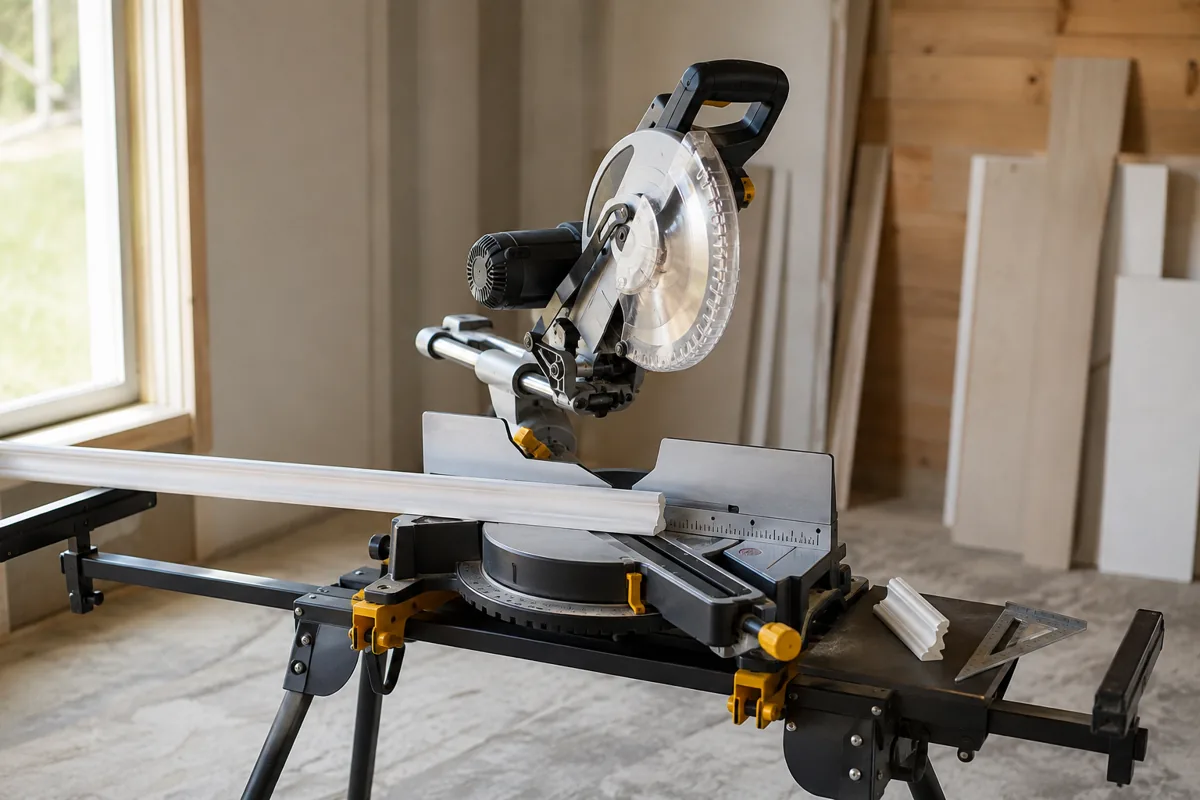
The DeWalt DWS779 and DWS780 are 12-inch, corded sliding compound miter saws built around the same basic cutting platform. Both use a 15-amp motor, slide to make wide crosscuts, and bevel in both directions. The main difference is not cutting capacity: it is the DWS780’s integrated XPS cut-line system, which projects a shadow from the blade onto the workpiece.
That distinction matters most if you make repeated cuts and want a fast visual reference. If you are comfortable aligning the blade to a pencil mark, the less expensive DWS779 can do the same core work. Check current prices before deciding; the savings vary, and the DWS780’s upgrade is useful only if its alignment system suits your work.
As an Amazon Associate we earn from qualifying purchases at no extra cost to you.


Our Top Picks


At a glance
| Feature | DeWalt DWS779 | DeWalt DWS780 |
|---|---|---|
| Blade size | 12 inches | 12 inches |
| Motor | 15 amps | 15 amps |
| Crosscut capacity at 90° | Up to 2 × 14 inches | Up to 2 × 14 inches |
| Crosscut capacity at 45° | Up to 2 × 10 inches | Up to 2 × 10 inches |
| Bevel range | Up to 49° left and right | Up to 49° left and right |
| Cut-line alignment | Blade guard provides no XPS shadow indicator | XPS LED casts a blade shadow on the work |
| Basic jobsite features | Sliding rails, tall fence, dust collection port | Same core saw features, plus XPS |
Capacity figures assume the material is supported and positioned as specified by DeWalt. A saw’s maximum cut width is not a substitute for stable support: long boards can tip, shift, or pinch the blade if they are not held level.
The real difference: XPS cut-line indicator
The DWS780’s XPS system shines an LED light across the blade, casting a shadow that shows where the blade teeth will cut. Lower the blade close to the board and you can see the kerf line directly. Unlike a laser that projects a fixed line, the shadow changes with the blade’s actual position, so it remains a useful reference as you make a bevel or miter cut.
It is still a reference, not a guarantee of a perfect cut. Blade deflection, a loose fence, a dull blade, or a board that moves can spoil the result. For tight joinery, make a test cut on scrap and check that the finished piece matches your setting. Keep the light and blade guard clean; dust can make the shadow harder to see.
The DWS779 does not include that integrated shadow system. You can align its blade to a pencil mark by lowering the blade with the saw unplugged, or use a separate work light and your own setup routine. That takes longer, but it is workable for trim, framing, and occasional crosscuts. If you routinely need to place cuts on a marked line, compare the DWS780’s current price against the DWS779 rather than assuming the premium is worthwhile.
Capacity and cutting performance
For ordinary cutting tasks, these saws are closely matched. Both have a 12-inch blade and sliding rails, with stated capacity of up to 2 × 14 inches at 90 degrees and 2 × 10 inches at 45 degrees. Both bevel left and right to 49 degrees. That combination covers common baseboard, casing, shelving, and framing cuts without requiring a larger saw for most home or jobsite work.
Those maximums are not the same as comfortable everyday capacity. A wide board needs firm support on both sides of the saw, and a long piece can sag enough to alter the cut. Use level stands or a stable bench, keep the fence clear of offcuts, and do not force the carriage through a cut. For stock wider than the saw’s rated capacity, use a different cutting method rather than trying to finish the cut from an unstable position.
Both saws use a 15-amp motor, so neither has a meaningful power advantage on paper. A sharp, appropriate blade matters more to finish quality than the model number. The supplied blade is adequate for general work, but a finer-tooth blade can reduce tear-out on finished trim. Match the blade to the material and follow its speed rating.
Setup, adjustment, and jobsite use
Neither saw is light or compact by small-saw standards. Their sliding rails extend behind the saw, so allow room at the back of a bench or choose a stand that gives the carriage clearance. Before buying, measure the space where the saw will sit, including room for long boards and the rails. If you move tools often, compare the saw’s weight and transport setup with a compatible miter-saw stand.
Check the fence and table for square before relying on factory settings. Shipping and repeated transport can knock alignment out, and a small error becomes obvious on a long miter joint. Verify the blade against the fence with a reliable square, then check the bevel against the table. Make a test cut, measure the workpiece, and adjust the stops if needed. Do not assume a detent setting is exact simply because it clicks into place.
Both models include a dust port, but dust collection is not perfect, especially when cutting fine trim. Connect a suitable extractor or vacuum if the work area is indoors, and wear eye and hearing protection. Keep hands clear of the blade path, clamp narrow or awkward pieces, and wait for the blade to stop before raising it fully.
Which one should you buy?
Choose the DWS779 if you want the same broad cutting capacity and motor power for less, and you are willing to align cuts by eye or pencil mark. It is a sensible choice for framing, occasional trim, remodeling, and general shop work. The missing XPS indicator does not reduce its rated capacity or make it a lesser saw for basic crosscuts.
Choose the DWS780 if you make many marked cuts, value quick blade-to-line alignment, or want the integrated shadow system without adding a separate light or alignment accessory. The benefit is mainly speed and convenience; it does not make the saw cut more accurately when the setup is out of square.
Before ordering, compare the actual prices and confirm the exact model number in the listing. If the DWS780 costs only a little more, the XPS system may be worth having. If the gap is substantial and you do not need fast cut-line placement, buy the DWS779 and put the difference toward a quality blade, stable support, or a careful setup. A fine-finish 12-inch blade can improve trim cuts on either saw, provided its bore, tooth design, and speed rating match the saw and material.