
What's inside
As an Amazon Associate I earn from qualifying purchases. This post may contain affiliate links at no extra cost to you.
Our Top Picks
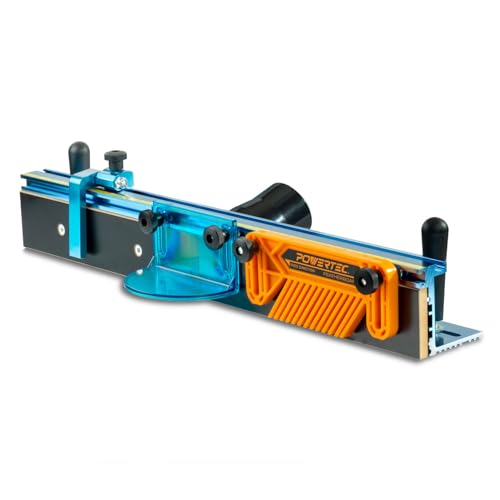 POWERTEC Router Table Fence Kit Deluxe System 3-3/8”24"24.61 x 5.13 x 4.92 inches7.5 poundsCheck on Amazon
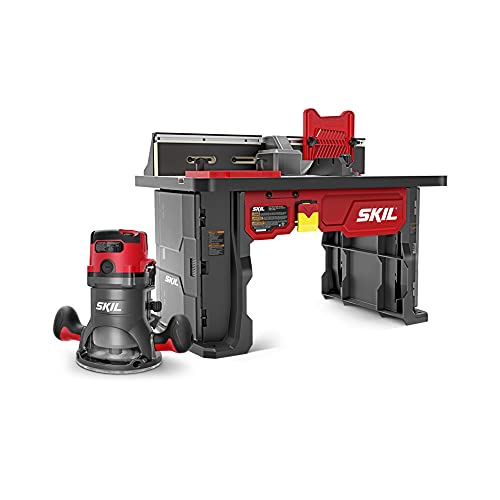
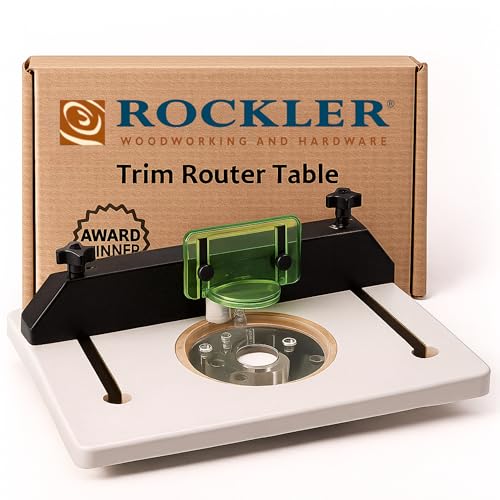


The short answer
For small parts, a handheld router usually gives you more control over where the cut goes. You can clamp the work, guide the router along a marked edge or template, and keep your hands away from the bit. A router table gives more control over the cut itself—especially when you need repeatable edge profiles—but it puts the workpiece close to an exposed cutter. On tiny, narrow, or awkward parts, that can become a safety and handling problem.
If most of your work is trimming edges on small boards, choose a router table with a suitable fence and guards. If you’re shaping a small part, routing a recess, or following a template, a handheld router is usually the more adaptable choice. Neither setup makes an unsafe workpiece safe: some parts are too small to route directly without a jig.
As an Amazon Associate we earn from qualifying purchases at no extra cost to you.


What “control” means here
Control has two parts: steering the cut and controlling the workpiece. With a handheld router, you steer the tool across a part that is clamped or held in a jig. With a table, the router stays fixed while you move the part against a fence, pin, or guide bearing. The table can make repeated cuts more consistent, but the operator has to keep the workpiece stable as it passes the bit.
That difference matters more as the part gets smaller. A 6-inch-wide panel is easy to support on either setup. A strip less than 1 inch wide, a short block, or a part with little room for a bearing or fence contact needs extra support. If you can’t keep it flat and control its movement without putting fingers near the cutter, stop and make a carrier, template, or larger blank to trim down later.
Router table vs. handheld router
| Task or factor | Router table | Handheld router |
|---|---|---|
| Repeatable edge profiles | Strong choice; a fence and fixed setup help produce matching edges | Possible with an edge guide, but setup and steady travel matter more |
| Small shaped parts | Requires secure support, often a carrier or jig | Often easier to guide around a clamped template |
| Short or narrow stock | Can tip, catch, or lose contact with the fence | Can rock on a small base or pull away from a guide |
| Recesses and template work | Less convenient unless the setup is designed for it | More flexible with a guide bushing or bearing-guided bit |
| Setup for repeated parts | Efficient once fence, bit height, and stops are set | Efficient with a template or stop, but the tool must be guided each time |
| Safety concern | Exposed cutter and hands near the workpiece; kickback risk if stock binds | Tool can twist or climb; work must be firmly clamped |
When a router table is the better choice
A table earns its space when you’re making many matching parts and the cut is along a manageable edge. For example, routing the same roundover on a batch of 12 cabinet-door rails is easier to repeat with a fixed bit height and fence than by freehanding each piece. A featherboard can press stock against the table or fence, and a push block lets you keep your hands farther from the cutter.
But a fence is not a universal small-part solution. A short piece may not stay registered against it for the full cut. A narrow strip can tip, and a bit may grab a piece that is poorly supported. Use a carrier sled or jig that holds the part securely, and make sure the carrier itself has enough surface to control. If there isn’t room for a push block, guard, or reliable support, don’t feed the part directly by hand.
For a shop that already has a compatible router, a router table with a fence and guard can be a sensible addition for repeat edge work. Check that the table suits your router’s base or mounting pattern before buying; compatibility and included safety features vary.
When a handheld router is the better choice
A handheld router is more useful when the part’s shape, rather than its edge, is the main challenge. Clamp the part, attach a template, and guide the router around it. For shallow recesses, bearing-guided trimming, or work in the middle of a panel, the tool can reach places a table setup cannot handle conveniently.
Small routers are easier to maneuver, but their smaller bases are also easier to tip. Keep as much of the base supported as possible, use a template or edge guide rather than trying to steer by eye, and take multiple shallow passes instead of forcing a deep cut. The right depth depends on the bit, material, and router; a 1/8-inch pass is a cautious starting point for many operations, not a rule for every setup. Listen for bogging, watch for burning, and stop if the router starts to pull away from the guide.
If you’re buying a router primarily for template work and small projects, compare compact trim routers. Look for a stable base and a comfortable grip, not just low weight. A larger router may be more stable for some cuts, but it can be awkward on a small template.
Common failure modes—and how to avoid them
On a table, the work can catch and jump if it is fed in the wrong direction or loses contact with the fence. Feed stock against the bit’s rotation—normally from right to left along a fence—and take light passes. Never climb-cut by reversing the feed direction as a shortcut; the bit can grab the work and pull it from your hands.
With a handheld router, the common problem is tipping or drifting, which leaves a gouge or an uneven profile. Clamp the work so it cannot shift, keep the base flat, and test the setup on scrap of the same thickness. A bit that is dull, dirty, or too large for the router can also burn the wood or make the tool harder to control. Check the bit’s shank size against the collet, and never run a bit beyond its marked speed limit.
A practical buying decision
Buy or build around a router table if you regularly make repeated profiles on stock large enough to support safely, and you have space for the table, fence, and dust collection. A basic table is not automatically safer than handheld routing; guards, push blocks, featherboards, and a reliable setup are part of the value.
Stick with a handheld router if you do occasional edge work, follow templates, or need to route parts in place. If you already own a router, a clamped guide or shop-made jig may solve the job for less than buying a table. For truly tiny pieces, first consider shaping a larger blank and cutting the small part free afterward. That may take an extra step, but it gives you more material to hold and keeps your hands farther from the bit.