
What's inside
As an Amazon Associate I earn from qualifying purchases. This post may contain affiliate links at no extra cost to you.
Our Top Picks
 Bosch 1617EVSPK 2.25 HP Combination Plunge- and Fixed-Base6 in6 x 11.5 x 11.6 inches18.2 PoundsCheck on Amazon
 EANOSIC Upcut Spiral Router Bits 1/4 inch Shank1/4" Dia - 1" CL -1/4" Shank0.1 PoundsCheck on Amazon


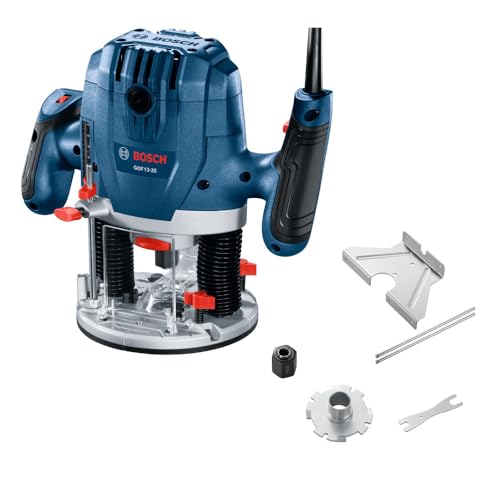
Makita RP1800 vs DeWalt DW621: the short answer
The Makita RP1800 and DeWalt DW621 are both serious plunge routers, but they suit different kinds of mortise work. The RP1800 is the larger, heavier machine, built around a 1/2-inch collet and deep plunge capacity. It is the better choice for repeated hardwood mortises, large bits, and jobs where the router must stay planted.
The DW621 is more compact and controlled. Its biggest advantage is a smooth plunge mechanism with excellent dust extraction, making it easier to use for smaller mortises, hinge recesses, and template work. In the common North American DW621 configuration, the router uses a 1/4-inch collet. Check the exact regional model before buying, because DeWalt’s specifications and included collets vary by market.
As an Amazon Associate we earn from qualifying purchases at no extra cost to you.


For occasional mortises in softwood or smaller hardwood stock, the cheaper DW621 is entirely adequate. For deep mortises with a 1/2-inch shank bit, the Makita is the more practical tool.
Makita RP1800 and DeWalt DW621 compared
| Specification | Makita RP1800 | DeWalt DW621 |
|---|---|---|
| Typical motor rating | 1,850 W | About 2 hp |
| Speed range | About 22,000 rpm, fixed speed | 10,000–24,000 rpm, variable speed |
| Collet | 1/2 inch; regional accessories may differ | Common US version: 1/4 inch |
| Plunge depth | Approximately 70 mm (2-3/4 inches) | Approximately 62 mm (2-1/2 inches) |
| Weight | About 6.0 kg (13.2 lb) | About 5.2 kg (11.5 lb) |
| Speed control | Generally fixed-speed | Electronic variable speed |
| Best fit | Deep, heavy-duty mortises | Controlled template and general mortise work |
These figures describe commonly sold versions; voltage, collet equipment, and accessories can change by country. Verify the rating plate and included parts before ordering.
Which router makes better mortises?
For a typical 3/8-inch or 1/2-inch mortise in hardwood, both routers have enough power. The limiting factors are usually the bit, the jig, and the operator’s feed rate rather than the motor rating. A sharp, upcut mortising bit removes chips more effectively than a cheap straight bit, and it reduces the tendency to burn the walls.
The Makita’s 1/2-inch collet is its main advantage. Larger shanks run with less flex, particularly when the bit is extended 1-1/2 inches or more to reach a deep mortise. That extra stiffness matters when cutting a 3/4-inch-wide mortise in oak or beech. A flexible 1/4-inch bit can deflect at the bottom, leaving tapered walls or a mortise that is wider at the entry.
The DW621’s variable speed is useful with larger-diameter cutters and different materials. Slowing the router reduces heat and gives better control as the cutter engages the work. It also helps when making shallow passes in plywood or softer woods. The trade-off is its more limited bit capacity in the common US version. Do not assume a 1/2-inch bit can be used just because the motor has enough power.
Neither router should be expected to plunge the full mortise depth in one pass. For a 2-inch-deep mortise, make several passes, removing roughly 1/4 to 3/8 inch at a time in hardwood. Leave the final 1/16 inch for a cleanup pass if the fit matters. Trying to take the entire depth at once can stall the motor, pull the jig out of alignment, or overheat the bit.
Plunge action, handling, and control
The DW621 feels more refined during repeated plunges. Its plunge action is smooth and predictable, and the motor’s electronic controls help maintain speed as the bit enters the cut. That makes it forgiving when working against a template or when the mortise starts close to an edge.
The RP1800 is less nimble. Its weight is noticeable when positioning it on a narrow workpiece, but that same weight helps prevent the base from skating. Once it is sitting on a substantial jig, the Makita feels stable and deliberate. For furniture parts and structural joinery, that is usually an advantage.
Use both hands, clamp the work securely, and start the router with the bit clear of the timber. Let the motor reach full speed before plunging. A common failure mode is allowing the router base to tilt while the bit is partly engaged. This produces an angled mortise entrance, especially when the jig is narrow or the base is supported on only two rails.
Dust extraction and jig compatibility
The DW621 has a strong reputation for dust management. Its enclosed plunge and extraction arrangement work well with a shop vacuum, particularly when routing shallow template recesses. It will not capture every chip from a deep mortise, but it keeps the work area clearer than many older plunge routers.
The Makita can also be connected to extraction, but the setup depends more on the base and accessory arrangement. For deep mortises, chips still tend to pack around the cutter. Pause every few passes and clear the pocket rather than forcing the bit through compacted waste.
Both routers work with shop-made mortising jigs, but check the base dimensions before building one. A jig that supports only a narrow strip of the base can allow rocking. The simplest reliable design uses two parallel rails wider than the router base, with stops at both ends. Clamp the jig and the workpiece independently; clamping only the jig can let the timber shift during a cut.
Bits, collets, and operating cost
Choose the router only after deciding which bits you need. If your mortises require 1/2-inch-shank cutters, the 1/2-inch-shank mortising router bits available for the RP1800 are the straightforward option. They cost more, but the larger shank is worthwhile for long, deep cuts.
For lighter work, a good set of 1/4-inch-shank upcut router bits is sufficient with the DW621. Avoid extending a bit farther than necessary. Exposed shank between the collet and cutter increases vibration and deflection, and inserting the bit too shallow can allow it to pull out under load. Seat the shank fully, then withdraw it about 1/8 inch before tightening so it does not bottom out in the collet.
Which one should you buy?
Buy the Makita RP1800 if you regularly cut deep mortises, work mostly in hardwood, or already own 1/2-inch-shank bits. Its weight and fixed high speed are disadvantages for delicate work, but they are not serious problems on a solid mortising jig. It is also the better platform for larger cutters where a 1/4-inch collet would be limiting.
Buy the DeWalt DW621 if you value control, variable speed, lower weight, and cleaner template routing. It is the sensible choice for hinge mortises, lock recesses, cabinet joinery, and occasional furniture work. The cheaper option is fine when your mortises are under about 1/2 inch deep, your cutters are 1/4-inch shank, and you are willing to make multiple passes.
If you are buying specifically for heavy mortising, also price a 1/2-inch plunge router with variable speed. Modern alternatives may offer easier speed control than the RP1800 while retaining the rigid collet needed for deep joinery. Whichever router you choose, spending money on sharp bits, a rigid jig, and a vacuum connection will improve the finished mortise more than a small difference in motor power.