What's inside
As an Amazon Associate I earn from qualifying purchases. This post may contain affiliate links at no extra cost to you.
A router lift makes small height changes easier to repeat, but it is not automatically more accurate than a well-adjusted fixed base. The useful upgrade is a mechanism that moves the router smoothly, holds its setting under load, and lets you make adjustments from above the table. For a small shop, the right choice depends on your router, table opening, and how often you change bits or settings.
As an Amazon Associate we earn from qualifying purchases at no extra cost to you.


Our Top Picks


What a lift solves—and what it doesn’t
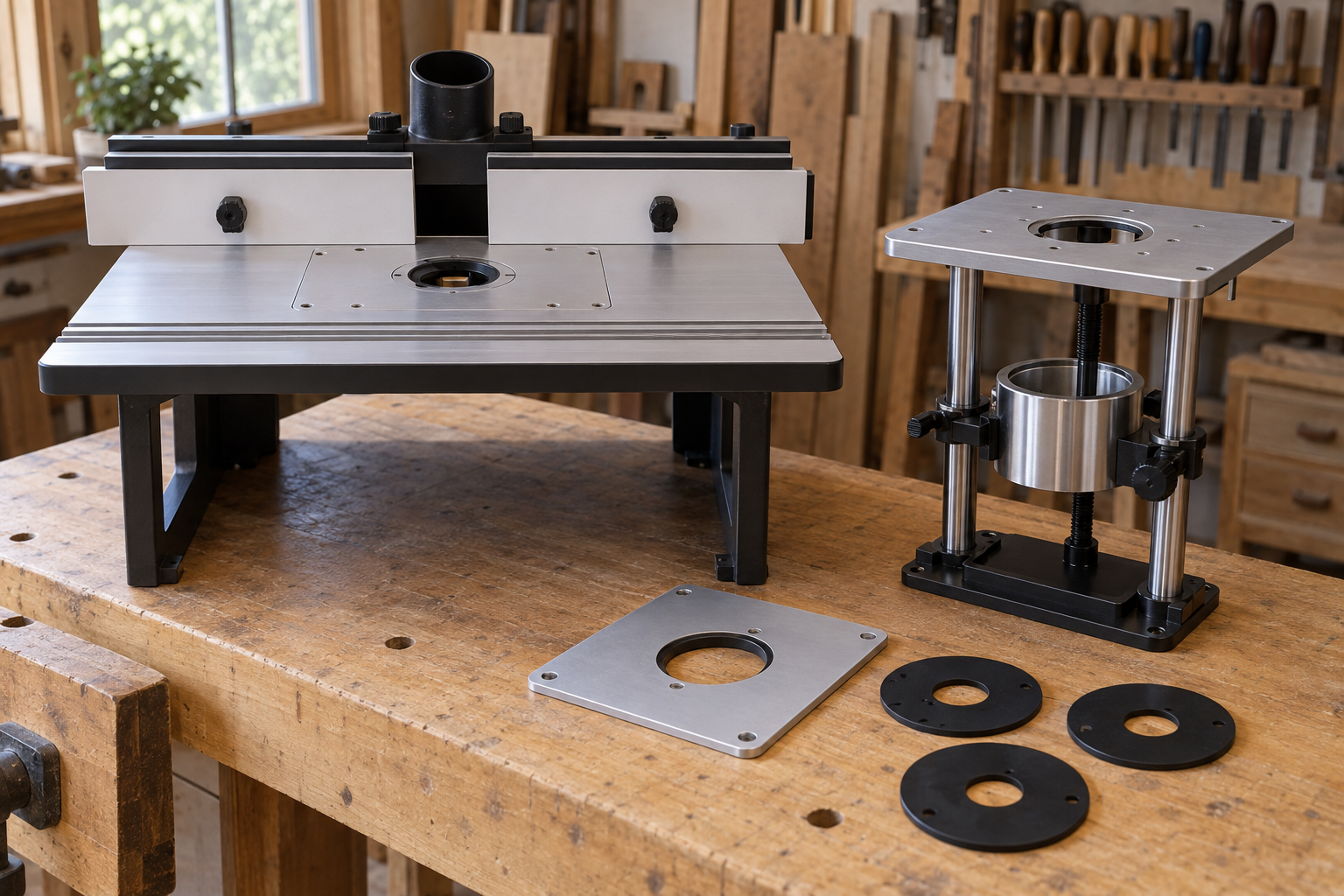
A lift supports a compatible router motor in a plate that fits the router table. A crank or wrench turns a screw to raise or lower the motor. That avoids reaching under the table to adjust a fixed-base router, which is awkward when the table is against a wall or stored on a small stand.
The main benefit is controlled adjustment. A fine-pitch mechanism can make small changes predictable, which helps when fitting a groove to a particular panel or dialing in a tongue-and-groove joint. But the lift does not guarantee a precise cut: router collet runout, a loose plate, a dull bit, or movement in the fence can all spoil the result. A lift also will not fit every motor. Check the lift’s approved motor diameter and your table’s plate dimensions before ordering.
Lift types compared
| Option | Adjustment and access | Best fit | Main trade-off |
|---|---|---|---|
| Router lift | Fine adjustment from above the table | Frequent setup changes and repeat work | Highest cost; requires compatible motor and plate |
| Fixed-base router in a plate | Usually adjusted from below; access varies | Occasional table routing on a tight budget | Slower changes, especially in a cramped stand |
| Above-table-adjustable fixed base | Height adjustment through a table access point | Users who want easier adjustment without a separate lift | Adjustment feel and range depend on the router |
For an occasional roundover or a few long edge profiles, a fixed-base router mounted in a compatible plate may be enough. Spend the savings on a decent bit or a stable stand instead. If you routinely switch between bits, make test cuts, or need to return to a measured height, a router lift for a router table can save setup time and reduce frustration.
Check fit before buying
Compatibility is the first buying filter. Router lifts are made for specific motor diameters or motor families, and a motor that is slightly too small may slip or need an approved adapter. Measure the motor body where the lift clamps—not the router’s base—and compare it with the manufacturer’s listed size. Also check whether your router has a removable motor. A plunge router with a motor that does not separate may not work with a lift designed for a bare motor.
Next, measure the table opening and plate. The lift must fit the opening, sit flush, and leave room for the crank or adjustment wrench. A plate that sits proud of the tabletop can catch a workpiece; one that sits low can affect how the work rides over the opening. Follow the lift’s leveling instructions and check the plate with a straightedge across several directions. If the table is not flat, a more expensive lift will not correct it.
Some lifts also need a specific insert-ring system or an above-table access hole in the cabinet. Confirm that the included rings suit the bit diameters you use. Large openings around a small bit make it easier for narrow stock or offcuts to dip near the cutter.
What makes height changes accurate
Look for a positive lock, accessible calibration or height scale, and a mechanism that does not bind through its full travel. A scale is a reference, not a measurement guarantee: verify important settings with a setup block, calipers, or a test cut. For repeat jobs, record the bit, measured height, and any fence position. Return to the setting and test it rather than trusting a dial alone.
One common failure is backlash: the crank turns, but the motor does not move immediately when you reverse direction. To avoid guessing, approach the final height from the same direction each time. If you overshoot, lower the motor enough to take up play, then raise it to the target. Another issue is a motor or lift that shifts when locked. Make a test cut, recheck the height, and tighten the lock according to the instructions. Do not force a tight mechanism; dust buildup or a misaligned motor can cause binding.
For a small shop, a lift matched to your router motor is generally a better bet than choosing by price or advertised adjustment precision alone. If your motor is not compatible, a router-table insert plate for a fixed-base router may be the simpler purchase.
When the upgrade earns its keep
Pay more for a lift when you adjust height often, work in a tight cabinet, or need repeatable fine changes across several setups. A smoother mechanism and a reliable lock matter more than a large number of markings on the crank. Check whether the adjustment tool is included and whether you can reach the lock and motor controls after installation.
Skip the lift if the router will stay at one height for long stretches, you can adjust it comfortably from below, or you are still building the table. A basic plate and compatible fixed-base router can do clean work when the plate is flat, the router is secure, and you verify each setup with a test cut. The best value is the arrangement that fits your motor and table without adapters or cabinet modifications you do not need.