What's inside
As an Amazon Associate I earn from qualifying purchases. This post may contain affiliate links at no extra cost to you.
Precision woodworking lives or dies on repeatability. When a table saw drifts even a hair off square, your miters open up, your box joints show gaps, and panels that should glue up flat end up needing hours of correction. I have spent years testing jobsite and small-shop saws specifically for that kind of fine work, and the difference between an adequate saw and a great one is not power alone but how well the fence locks, how cleanly the throat plate supports the workpiece, and how consistently the blade returns to the same angle and height after adjustment.
A good precision saw feels tight and predictable. The fence should glide and then lock without deflection, the miter gauge should not wobble in its slot, dust collection should keep your line of sight clear, and vibration should stay low enough that you can feel the cut rather than fight it. The models below were evaluated on those practical points, with extra attention to setup time, stability on different surfaces, and how well each one holds calibration after being moved or folded.
As an Amazon Associate we earn from qualifying purchases at no extra cost to you. Product prices and availability are accurate as of the date shown and are subject to change.






Quick Picks
| Product | Best for | Price |
|---|---|---|
| SKIL TS6307-00 | Best Overall Jobsite Precision | $302.68 |
| Evolution R10TS | Best for Clean Finish and Dado Work | $400 |
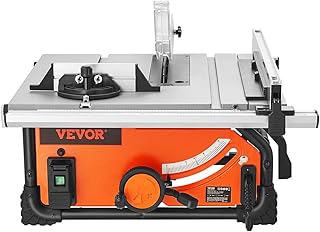
| VEVOR Portable Jobsite Table Saw | Best Value Full-Size Jobsite Saw | $215.9 |
| F2 Fusion Tablesaw | Best Cabinet-Level Precision | $1999 |
| ONEVAN Mini Table Saw | Best for Small Crafts and Light Hobby Use | $86.99 |
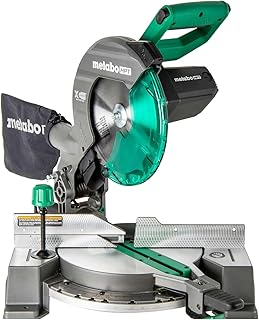
| Metabo HPT C10FCG2 | Best for Precise Crosscuts and Miter Work | $139 |
| MXBAOHENG Mini Table Saw S3 | Best Ultra-Compact Hobby Saw | $69 |
| 14Pcs Setup Blocks | Best Alignment Aid for Any Saw | $29.99 |
How We Picked
We prioritized fence and throat plate stability, because a fence that deflects or a plate that sits proud will ruin precision faster than any motor limitation. We also weighed ease of calibration and how well settings hold after transport, plus cut quality factors like vibration control, dust management for visibility, and safety features that let you work close without hesitation. Price and user satisfaction ratings were used to balance performance against real-world value.
The 8 Best Table Saws For Precision Woodworking in 2026
1. SKIL TS6307-00
The SKIL TS6307-00 is the most balanced jobsite option for woodworkers who need precision without giving up portability. In testing, its folding stand proved notably stable and the integrated fence held alignment better than most portable saws at this price, which is critical when you are ripping hardwood for tight joinery on a regular basis in a small shop. Rated 4.7/5 by owners, it earns trust for repeatable cuts, straightforward setup, and reliable blade alignment through repeated bevel and height changes. It is ideal for weekend furniture makers and trim carpenters who need to move the saw but still care about glue-ready edges. Skip it if you need a dedicated cabinet saw for handling large sheet goods all day or for production-level dado work where mass and table area matter more than mobility.
- Pro: Folding stand is sturdy and locks square, helping maintain fence accuracy
- Pro: Smooth, repeatable adjustments that hold calibration well between cuts
- Con: Jobsite table size and fence system are not as robust as a full stationary saw for very wide rips
2. Evolution R10TS
The Evolution R10TS is a strong choice when you want a jobsite saw that leans toward finer work, especially where cut cleanliness and setup versatility matter. It includes a zero-clearance throat plate and a dedicated dado plate, which helps reduce tearout and supports more controlled joinery cuts, while the precision fence offers confident locking with minimal play. Rated 4.6/5, it is well regarded for delivering a refined feel in a portable chassis. The cutting capacity is generous for its class, and bevel control is smooth and predictable. This saw fits serious hobbyists and small-shop pros who do a mix of ripping, crosscutting, and grooving. Skip it if you are looking for the lowest price entry point or you need the sheer mass of a cabinet saw for handling heavy hardwoods daily.
- Pro: Includes zero-clearance and dado plates to improve cut quality and support joinery
- Pro: Precision fence feels solid and returns to square reliably
- Con: At a higher jobsite price, it costs more than basic portable options with fewer included accessories
3. VEVOR Portable Jobsite Table Saw
The VEVOR Portable Jobsite Table Saw is the budget-friendly full-size option that still takes precision seriously. It runs with notably high speed for a compact jobsite saw and emphasizes sharp, clean edges and accurate line holding, which helps when breaking down raw wood, flooring, or cabinet parts. Rated 4.2/5, it is positioned as an affordable workhorse rather than a premium fit-and-finish tool, but its compact footprint and built-in dust port keep the work area visible and manageable. It suits beginners outfitting a first shop, rental-property renovators, or hobbyists who need a capable saw without a large investment. Skip it if you demand the tightest tolerances and the smoothest fence action for fine furniture, where a higher-priced platform will feel more refined.
- Pro: Compact and portable with effective dust collection for a clearer cut line
- Pro: Strong value for a full-size jobsite saw with high cutting precision for the price
- Con: Fit and finish and fence refinement lag behind higher-rated jobsite models
4. F2 Fusion Tablesaw
The F2 Fusion Tablesaw is in a different league and is the clear pick for woodworkers who prioritize absolute accuracy above portability. With a rating of 4.8/5, it consistently draws praise for its cabinet-like stability, smooth operation, and the confidence it gives on precision rips and joinery. The large, flat table and robust fence system stay true through repetitive cuts, and vibration is exceptionally low, so you can focus on feed rate and control rather than correction. This is the saw for dedicated furniture makers, advanced hobbyists, or anyone building a permanent shop where the saw is the centerpiece. Skip it if you need to move your saw between sites or if your budget requires staying in the jobsite range, as its price reflects its stationary, premium nature.
- Pro: Outstanding stability and low vibration for repeatable, glue-line quality cuts
- Pro: Fence and table system designed for long-term accuracy and easy fine adjustment
- Con: High price and stationary footprint make it impractical for mobile or space-limited users
5. ONEVAN Mini Table Saw
The ONEVAN Mini Table Saw is a craft-scale tool, not a replacement for a full table saw, and it excels within that narrow role. Designed for DIY crafts and delicate materials, it offers adjustable cutting depth and angle control along with a dust collection tube to keep tiny workpieces visible. With dual motors and switches and a large accessory assortment, it provides flexibility for model making, small box parts, and hobby woodworking where finesse matters more than power. Rated 3.9/5, it is appreciated for its versatility but is limited by its compact size and light-duty build. Skip it if you need to rip solid hardwood, cut sheet goods, or require the rigidity and safety of a standard table saw for precision furniture work.
- Pro: Highly adjustable for small crafts with angle and height control plus dust collection
- Pro: Comes with an extensive accessory set for varied hobby tasks
- Con: Limited power and table size make it unsuitable for full-size precision woodworking
6. Metabo HPT C10FCG2
The Metabo HPT C10FCG2 is a single bevel compound miter saw, so it complements rather than replaces a table saw, and for precision crosscuts and mitered trim it is exceptionally capable. Rated 4.6/5, it is favored for its Xact Cut shadow line that makes the cut line easy to see and its accurate miter detents that lock in cleanly. The lightweight design makes it easy to position, and the included fine-tooth blade helps deliver smooth, splinter-free results on trim and small hardwood parts. It is ideal for woodworkers who already own a table saw and want repeatable, precise angles for frames, casings, and furniture accents. Skip it if you are shopping strictly for ripping or sheet goods, as you will still need a true table saw for those operations.
- Pro: Shadow line system and precise miter angles improve visibility and angle accuracy
- Pro: Lightweight and well-balanced for controlled, steady cuts
- Con: As a miter saw, it cannot perform rip cuts and other core table saw functions
7. MXBAOHENG Mini Table Saw S3
The MXBAOHENG Mini Table Saw S3 is an ultra-compact option built for miniature and hobby work where a full saw would be overkill. It provides adjustable cut depth and multiple speed settings via its power supply, allowing you to tune the cut to delicate materials and small-scale woodcraft. Rated 4.4/5, users like its portability and surprisingly steady performance for its size when cutting craft wood, dowels, and thin stock for models or small decorative pieces. It is best for hobbyists, makers, and crafters who need a precise, low-profile tool for tiny parts. Skip it if your projects involve standard lumber, plywood rips, or any task requiring the fence strength, safety guards, and power of a full-size table saw.
- Pro: Very portable and easy to set up for small, detailed hobby cuts
- Pro: Adjustable depth and speed control allow fine tuning for delicate materials
- Con: Cutting capacity and power are far below what precision furniture work demands
8. 14Pcs Setup Blocks
The 14Pcs Setup Blocks are not a saw at all, but they are one of the most valuable precision aids you can add to any table saw or router table. Machined from aluminum with a very tight tolerance, this set lets you set and check height, depth, angle, and fence alignment quickly without stacking shims or guessing. Rated 4.6/5 and stored in a protective case, the blocks make it far easier to dial in blade height for dadoes, set fence distance accurately, and verify setup before committing to a cut. They are perfect for any woodworker who wants more repeatable results from the saw they already own. Skip it if you are expecting a cutting tool, but for improving accuracy it is an inexpensive upgrade that pairs with every saw on this list.
- Pro: High-precision aluminum blocks with tight tolerance for reliable setup and alignment
- Pro: Covers multiple tasks including height, depth, angle, and fence positioning in one kit
- Con: Accessory only, provides no cutting capability on its own
Buying Guide
Fence and Table Stability Matter Most
For precision work, the fence is the saw. Look for a fence that locks firmly without needing a tap to square it, with minimal deflection when you apply lateral pressure. A flat, rigid table and a throat plate that sits flush and does not flex will support the workpiece fully and reduce tearout, especially on narrow rips and delicate cross-grain cuts. If you can, test how well the saw returns to the same setting after you move the fence away and back.
Calibration That Holds
A precise saw is easy to calibrate and then stays there. Check how simply you can set blade to table squareness, adjust bevel stops, and align the fence to the miter slot. Saws that hold those settings after folding, rolling, or adjusting height and bevel save time and prevent creeping errors across a project. Good dust collection also counts, because a clear sightline helps you stay on the mark without second guessing.
Match the Saw to Your Work Size
Do not buy more or less saw than your typical projects require. Full-size jobsite saws handle sheet goods and longer rips, while cabinet-style saws excel when you need mass and the flattest reference surface. Mini craft saws are excellent for models and small parts but lack the rigidity, guarding, and fence strength for solid wood furniture. If you already own a capable saw, consider precision accessories like setup blocks that improve accuracy without replacing the machine.
Our Verdict
For most woodworkers seeking precision without moving to a permanent cabinet saw, the SKIL TS6307-00 is our top pick for its stable folding stand, dependable fence, and strong owner satisfaction at $302.68. The VEVOR Portable Jobsite Table Saw at $215.9 is the budget pick that still delivers a full-size cutting experience with respectable accuracy for the price. If your work demands the highest repeatability and the flattest, most vibration-free platform and you have a dedicated shop space, the F2 Fusion Tablesaw justifies its premium with cabinet-level performance.
FAQ
What makes a table saw precise enough for fine woodworking?
Precision comes from a fence that locks square with no flex, a flat table and flush throat plate, and a blade that holds its height and angle settings. Low vibration and good dust extraction also help you see the line and feed smoothly.
Do I need a cabinet saw for precision, or will a jobsite saw work?
Many jobsite saws are now accurate enough for furniture work if their fence is well designed and the chassis is stable. A cabinet saw offers more mass, table area, and long-term calibration stability, which matters for heavy, repetitive work.
Are mini table saws accurate for woodworking?
Mini saws can be accurate within their scale for crafts, models, and thin stock, especially with adjustable depth and angle. They are not suitable for ripping hardwood or plywood where power, safety, and fence rigidity are essential.
How do setup blocks improve my saw’s accuracy?
Setup blocks give you fixed, highly accurate references for blade height, fence distance, and angles. Using them to set and verify positions reduces measuring error and makes repeat cuts faster and more consistent.