What's inside
As an Amazon Associate I earn from qualifying purchases. This post may contain affiliate links at no extra cost to you.
Our Top Picks

The short version
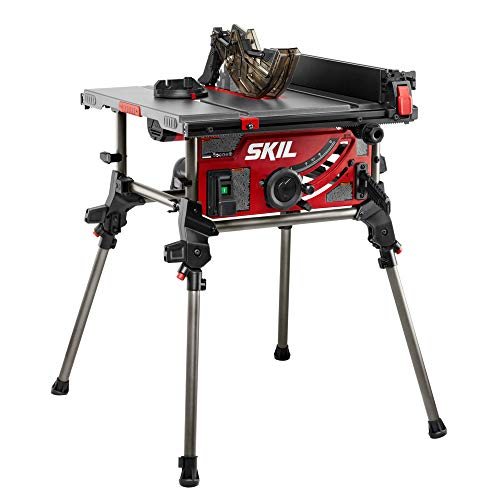
The Ridgid R4518 and Skil TS6307-00 are both affordable 10-inch jobsite table saws, but their fences feel different in use. The Skil uses a rack-and-pinion adjustment system that makes small width changes quick and repeatable. The Ridgid uses a conventional sliding fence that locks at the front and rear. It has a longer, more substantial feel, but it depends more on careful positioning and locking.
That difference matters more than motor wattage when you are cutting cabinet parts, flooring, shelving, or repeated strips. The Skil is easier to set accurately without a tape measure. The Ridgid is a reasonable choice when you want a larger right-side rip capacity and prefer a traditional fence that can be removed, repositioned, or supported with an outfeed setup.
As an Amazon Associate we earn from qualifying purchases at no extra cost to you.
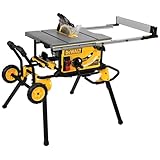

Fence system comparison
| Feature | Ridgid R4518 | Skil TS6307-00 |
|---|---|---|
| Fence adjustment | Sliding fence with front and rear locking points | Rack-and-pinion fence adjustment |
| Maximum rip capacity | About 30 inches to the right of the blade | About 25 inches to the right of the blade |
| Fence feel | Longer and more conventional | Quick, positive, and easy to fine-tune |
| Best advantage | More capacity for wide sheet goods | Fast repeatable width changes |
| Main weakness | Can shift or sit out of square if not locked carefully | Less room for very wide rips and limited aftermarket flexibility |
How the Ridgid R4518 fence works
The R4518’s fence is a conventional jobsite-saw design. You release the locking handle, slide the fence along the front rail, align it with the scale, and lock it. The rear portion is engaged by the same locking action, so both ends need to seat properly before cutting.
This arrangement is familiar and offers useful capacity: roughly 30 inches on the right side of the blade. That is enough for many half-sheet plywood cuts and gives the Ridgid an advantage when the work involves wider panels. If you routinely break down 24-inch cabinet sides or trim larger shelving, those extra inches can reduce the number of awkward setups.
The trade-off is adjustment precision. Moving the fence a small amount by hand can take several attempts, especially when you are trying to hit a dimension within 1/16 inch. The scale is useful for rough positioning, but it should not replace a test cut and measurement. Lock the fence firmly, then check the distance at both the front and rear of the blade. A fence that is not parallel can pinch the workpiece, create burn marks, or increase kickback risk.
The Ridgid fence is not automatically poor because it lacks rack-and-pinion adjustment. It is simply more dependent on operator technique. Keep the rail clean, avoid leaning on the fence while locking it, and confirm that the rear locking point has engaged. Those habits matter more than the nominal capacity number.
How the Skil TS6307-00 fence works
The Skil’s rack-and-pinion fence is its clearest advantage. A handwheel moves the fence through a geared mechanism, allowing small adjustments without repeatedly loosening and sliding the entire assembly. For jobs with several different widths, this is quicker and less frustrating than the Ridgid’s conventional setup.
It is especially helpful when making repeated rips. Set the fence, cut a test piece, measure it, and turn the adjustment wheel to correct the width. Small changes are more controlled, and the fence is less likely to jump past the target while you are positioning it. The system does not eliminate the need to measure; scales can be slightly off, and material dimensions vary.
The Skil provides roughly 25 inches of rip capacity to the right of the blade. That covers common lumber, trim, flooring, and many smaller plywood parts. It is enough for a large share of homeowner and hobbyist work, but it is less comfortable for wide cabinet panels. You can make those cuts with support and careful handling, but the saw does not give you the same working room as the Ridgid.
Rack-and-pinion mechanisms also add parts that can collect dust or become rough over time. Do not force the handwheel if it binds. Clean the teeth and rail, check for loose hardware, and make sure the fence is fully seated before cutting. A geared adjustment system improves convenience, not immunity from setup errors.
Accuracy, alignment, and safety
Neither fence should be judged only by how it feels out of the box. Check the blade-to-miter-slot relationship, then check whether the fence is parallel to the blade. Use a reliable combination square or steel rule rather than trusting the printed scale alone.
For a typical rip cut, the fence should be parallel or very slightly farther from the blade at the rear. If the rear closes toward the blade, the board can bind. If it opens excessively, the cut may wander and the workpiece may rub against the fence. After moving or folding the saw, repeat the check; jobsite transport can loosen hardware or knock an alignment out of place.
Use the supplied blade guard, riving knife, and anti-kickback parts when the cut allows. A fence that is perfectly aligned still cannot prevent kickback caused by twisted lumber, trapped offcuts, or pushing stock past the blade without support. For panels wider than your comfortable reach, use an outfeed table or a second person to support the material.
Which fence is better for your work?
Choose the Skil if you make frequent dimension changes, cut many narrow strips, or value quick setup over maximum capacity. Its rack-and-pinion control is also a good fit for beginners who are still developing a consistent fence-setting routine. If most of your work involves boards and parts under 24 inches wide, the reduced capacity is usually a minor compromise.
Choose the Ridgid if you regularly cut wider plywood, want approximately 30 inches of right-side rip capacity, or prefer a straightforward fence that can be positioned quickly for rough work. It is also a sensible option when you already use a tape measure and test cuts rather than relying on indexed adjustment.
If fence convenience is the priority, browse rack-and-pinion table saws. If your priority is moving large panels, look instead at jobsite table saws with larger rip capacity.
Value and final choice
The cheaper option is fine when your cuts are mostly construction lumber, short shelving, flooring, or occasional DIY repairs. In that situation, the Skil’s fence is usually the easier system to live with, while the Ridgid’s extra capacity is useful only when you actually need it.
For repeated cabinet work, neither saw should be treated as a production machine. Expect to verify dimensions, support full-size sheets, and occasionally realign the fence. Between these two, the Skil wins on adjustment speed and day-to-day convenience. The Ridgid wins when the job involves wider material and you are comfortable setting a conventional fence carefully. That is the practical dividing line: controlled repeatability versus additional working capacity.