What's inside
As an Amazon Associate I earn from qualifying purchases. This post may contain affiliate links at no extra cost to you.
Our Top Picks


Cutting Depth and Rebar Size Reality
On paper both grinders cut rebar, but usable depth of cut is what matters on site. A 4-1/2 inch grinder with a fresh cutoff wheel gives you about 1 to 1-1/8 inches of usable depth when you account for the arbor, guard, and the fact you never want to bury the nut into the cut. A 7 inch grinder gives you about 2-3/4 inches.
For common rebar that difference is decisive only at a certain size:
#3 (3/8″) and #4 (1/2″) rebar: Either grinder cuts in one pass. A 4-1/2 inch wheel goes through in 2-4 seconds if you let the wheel do the work.
#5 (5/8″) and #6 (3/4″) rebar: Still one-pass for a 4-1/2 inch grinder, but you are using most of the wheel diameter. If the bar is against a form or in a tight cage, the guard will hit before you finish the cut.
#7 (7/8″) and #8 (1″) rebar: A 4-1/2 inch grinder often needs two passes or a roll of the bar. A 7 inch grinder still does it in one pass with clearance to spare. If you cut bundles or dowels sticking out of a footing, that single-pass clearance saves a lot of repositioning.
If your work is mostly cutting #4 and #5 to length on sawhorses, depth is not your limiting factor. If you cut in place, flush against concrete, or cut gang-cut bundles, the 7 inch advantage is real.
Power, Speed, and Real Cut Time
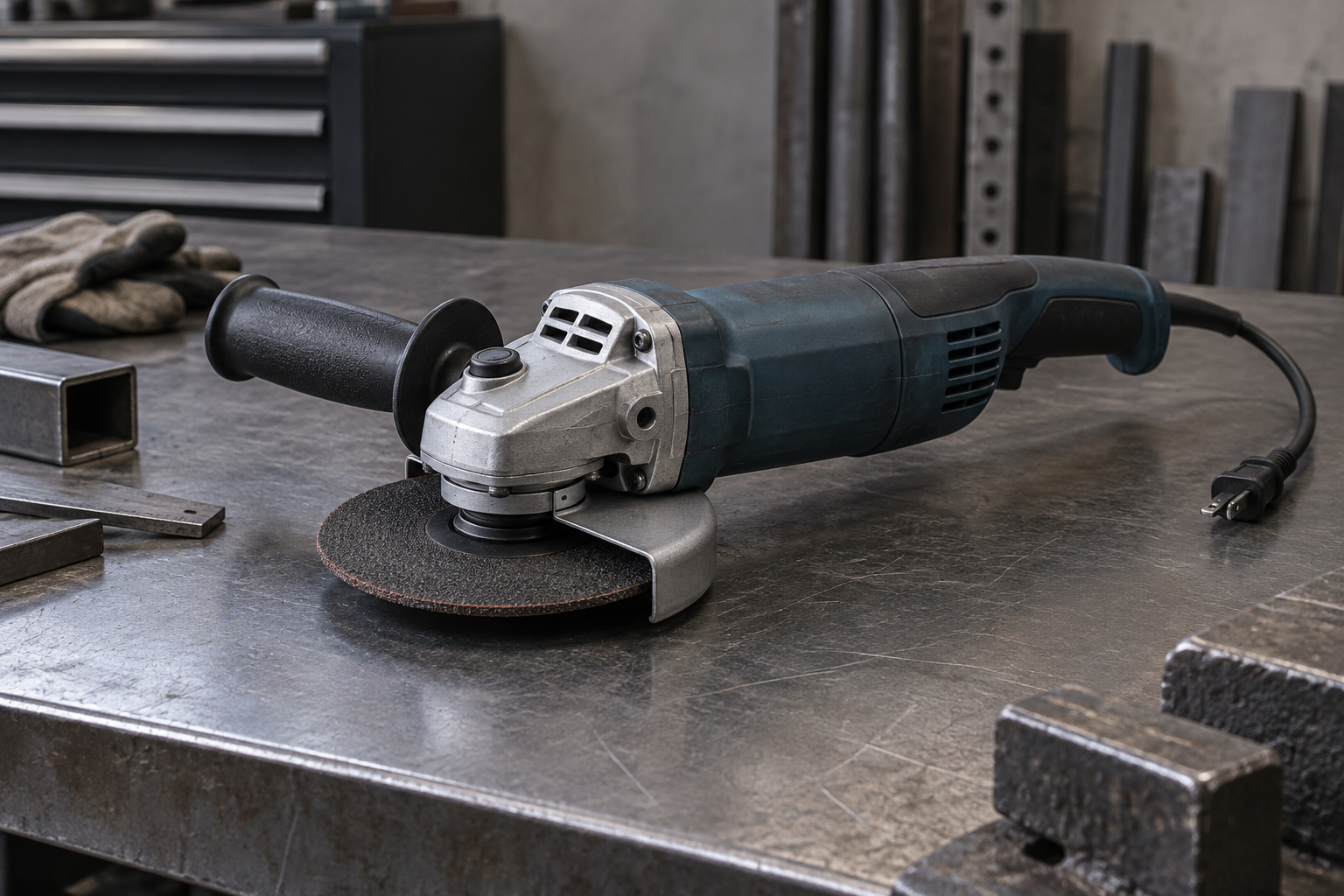
The typical 4-1/2 inch grinder is 7 to 10 amps, 11,000 RPM, and weighs 3.8 to 6 pounds. The typical 7 inch grinder is 13 to 15 amps, 8,500 RPM, and weighs 8.5 to 12 pounds. Larger motor means more torque under load.
In practice, a 4-1/2 inch grinder cuts faster on small rebar because rim speed is higher and the thin 0.045-inch wheel removes less material. On a single #4 bar, the 4-1/2 inch will be slightly quicker. On #6 and up, or when you stack three bars, the 7 inch motor does not bog down and finishes faster because you can lean into it without stalling.
Where the 4-1/2 inch fails on site is heat and duty cycle. Those small motors get hot after 10-15 continuous cuts in #5 rebar on a hot day, especially with a long 100-foot 16-gauge extension cord. Voltage drop will stall a 7-amp grinder long before it stalls a 15-amp grinder on a 12-gauge cord. If you are running off a generator or a far outlet, the bigger grinder is more tolerant, though it will trip a 15-amp breaker if anything else is on the circuit.
Failure mode to watch: pushing a thin cutoff wheel sideways to speed the cut. On a 4-1/2 inch grinder the wheel flexes and shatters. On a 7 inch grinder the wheel is stiffer but kickback is much more violent because of the mass and leverage. Never use the side of a cutoff wheel to deburr or grind; switch to a grinding wheel if you need to dress the cut.
Handling, Weight, and Fatigue
This is where most crews make the wrong choice. A 7 inch grinder cuts bigger material, but you will not want to hold it overhead or one-handed while the other hand holds the bar.
A 4-1/2 inch angle grinder can be run with one hand for a second to stabilize work, it fits between form studs and rebar mats, and you can carry it in a tool belt. For ladder work, wall ties, or cutting stirrups in a column cage, the smaller size is safer because you maintain control.
A 7 inch angle grinder demands two hands, a solid stance, and room for the guard. It is 4 to 6 pounds heavier and produces 2-3x more gyroscopic force, so a twist if the wheel binds will wrench your wrist harder. On the ground cutting 20-foot sticks to length, that weight is fine and even helps keep the cut straight. On a scaffold cutting protruding dowels, it is exhausting after a dozen cuts.
If you have only one grinder for general site work – cutting rebar, grinding concrete lips, wire wheeling – the 4-1/2 inch gets used 90% of the time because it is there and ready. The 7 inch stays in the gang box until you need it.
Disc Cost, Life, and Consumables
Both sizes use 0.045-inch thin cutoff wheels for rebar, but cost and life differ. A good 4-1/2 inch cutoff wheel is $1 to $2.50 in packs and lasts 15-25 cuts in #4 rebar before it is down to 3-1/2 inches and losing depth. A 7 inch wheel is $3.50 to $6 and lasts 30-50 cuts because there is more abrasive to wear.
Per cut, cost is similar, but the 7 inch wheel is less likely to run out of diameter mid-job. That matters if you are cutting #6 all day; a worn 4-1/2 inch wheel that started at 4.5 inches will not make a one-pass cut anymore at 4 inches.
Sparks and noise are also different. A 7 inch wheel throws a much larger and hotter spark stream and is noticeably louder. Inside a foundation or parking garage you will want a full face shield, not just glasses, and you need to plan spark direction away from form oil, foam, and other trades. Both sizes need hearing protection, but the 7 inch at full load is in the 100-105 dB range.
For cleanest cuts in rebar, look for metal cutoff wheels for rebar rated specifically for steel and for your grinder’s RPM. Avoid cheap masonry/combo wheels; they cut slower, create more heat, and temper the rebar end blue, which can affect bending nearby.
Head-to-Head Comparison
| Spec | 4-1/2 Inch Grinder | 7 Inch Grinder |
|---|---|---|
| Usable Depth of Cut | 1″ – 1-1/8″ | 2-1/2″ – 2-3/4″ |
| Motor | 7-10 Amp, ~11,000 RPM | 13-15 Amp, ~8,500 RPM |
| Weight (tool only) | 3.8 – 6 lbs | 8.5 – 12 lbs |
| Wheel Cost | $1.00 – $2.50 | $3.50 – $6.00 |
| Cuts Per Wheel (#4 rebar) | 15 – 25 | 30 – 50 |
| Best For | One or two bars, in-place cages, overhead, tight access | Bundles, #7+ bar, flush cuts to concrete, production sawing on ground |
| Weak Point | Bogs and overheats on thick/bundled bar, loses depth as wheel wears | Heavy, more dangerous kickback, needs 20A circuit and two hands |
Which Should You Buy for Rebar Work?
Buy the 4-1/2 inch if you cut #3 to #6, work alone, or cut in cages and forms. It is cheaper, lighter, and you will actually use it. Most residential and light commercial concrete work lives here. Get a grinder with a paddle switch and a good guard you can rotate without tools; that matters more than another amp of power. Run thin 0.045-inch wheels and let the weight of the tool feed the cut instead of forcing it.
Buy the 7 inch if you regularly cut #7 and larger, cut multiple bars at once, or need flush cuts against slabs and walls where guard clearance matters. It also makes sense if you already own a 4-1/2 inch for detail work and want a station grinder that lives on sawhorses for cut-to-length production.
For many site crews the right answer is both: a 4-1/2 inch cordless or corded grinder on your person for everything, and a corded 7 inch in the trailer for the days you gang-cut. If you can only have one corded tool and your rebar is #6 and under, spend the savings on quality cutoff wheels, a 12-gauge extension cord, and a face shield. Those three improve cut quality and safety more than stepping up an inch in disc size.
One last note: neither grinder replaces bolt cutters or a rebar shear where you can use them. Cutting with an abrasive wheel leaves a hot, sharp burr. If the bar will be handled or touched by other trades, take two seconds with a flap disc or file to knock the burr off. It prevents glove tears and makes tying faster.