What's inside
As an Amazon Associate I earn from qualifying purchases. This post may contain affiliate links at no extra cost to you.
Our Top Picks
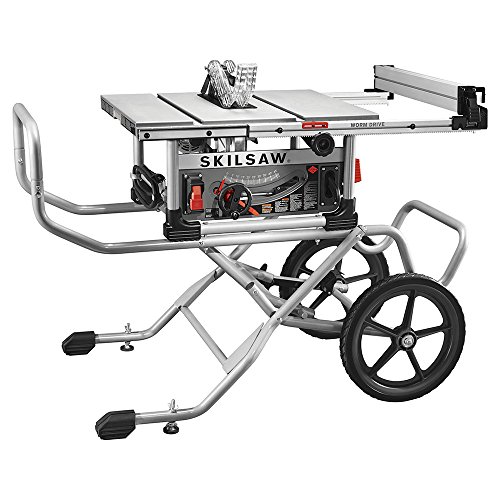 SKIL 10 Inch Heavy Duty Worm Drive Table52.6 x 29.5 x 35 inches52.6 x 29.53 x 35.08 inches94.3 poundsCheck on Amazon
 SKIL 15 Amp 8-1/4-Inch Compact Portable Jobsite Table8-1/4''25.98 x 22.83 x 12.99 inches40 poundsCheck on Amazon
 BOSCH GTS15-10 10 Inch Portable Jobsite Table Saw10 in28.1 x 27.8 x 13.53 inches102.95 poundsCheck on Amazon


Quick comparison
The Ridgid R4520 and DeWalt DWE7491X are both corded jobsite table saws with 10-inch blades, but their fences serve different kinds of work. The Ridgid offers a 30-inch rip capacity to the right of the blade and a larger cast-iron table. The DeWalt reaches 32½ inches, giving it a small edge when cutting wide sheet goods. Neither is a cabinet saw: both are portable, open-stand machines that trade mass and vibration control for easier transport.
| Feature | Ridgid R4520 | DeWalt DWE7491X |
|---|---|---|
| Blade diameter | 10 inches | 10 inches |
| Maximum rip to right | 30 inches | 32½ inches |
| Maximum rip to left | 15 inches | 22 inches |
| Table surface | Cast iron center table with extensions | Aluminum table with extensions |
| Stand | Rolling stand | Scissor-style stand |
| Best fit | Shop use and heavier workpieces | Frequent moves and wide sheet cuts |
Specifications can vary by package or revision, so check the saw’s manual and the listing for the exact version before buying. A fence’s stated rip capacity is not the same as the width of a cut it can make safely: the workpiece must also be supported and controlled.
As an Amazon Associate we earn from qualifying purchases at no extra cost to you.


What rip capacity means in practice
Rip capacity is the maximum distance between the blade and the fence. It matters when ripping a panel lengthwise, not when crosscutting its width. A standard 4-by-8-foot sheet is 48 inches wide, so neither saw can rip it in half in one unsupported pass. You can make a narrower strip, use a circular saw and straightedge for the initial breakdown, or arrange a second support surface for a controlled cut. For sheet goods, the saw’s rated capacity does not replace outfeed support or a helper when the panel is awkward to handle.
The DeWalt’s 32½-inch right-side capacity is 2½ inches more than the Ridgid’s 30 inches. That can spare a separate setup when trimming a panel to a wide dimension near that limit. The DeWalt also has more stated capacity to the left of the blade, which can help with certain narrow-side setups. For common lumber and cabinet parts well under 30 inches wide, those extra inches rarely determine the choice.
Fence and cut quality
Both saws rely on a rack-and-pinion fence system. On the DeWalt, the fence adjusts by turning the front control, which makes it relatively quick to set and lock across its travel. The Ridgid’s fence also adjusts and locks from the front. With either saw, verify that the fence is parallel to the blade before trusting a long rip. A fence that toes inward can pinch the board against the back of the blade, increasing the risk of burning or kickback; a fence that is out of square can spoil repeat cuts.
Do not assume the first reading on the scale is exact. Check the fence with a reliable square or measuring tool, then make a test cut and measure the result. If a cut drifts, stop and inspect blade alignment, fence alignment, and material support before continuing. A sharp, appropriate blade and steady feed often matter more to finish quality than a small difference in the machines’ rip capacities.
Table and portability
The Ridgid’s cast-iron table center is a meaningful advantage for shop use. Its mass helps resist movement, and the surface feels more substantial under smaller workpieces. It is not a guarantee of perfect accuracy, and extensions still need to be level with the center table. Check for lips where sections meet; a panel catching on an extension can twist during a cut.
The DeWalt’s lighter aluminum table and folding scissor-style stand are easier to move between sites and store. The trade-off is that a light portable saw can shift or vibrate more, especially on an uneven floor or under a heavy panel. Set it on firm ground, lock the stand, and check that all feet are planted. The Ridgid’s rolling stand is convenient around a garage or workshop, but its larger, heavier setup is less appealing if you regularly load a saw into a vehicle.
Power, blade, and material limits
Both are 120-volt, 10-inch saws intended for typical jobsite and home-shop work. They can rip framing lumber and sheet goods within their depth and width limits, but neither should be treated like an industrial saw for nonstop production. Feed thick hardwood at a controlled pace; forcing it can bog the motor, burn the cut, or push the workpiece away from the fence. Confirm the maximum cutting depth and bevel capacity in the manual if those matter to your projects.
Use the supplied blade for rough work if its cut quality suits you, but a suitable replacement blade can improve results in plywood or hardwood. Keep the blade guard and riving knife installed for through-cuts, and use a push stick when your hands would otherwise approach the blade. Long boards need infeed and outfeed support. Without it, the board can tip, bind, or pull your hands toward the blade.
Which saw should you buy?
Choose the DeWalt DWE7491X if you value quick fence adjustment, frequent transport, or its extra 2½ inches of right-side rip capacity. It is the more practical fit for a mobile carpenter who needs a compact setup and often cuts broad panels to dimensions just beyond the Ridgid’s reach. If you routinely work with full sheets, plan how you will support and break them down; the DeWalt does not make a 48-inch rip a one-person, no-support job.
Choose the Ridgid R4520 if the saw will spend most of its life in a garage or shop, where the heavier cast-iron table is useful and the difference in capacity is seldom limiting. It is the sensible choice when your work is mostly lumber, cabinet parts, and panels under 30 inches. If neither saw’s limits suit your projects, compare other portable table saws with wider rip capacity rather than expecting an extension or improvised support to change the machine’s safe cutting range.
Before buying, compare the complete package, including stand, fence, warranty, and local service access. For occasional home repairs, the cheaper saw can be perfectly adequate if it has the capacity you need and its fence checks square. Paying extra for portability or table mass makes sense only when those features solve a real problem in your workspace.