Key takeaways
- Two engineering-led brands with very different American footprints. Where Bosch wins outright, where Makita pulls ahead, and what availability really costs you.
What's inside
As an Amazon Associate I earn from qualifying purchases. This post may contain affiliate links at no extra cost to you.
Bosch and Makita are both engineering-first companies, and both make tools that reward people who care about accuracy. In the United States, though, they occupy different positions: Makita has the deeper cordless ecosystem, while Bosch owns some specific categories outright.
That difference matters more than any spec sheet, because the two brands are asking you to buy different things. Bosch asks you to buy a tool. Makita asks you to buy a platform. Both are fair requests, and most bad purchases come from not noticing which question you were answering.
As an Amazon Associate we earn from qualifying purchases at no extra cost to you. Product prices and availability are accurate as of the date shown and are subject to change.


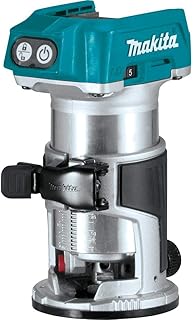
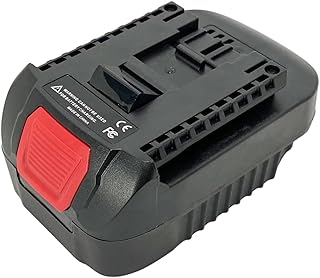

No honest brand-level comparison can tell you which motor lasts longer, so this is a comparison desk view instead: what each company optimizes for, and which kind of woodworker gets punished by that choice. A finish carpenter working out of a van and a hobbyist with a fixed bench and a wall outlet should not buy the same way.
| Category | Bosch | Makita | Winner |
|---|---|---|---|
| Routers | Colt and plunge bases, class-leading | Good compact routers | Bosch |
| Jigsaws | Widely considered the benchmark | Very good | Bosch |
| Drills and drivers | Strong | Strong, better ergonomics | Makita |
| Cordless range in US | Moderate | Large (LXT + XGT) | Makita |
| Miter saws | Glide system, excellent, expensive | Solid | Bosch |
| Sanders and dust control | Good | Excellent | Makita |
| US availability | Good | Very good | Makita |
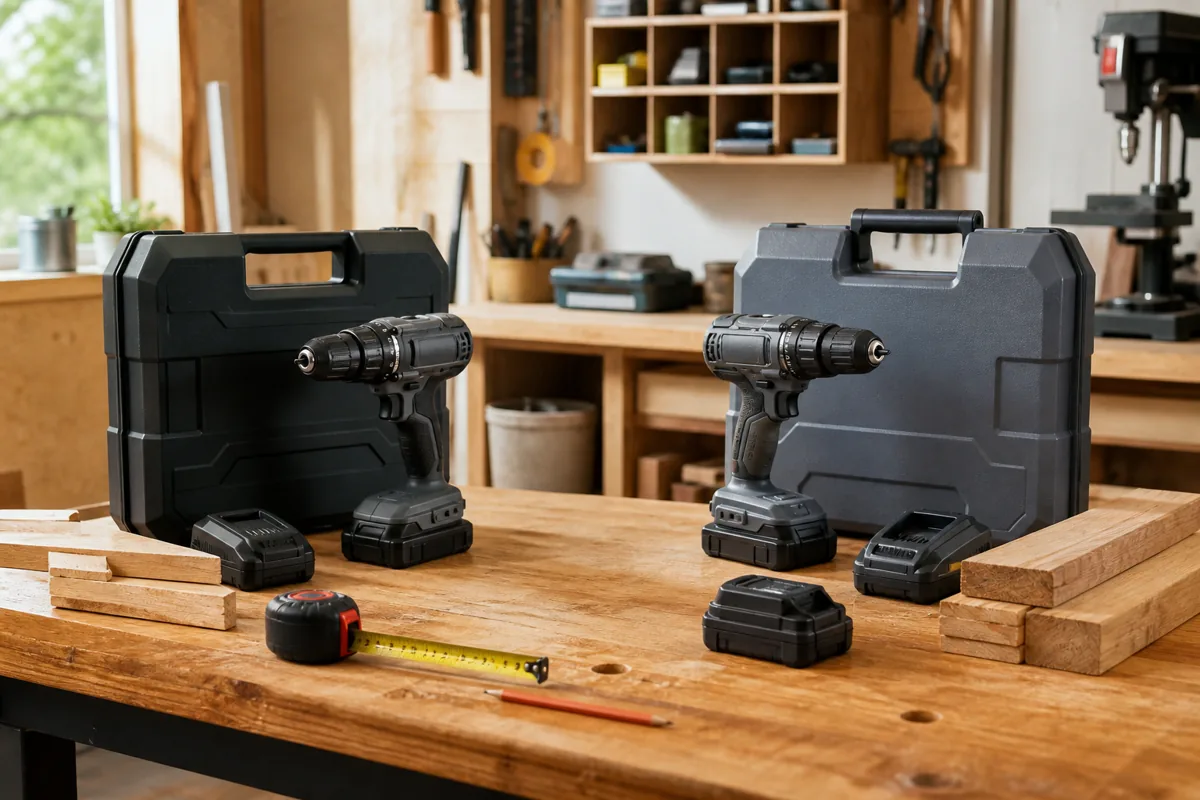
How to choose between them
Five criteria decide this, and they are not equal. Weigh them in this order:
- Battery platform breadth — how many tools you will eventually run on one pack
- Category strength — whether the tools you use for hours are ones the brand leads in
- Ergonomics — how the tool feels in hour six, not in the aisle
- Dust management — whether extraction was designed in or bolted on
- Parts and local availability — whether you can still service it in five years
Platform breadth goes first because it is the only one that gets more expensive to change later. Every pack you buy raises the cost of switching, and switching is never one tool — it is chargers, spare batteries and the vacuum on the same slot. Makita’s LXT range gives you more places to spend that money in the US than Bosch’s 18V line, with XGT above it for higher-draw work.
Category strength is second, and it is where Bosch collects the argument. Being good at everything is worth less than being best at the tool you reach for daily. If routing and jigsaw work are the core of what you build, the category leader should anchor the kit and the battery question becomes a separate purchase rather than a constraint.
The last three get underrated. Ergonomics cannot be judged in a store: balance, grip circumference and where the pack’s weight hangs only matter after an hour overhead. Dust management comes down to whether the shroud captures at the cut and whether the port takes a standard hose or a proprietary adapter. Parts availability is the boring one; search either brand plus “parts diagram” before committing to a tool you intend to keep.
Where Bosch is simply the better tool
Two categories, no argument: jigsaws and routers. Bosch jigsaws cut straighter with less blade deflection than almost anything at their price, and the Colt palm router has been the default recommendation for small routing work in American shops for years. The Bosch Glide miter saw is also a genuinely clever design if bench depth is tight — it costs more, and it is worth it in a small shop.
The reasons transfer, so they are worth naming. A jigsaw is only as good as its ability to hold the blade perpendicular under side load; orbit settings and speed dials are secondary to that one mechanical problem. Routers come down to base rigidity, adjustment feel and whether depth can be set accurately without a third hand. The Glide advantage, by contrast, is spatial rather than mechanical: it buys back bench depth against a wall, and if your saw lives on a stand in open floor you are paying for engineering you will not use.
Where Makita pulls ahead
Cordless breadth and comfort. If you want one battery to cover drills, drivers, saws, sanders, vacuums and outdoor tools, Makita’s LXT range gives you far more options in the US market than Bosch’s 18V line. Makita’s dust extraction and finish sanding tools are also a step ahead for anyone doing interior work.
The comfort claim is worth unpacking. Makita tools feel lighter than they weigh because of where the mass sits, and grip shapes stay consistent across generations, so this year’s driver handles like the one you learned on. The trade is that Makita rarely wins a category outright the way Bosch does. It is excellent nearly everywhere and unmatched in fewer places, which suits most people but is a genuinely different proposition.
Bosch Colt palm router
Round-overs, dados, edge work, hinge mortises — the small router most American woodworkers end up owning. Smooth, controllable, and easy to adjust one-handed.
Makita LXT cordless kits
If the plan is to go fully cordless across the shop, Makita gives you more places to spend your money on one battery.
The corded question
Both brands still make excellent corded tools, and for stationary shop work — router tables, benchtop sanders, larger jigsaw work — corded is often the smarter purchase. Bosch’s corded routers and jigsaws in particular remain a better buy than their cordless equivalents for shop use.
The logic is simple: a tool that never leaves the bench gains nothing from a battery and loses power, runtime and balance to it. A corded router in a table holds constant speed all afternoon; a cordless one sags as the pack drains. Buying corded for fixed positions and cordless for everything that moves is cheaper than going cordless across the board, and it shrinks how much the platform argument matters at all.
What each price band buys
Neither brand sells a bad tool, but both sell tools aimed at someone who is not you.
Entry kits and combo deals
Down here the tool is usually fine and the batteries are the compromise: small packs, slow chargers, sometimes a brushed motor where the standalone tool is brushless. Acceptable for intermittent household work, bad if you are buying into the platform, because the packs die long before the tools. Check whether a fast charger is included; that line item moves the value more than the tool count does.
The mid range, where both brands are strongest
This is the band to aim for: brushless motors, metal where load passes through it, real electronic protection, packs big enough to finish a task. The good pick is a tool one generation old rather than a cheap tool that is current, since outgoing models discount while parts and batteries are still everywhere. The bad pick is a bare tool bought on price for a platform you do not otherwise own.
Flagship and specialty tools
At the top you are buying a specific capability — glide-style bench savings, track saw accuracy, high-output packs for sustained cutting. Worth it when the constraint they solve is one you actually have, poor value bought as insurance against work you might do someday.
Mistakes that cost real money
- Choosing a platform because of one tool. Decide the battery system on breadth, then buy standout tools on merit whatever badge they wear.
- Buying every pack the same size. Two mid-size packs and a fast charger beat one huge battery for handheld work, but sanders, saws and vacuums want the capacity.
- Hunting for cross-brand adapters. The packs are not compatible, and adapters bypass protection circuitry both companies build in deliberately.
- Assuming European availability applies here. A tool reviewed enthusiastically abroad can be awkward to source or support in the US.
- Skimping on blades, bits and abrasives. A mid-range saw with a good blade beats a flagship running the stock one, for a fraction of the price difference.
Who should buy which
- ✔ Choose Bosch for routing, jigsaw work and miter-saw precision
- ✔ Choose Bosch if your shop is corded-first and space-limited
- ✔ Choose Bosch for European-style accuracy and dust management
- ✘ Choose Makita for a full cordless workshop on one battery
- ✘ Choose Makita for all-day handling comfort
- ✘ Choose Makita for sanding, dust extraction and finish work
The mirror image matters too. Skip Bosch if you want one battery for the whole shop and will not run a second platform alongside it. Skip Makita if your work is fixed-bench precision built around routing and jigsaw cuts. And skip the question entirely if you already own a stack of packs from either brand.
FAQ
Is Bosch Professional (blue) available in the US? Some of it, unevenly. Much of the blue range is easier to find in Europe, which is worth knowing before you plan a kit around it.
Are Bosch batteries compatible with Makita? No, and no adapter is worth the risk.
Which is better for a beginner woodworker? A Bosch router and jigsaw plus a Makita cordless drill is, honestly, a better starting kit than going all-in on either brand.
Is it worth running both LXT and XGT? Only if the heavy tools justify it. LXT covers the large majority of woodworking loads, and running both means two charger families and two pack inventories, so pick one as the default and treat the other as a specialty.
The short answer
Buy Bosch for the specific tools it leads — routers, jigsaws, miter saws. Buy Makita when you want one battery platform to run a whole workshop. Mixing them is not a failure of discipline here; it is the sensible outcome.
If you want one rule: let the platform follow the tools you use for hours at a time, and let precision one-offs follow the category leader. That produces a mixed shop, a smaller battery collection than expected, and fewer tools you regret.
Check prices on Amazon →