What's inside
As an Amazon Associate I earn from qualifying purchases. This post may contain affiliate links at no extra cost to you.
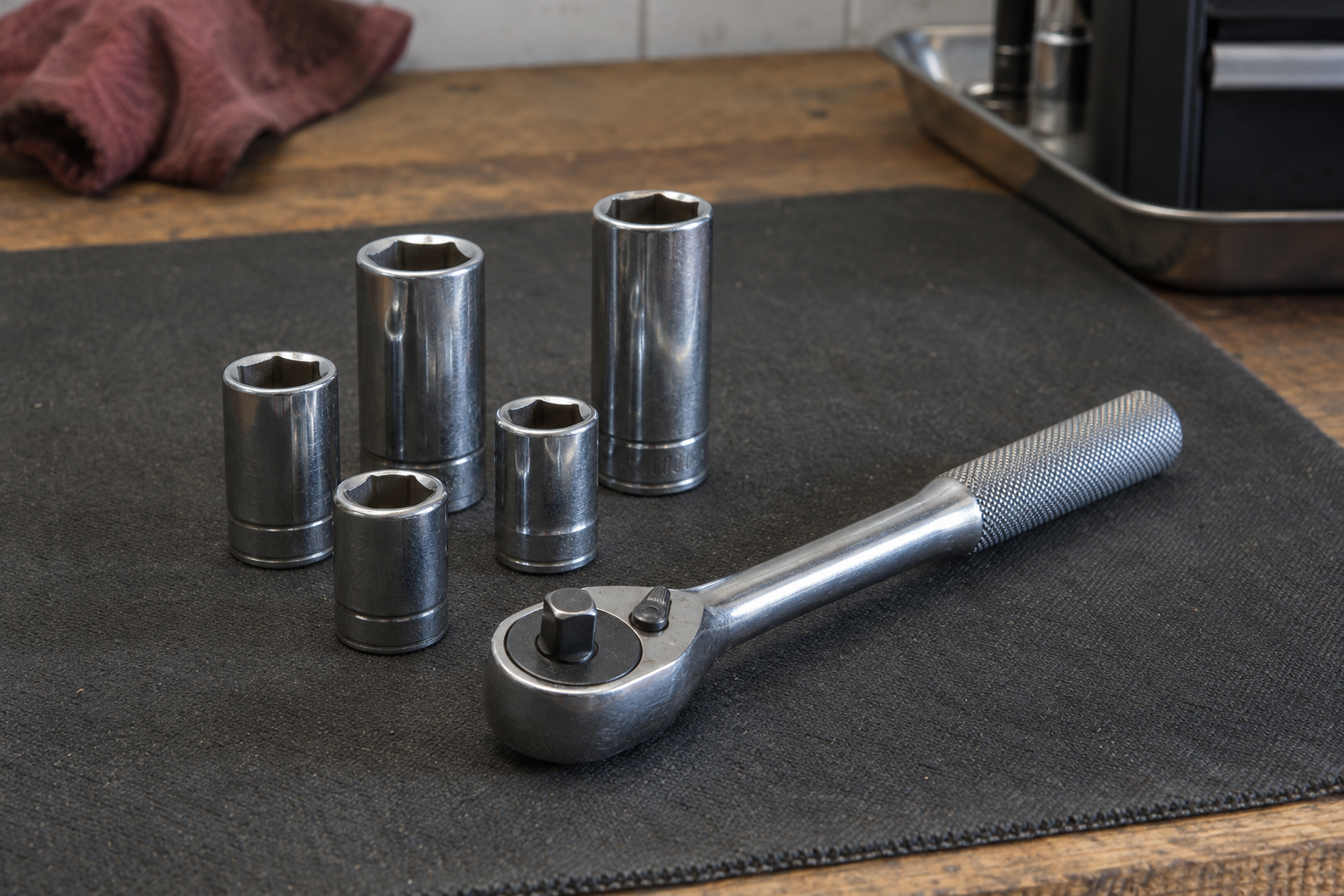
When a fastener is buried behind a radiator, inside an engine bay, or close against a cabinet wall, ratchet size matters as much as socket size. A long-handle ratchet can deliver substantially more torque, but it also needs more room to swing. A compact ratchet fits where a full-size tool cannot, yet its short handle makes stubborn fasteners harder to break loose.
The practical choice is not simply “more leverage is better.” It is a trade-off between torque, access, control, and the risk of damaging the fastener. For most toolboxes, the best answer is to own one of each and use them for different stages of the job.
As an Amazon Associate we earn from qualifying purchases at no extra cost to you.


Our Top Picks
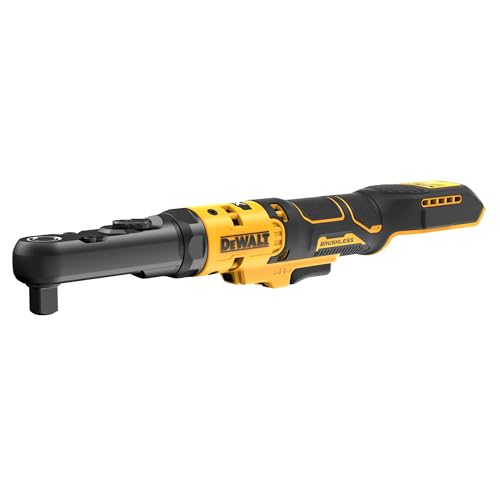
 Milwaukee 2457-20 M12 Cordless 3/8" Sub-Compact 35 ft-Lbs3/8"9.47 x 2.94 x 1.76 inches1 PoundsCheck on Amazon


How Ratchet Handle Length Changes Leverage
Torque is calculated as force multiplied by distance. If you apply 30 pounds of force to a 10-inch handle, you produce about 25 pound-feet of torque. The same force on a 5-inch compact ratchet produces about 12.5 pound-feet.
That difference is significant. A long-handle 1/2-inch-drive ratchet may be roughly 18 to 24 inches long, while a compact 1/4-inch-drive ratchet may be only 3 to 6 inches. Even when both use a comfortable grip, the longer tool lets you loosen tight fasteners with less effort.
However, published or estimated torque capacity is not a guarantee that the fastener will come free. Rust, thread locking compound, cross-threading, and corrosion can require far more breakaway torque than the fastener needs during reassembly. Excessive force can round the head, shear a bolt, or damage the ratchet mechanism.
Why Compact Ratchets Win in Tight Spaces
A compact ratchet’s main advantage is not leverage; it is access. A short head and handle can fit between a bolt and a frame rail, around plumbing, or beneath a low-clearance appliance. Some low-profile models have a head height under 1 inch, which can make the difference between reaching a fastener and needing to remove surrounding parts.
Short handles also need a smaller swing arc. A 20-inch ratchet may require 10 to 12 inches of usable clearance to make a useful stroke. A 5-inch compact ratchet can often work with less than 3 inches, especially when the mechanism has a fine 72-tooth or 90-tooth gear.
That fine tooth count helps in confined areas, but it does not automatically make the tool stronger. A fine-tooth mechanism has smaller engagement components and can be more vulnerable to shock loads. Do not use a compact ratchet as a substitute for a breaker bar when a fastener is seized.
Where Long-Handle Ratchets Are Better
Long-handle ratchets are the better choice for breaking loose tight fasteners, removing suspension hardware, and tightening larger bolts to a specified torque before using a torque wrench. The longer handle reduces the hand force needed and gives you better control over steady pressure.
They are also less frustrating for repetitive work. On a larger fastener that needs several turns, a long handle gives your hand a more natural reach and usually provides a larger grip. A flex-head version can add access, but the pivot introduces another failure point and can fold unexpectedly if the head is not held in line with the fastener.
The downside is clearance. A long ratchet may be impossible to swing in an engine compartment even if its socket reaches the bolt. It can also encourage excessive force. If you find yourself standing on the handle or adding a pipe for extra leverage, stop and switch to the correct breaker bar, penetrating oil, heat, or a dedicated impact tool where appropriate.
Long-Handle vs Compact Ratchet
| Factor | Long-handle ratchet | Compact ratchet |
|---|---|---|
| Typical handle length | 12 to 24 inches | 3 to 8 inches |
| Leverage | High; best for tight or larger fasteners | Low; suited to already-loosened fasteners |
| Required swing space | Large, often 8 to 12 inches | Small, sometimes 2 to 3 inches |
| Typical useful drives | 3/8-inch and 1/2-inch | 1/4-inch and compact 3/8-inch |
| Best use | Breakaway torque and heavy assembly work | Access, speed, and light-duty fastening |
| Main failure mode | Over-torquing or damaging parts in a confined area | Stripping, tooth damage, or handle breakage under excess force |
Drive Size Matters as Much as Handle Length
A compact 1/4-inch-drive ratchet is excellent for trim, electronics enclosures, hose clamps, and small engine-bay fasteners. It is not the right tool for a rusted suspension bolt. For general automotive and household work, a 3/8-inch ratchet offers the broadest compromise between socket availability, strength, and physical size.
A 1/2-inch-drive long-handle ratchet is appropriate for wheel lugs, axle hardware, and large structural fasteners, but it is usually too bulky for delicate work. If you need reach and leverage on a medium-size fastener, consider a long-handle 3/8-inch ratchet rather than jumping immediately to a large 1/2-inch tool.
For the most restricted access, look for a compact fine-tooth 1/4-inch ratchet. A 72-tooth mechanism moves 5 degrees per click, while a 90-tooth mechanism moves 4 degrees. That is useful when the handle can travel only a few inches, but it should be paired with sensible force rather than brute strength.
The Most Useful Two-Ratchet Setup
If you are buying your first ratchet, a quality 3/8-inch model around 8 to 12 inches long is usually the most versatile and affordable starting point. The cheaper option is fine when you work on clean household hardware, furniture, bicycles, or fasteners that are already loose. Look for a comfortable grip, a reversible lever that is easy to operate, and a release button that does not snag.
Add a compact ratchet when access is regularly the problem. Add a long-handle model when your existing ratchet cannot loosen fasteners without straining. A long-handle 1/2-inch ratchet makes sense for heavier automotive work, while a compact 3/8-inch ratchet is more useful if your main problem is clearance.
Use the compact ratchet to run a fastener down and remove it after it breaks free. Use the long ratchet only where its leverage and clearance are appropriate. That division of labor gives you faster work, fewer damaged fasteners, and a lower chance of turning a tight-space repair into a much larger job.