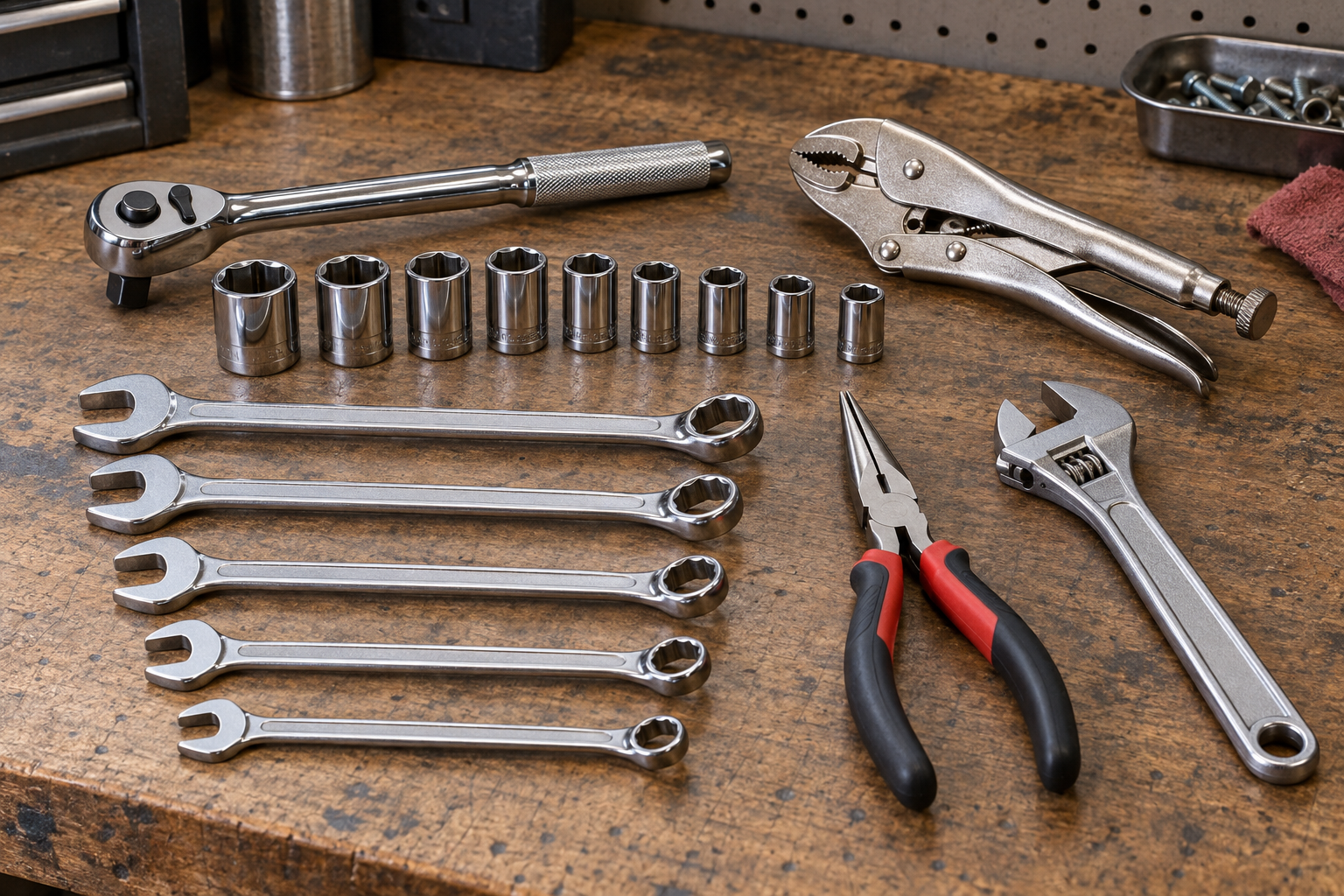
What's inside
As an Amazon Associate I earn from qualifying purchases. This post may contain affiliate links at no extra cost to you.
Rounded fasteners call for a different grip than ordinary pliers can provide. Irwin Vise-Grip Original locking pliers clamp and hold; Knipex TwinGrip pliers combine a front gripping tip with side jaws designed to bite damaged fasteners. They overlap, but they are not interchangeable in every job.
For a bolt head you can reach from the side, the Vise-Grip is often the stronger holding tool. For a stripped screw or stud that has little exposed head, TwinGrip’s front grip can make the difference. The right pick depends on access, fastener shape and whether you need to turn the part or simply hold it.
As an Amazon Associate we earn from qualifying purchases at no extra cost to you.


Our Top Picks
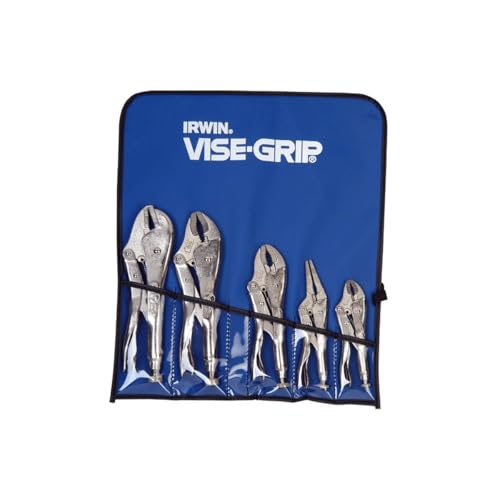
 Amazon Basics 5-Piece CR-V Locking Pliers Set with5-Piece9 x 2.5 x 0.75 inches3.8 PoundsCheck on Amazon


How the gripping systems differ
The classic Irwin Vise-Grip Original uses an adjustable jaw opening and an over-center locking mechanism. Set the jaws around the work, squeeze the handles until they lock, then turn the adjustment screw to change the clamping force. The lock keeps pressure on the fastener without requiring you to keep squeezing.
TwinGrip pliers have no locking mechanism. Their nose has serrated teeth that can engage a fastener from the front, while the side jaws grip when there is room to get around the fastener. The front grip is particularly useful when a screw head is damaged or a stud is nearly flush with a surface. You must maintain hand pressure while turning, so they are less suited to jobs where you need the tool to stay clamped unattended.
At-a-glance comparison
| Feature | Irwin Vise-Grip Original | Knipex TwinGrip |
|---|---|---|
| Grip style | Locking, adjustable jaws | Non-locking front and side grip |
| Best access | Room to get jaws around the fastener | Front access or side access, depending on the fastener |
| Useful for holding parts | Yes; locks in place | Only while you maintain pressure |
| Control | Clamping force set with adjustment screw | Grip depends on hand pressure and jaw position |
| Common limitation | Needs room to surround the work; can crush or mark it | Does not lock; front teeth need enough exposed material to bite |
Which works better on rounded fasteners?
On a rounded hex bolt, the Vise-Grip is a sensible first choice if you can get its jaws squarely around the head. Adjust the screw so the handles close firmly and lock, but do not force them shut so hard that you deform the fastener or the part beneath it. The broad clamping action and locked grip are useful when you need both hands for turning or stabilizing the assembly.
TwinGrip can be the better option when the fastener is recessed, flush, or too damaged for the Vise-Grip’s jaws to catch securely. Its front teeth can bite into an exposed screw head or stud where conventional pliers may slip. That grip is not magic: if the fastener is completely flush, buried, or too hard and smooth for the teeth to engage, neither plier is a reliable substitute for drilling, a screw extractor, or another removal method.
For a stripped screw, first check whether a correctly sized driver, extractor, or impact driver is more appropriate. Pliers can chew up the head further, and a slipping bite can damage nearby paint, wiring or soft metal. When using either tool, protect finished surfaces and keep your hand out of the turning path in case the jaws let go.
Access, holding and control
The Vise-Grip’s main advantage is its lock. It can hold a nut, bracket or workpiece while you reposition your hand, use another tool or inspect an assembly. That makes it a useful general-purpose locking plier, not just a fastener remover. Its drawback is bulk: the handles and locking linkage need clearance, and the jaws must get around the workpiece.
TwinGrip’s front bite gives it an access advantage on some fasteners, but it does not replace a locking plier for hands-free holding. On a tight job, you also need enough room to swing the handles through a useful arc. If you can only make tiny movements, a small wrench, bit driver or dedicated extractor may work better.
Which one should you buy?
Choose the Irwin Vise-Grip Original locking pliers if you want a locking tool for general shop work and most of your rounded fasteners have enough exposed surface to clamp around. They are the more versatile choice when holding parts matters as much as turning them. For occasional repairs, a conventional locking-plier design is often enough; there is little reason to pay for a specialized jaw if front access is not a regular problem.
Choose Knipex TwinGrip pliers if you regularly remove damaged screws, studs or fasteners that offer little side access, and you can work while maintaining pressure. They are a more specialized purchase: the front grip solves a real problem, but it does not lock and does not make every rounded fastener removable.
If you have frequent repair work across both situations, owning one of each can make sense. If you are buying just one tool, buy for the problem you encounter most—not for the worst-case job you might face once. A good set of locking pliers may be the better value if you also need different jaw sizes, while a front-grip plier is worth considering when flush or badly stripped fasteners are a recurring headache.
Get a better bite and avoid damage
Clean loose rust and grease from the fastener where possible. Place the jaws on the strongest remaining flats or exposed material, rather than on a thin edge. Pull steadily in the direction that loosens the fastener; jerking a tool that is barely engaged tends to round the surface further. If the jaws slip once, stop and reassess instead of repeatedly squeezing harder.
For the Vise-Grip, confirm that the locking action is secure before applying torque, and release it with the handle lever rather than prying the jaws open. For TwinGrip, keep firm pressure on the handles and make sure the front teeth are seated before turning. Neither tool should be used as a hammer or as a replacement for the correctly sized wrench when the fastener is still serviceable.