What's inside
- Milwaukee Tool Bags Compared: Packout vs. Open Totes vs. Backpacks
- At a glance: size, pockets, and load rating
- Packout: choose it for modular transport
- Open totes: choose quick access over containment
- Backpacks: choose them for hands-free mobility
- Choose by load and work routine
- Ownership details that affect the choice
- Bottom line
- Related Guides
As an Amazon Associate I earn from qualifying purchases. This post may contain affiliate links at no extra cost to you.
Our Top Picks

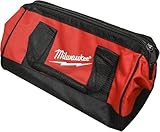
Milwaukee Tool Bags Compared: Packout vs. Open Totes vs. Backpacks
For a large, modular load that travels with other Packout gear, choose a Packout tool bag; for quick access to bulky tools, choose an open tote; and for hands-free carrying up stairs or across a site, choose a backpack. The right Milwaukee tool bag depends less on the number of pockets than on how much you carry, how you move it, and whether it needs to connect to a storage system.
The figures below cover representative Milwaukee models, not every size in each range. Dimensions are approximate exterior measurements; specifications can vary by model and market, so confirm the exact SKU before buying. Pocket counts are useful for comparing organization, but manufacturers may count interior and exterior compartments differently.
As an Amazon Associate we earn from qualifying purchases at no extra cost to you.


At a glance: size, pockets, and load rating
| Bag | Approx. dimensions (L × W × H) | Pockets | Load rating | Best carry style |
|---|---|---|---|---|
| PACKOUT 15-inch Structured Tool Bag (48-22-8321) | 15 × 10 × 11 in. | 31 | 50 lb | Organized carry that integrates with Packout |
| PACKOUT 20-inch Structured Tool Bag (48-22-8322) | 20 × 10 × 11 in. | 32 | 50 lb | More room for larger hand tools and accessories |
| Tradesman 15-inch Tool Bag (48-22-8119) | 15 × 10 × 10 in. | 32 | Not consistently specified as a comparable rated payload | Open-top access without the Packout connection |
| Jobsite Backpack (48-22-8200) | 14 × 8 × 20 in. | 35 | Not consistently specified as a comparable rated payload | Hands-free carry and vertical storage |
Packout’s published 50-pound rating is a useful limit, not a target to exceed. For the other bags, check the current product label or Milwaukee specification sheet for the particular model; an unlisted rating is not a promise that any load is safe. Pocket totals also do not tell you whether a bag will fit a specific drill, meter, or case.
Packout: choose it for modular transport
The Packout structured bags have a reinforced base designed to connect to the Packout storage system. That matters when a bag is one part of a rolling stack or needs to stay put during transport. The 15-inch model is the more compact choice for a daily set of hand tools, a drill, and small accessories. The 20-inch version gives long or bulky items more room, but it takes up more space and is easier to overfill.
Choose Packout if you already use the system, regularly move several cases together, or want the bag’s base to attach to compatible Packout components. It is less compelling if you carry only one light bag from a parked vehicle to a nearby work area: you may pay for a system connection you rarely use.
Packout trade-offs
- Advantages: a structured base, many organizing pockets, and compatibility with Packout storage components.
- Limitations: a rigid base adds bulk; a loaded bag can be awkward to carry farther than a short walk; and compatibility does not make the contents weatherproof.
- Best match: a tradesperson who transports organized tool sets alongside other Packout gear.
Open totes: choose quick access over containment
A tradesman-style open tote suits tools used repeatedly throughout the day. You can reach in without working around a zipper, and the open top accommodates items that are awkwardly shaped for a backpack. Milwaukee’s 15-inch Tradesman bag offers a useful middle ground: enough pockets to sort smaller tools while keeping the main compartment accessible.
That convenience has a cost. Small parts can fall out if the tote tips, and dust, rain, and debris have a direct path inside. If your daily route involves stairs, ladders, or a crowded vehicle, a tote’s handles may also be less comfortable than backpack straps. Use a small parts case inside the tote rather than relying on pockets alone for loose fasteners.
Pick an open tote for bench work, service calls with frequent tool changes, or short carries where immediate access matters more than hands-free movement. Avoid loading it so heavily that the handles dig into your hands or the bag becomes unstable when set down.
Backpacks: choose them for hands-free mobility
The Milwaukee Jobsite Backpack is tall and narrow compared with a tote, with multiple pockets for separating hand tools, accessories, and smaller items. Its shape is practical for stairs, walking between work areas, or carrying tools while keeping one hand free. The trade-off is access: tools buried at the bottom are slower to retrieve, and wide tools may not fit neatly in the vertical compartment.
A backpack is a strong choice for a compact service kit or for workers who travel on foot around a site. Before buying, check the interior dimensions against your largest tool and any hard cases you want to carry. Pocket count alone can be misleading: a bag with many slim slots may organize drivers well but offer little room for a meter, charger, or bulky power tool.
Choose by load and work routine
| Your situation | Better fit | Why |
|---|---|---|
| You already move tools in Packout cases | Packout structured bag | The connection helps keep the bag with the rest of the stack. |
| You need quick access at a bench or work area | Open tote | The open top is faster for tools used repeatedly. |
| You walk, climb stairs, or need a free hand | Backpack | Shoulder straps distribute the carry and keep both hands available. |
| Your load includes long or bulky tools | 20-inch Packout bag or a suitably sized tote | A wider compartment is easier to load than a tall, narrow backpack. |
| You carry mostly small hand tools and accessories | 15-inch Packout bag, tote, or backpack | Choose by carry style; all offer substantial pocket organization. |
A practical fit check before buying
Gather the tools that actually travel with you, then measure the longest and widest items—not just the tool bodies, but also attached batteries, cases, and handles. Allow room to remove each item without forcing it past neighboring tools. If your packed kit weighs 38 pounds, a bag with a 50-pound rating has only 12 pounds of nominal headroom; that remaining capacity can disappear quickly when you add a charger, water, or job materials. Weigh the complete load rather than estimating from the tool count.
Ownership details that affect the choice
In daily use, zippers, seams, handles, and base contact points are the areas worth checking. A bag dragged across rough concrete will wear differently from one carried by its handles and stored indoors. Keep sharp tool edges from rubbing against the fabric, avoid hanging excessive weight from one pocket, and do not treat a structured or water-resistant design as waterproof unless the specific model is rated for that protection.
Clean out sawdust and metal chips before they work into pocket seams or zipper teeth. Brush or vacuum debris from the interior, wipe exterior grime with a damp cloth, and let the bag dry fully before storing it closed. Avoid packing a damp bag tightly around tools: trapped moisture can encourage corrosion. These habits help any Milwaukee tool bag last longer, but none can compensate for regularly exceeding its stated load limit.
Bottom line
Choose the 15-inch Packout bag for a compact, system-connected kit; step up to the 20-inch version when larger tools need the room. Choose an open tote when fast access is the priority, and a backpack when hands-free movement matters most. Match the interior to your largest tools, verify the exact model’s dimensions and load rating, and buy for the way you carry—not simply the highest pocket count.