What's inside
As an Amazon Associate I earn from qualifying purchases. This post may contain affiliate links at no extra cost to you.
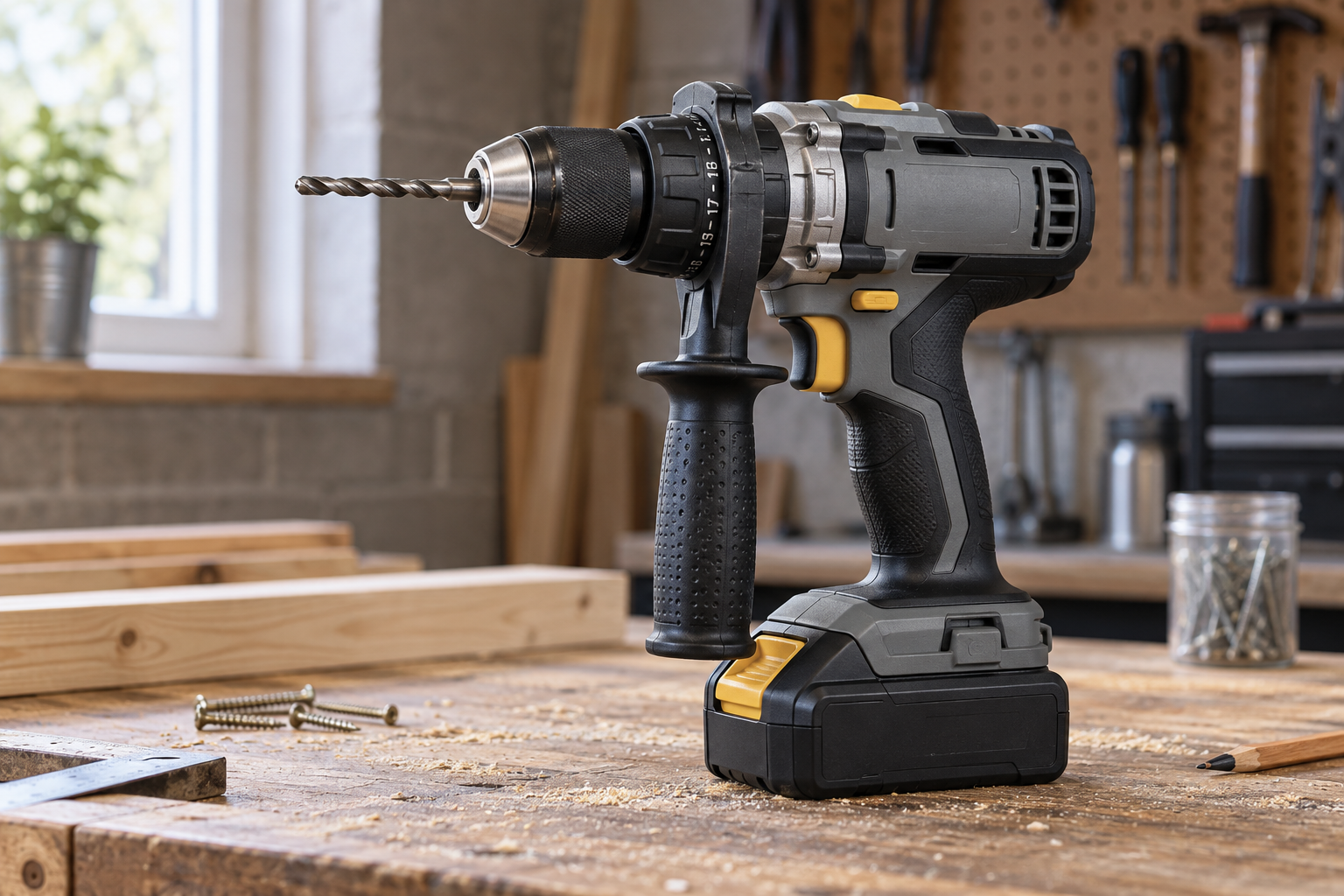
Large auger bits expose the difference between a strong hammer drill and a drill that only looks strong on its specification sheet. A 1-inch bit is easy work for both the Bosch GSR18V-1330C and Milwaukee 2903-20. A 2-inch self-feeding bit, a long ship auger, or a large spade bit in wet framing lumber is where grip, low-speed control, and overload protection matter.
Both are premium 18V/20V-class cordless hammer drills with brushless motors, metal chucks, side handles, and enough torque for demanding construction work. The Milwaukee has a small advantage in rated output. The Bosch counters with very good electronic control and a slightly more compact feel. For repeated large-hole drilling, the choice is close, but the best pick depends on how aggressively you work and which battery platform you already own.
As an Amazon Associate we earn from qualifying purchases at no extra cost to you.


Our Top Picks
 Bosch GSB18V-1330CN PROFACTOR™ 18V Connected-Ready 1/2 In. Hammer8" in8 x 2.9 x 8.6 inches4.6 poundsCheck on Amazon
 BOSCH 11255VSR Bulldog Xtreme SDS-Plus Rotary HammerEach22.5 x 11.25 x 4.75 inches10.4 poundsCheck on Amazon
 BOSCH GBA18V80-2PK 18V CORE18V® Lithium-Ion 8 Ah High46 in4.6 x 3 x 2.7 inches1 PoundsCheck on Amazon
Bosch GSR18V-1330C vs Milwaukee 2903-20 specifications
| Feature | Bosch GSR18V-1330C | Milwaukee 2903-20 |
|---|---|---|
| Tool type | 18V brushless hammer drill | 18V/20V MAX brushless hammer drill |
| Maximum torque | 1,330 in-lb | 1,400 in-lb |
| Chuck | 1/2-inch keyless | 1/2-inch metal keyless |
| No-load speed | 0-550 and 0-2,100 rpm | 0-550 and 0-2,100 rpm |
| Hammer rate | Up to about 31,500 bpm | Up to 33,000 bpm |
| Electronic protection | KickBack Control and connected-tool functions | AutoStop control and overload protection |
| Best advantage | Control, handling, and connected settings | Slightly higher output and strong heavy-duty feel |
Published torque numbers are not a direct measurement of how quickly either drill will bore a hole. They are generally maximum figures measured under controlled conditions. Chuck friction, battery condition, bit sharpness, and the material all change real-world performance. Still, the Milwaukee’s 70 in-lb advantage gives it a modest edge when a large bit starts to bind.
How they handle large auger bits
For a 1-1/4-inch or 1-1/2-inch auger bit in ordinary framing lumber, both drills have more than enough power. Use the low gear, keep the side handle installed, and let the bit’s lead screw pull itself through the wood. Neither tool should be run at full speed simply because it can reach 2,100 rpm. Large bits generate heat and can grab suddenly when they hit a knot or embedded fastener.
At roughly 2 inches and above, the Milwaukee 2903-20 is the better choice for sustained production drilling. Its extra rated torque and slightly higher hammer output do not transform the job, but they help the motor maintain speed as the bit loads up. That matters when drilling many holes for plumbing or electrical work rather than making one occasional pass.
The Bosch remains capable, particularly with a sharp self-feeding auger. Its electronic controls make it easier to avoid the abrupt reaction that occurs when a large bit stalls. Bosch’s KickBack Control is useful insurance, but it is not a substitute for the side handle or a firm two-handed grip. Any drill powerful enough to drive a large auger can twist your wrist if the bit locks.
Neither drill is the ideal tool for constant use with very large ship augers, oversized self-feeding bits, or hole saws approaching their maximum recommended diameter. A high-torque drill or a dedicated right-angle drill is a better category for that work. For occasional large holes, the two hammer drills are more versatile because they can also drive screws and drill masonry.
Control, clutch behavior, and kickback
Large auger bits are normally used in drill mode, not the numbered clutch settings. The clutch is intended mainly for driving screws and will not reliably protect the operator from a jammed auger. Use the drill setting, low gear, and moderate trigger pressure. Back the bit out periodically if chips stop clearing, especially in deep holes.
Milwaukee’s AutoStop system and Bosch’s KickBack Control address the same serious problem: a sudden rotation of the drill body when the bit catches. Both systems can shut the tool down quickly, but they may also interrupt work when a bit momentarily snags. That is a worthwhile trade-off. Resetting a drill is less costly than a wrist injury or a damaged workpiece.
The Bosch feels a little easier to manage for users who spend much of the day drilling at changing speeds. The Milwaukee has the more forceful, substantial feel under load. Neither is light with a high-capacity battery attached, and a 12Ah pack can make overhead or ladder work tiring. For large augers, balance matters more than saving a few ounces on the bare tool.
Which is better for hammer drilling?
The hammer modes are useful for small and medium holes in brick, block, and softer concrete. They are not a replacement for an SDS-plus rotary hammer when drilling many holes or using bits larger than about 1/2 inch in concrete. Both tools will make masonry work, but they do it slowly compared with an SDS tool and place more strain on the operator.
The Milwaukee’s higher impact rating gives it a slight advantage in masonry speed. The Bosch’s connected features can be useful for adjusting settings or monitoring the tool, but an app does not add impact energy. If your work is primarily anchors in concrete, spend the money on an SDS-plus rotary hammer instead.
Battery choice changes the result
Large auger work draws high current, especially when the bit is dull or partially buried in a knot. A compact 2Ah battery may run the drill, but it can cause earlier power reduction and will drain quickly. Use a high-output battery in the roughly 5Ah to 8Ah range for the best balance of runtime, power, and weight. A Bosch 18V high-capacity battery or Milwaukee M18 high-output battery is a more sensible match than the smallest pack in either system.
Keep a second battery charging if you are drilling dozens of holes. Stop when the motor repeatedly slows, the battery becomes excessively hot, or the tool’s protection system trips. Continuing to force the bit after repeated stalls wastes time and can damage the bit, chuck, or battery.
Which one should you buy?
Choose the Milwaukee 2903-20 if large augers are a regular part of your work, you want the highest rated output of the two, or you already own M18 batteries. Its advantage is incremental rather than dramatic, but it is the stronger production choice for repeated 1-1/2-inch and 2-inch holes.
Choose the Bosch GSR18V-1330C if you value controlled handling, already own Bosch 18V batteries, or find it at a meaningfully lower price. For occasional large holes, remodeling, cabinet work, and general drilling, it gives up little in practical performance. The cheaper option is fine when the job is measured in a few holes rather than hundreds.
Whichever drill you choose, buy sharp auger bits, use the side handle, select low gear, and clear chips instead of forcing a stalled bit. Those habits will improve drilling speed and safety more than a small difference in advertised torque.